
Description
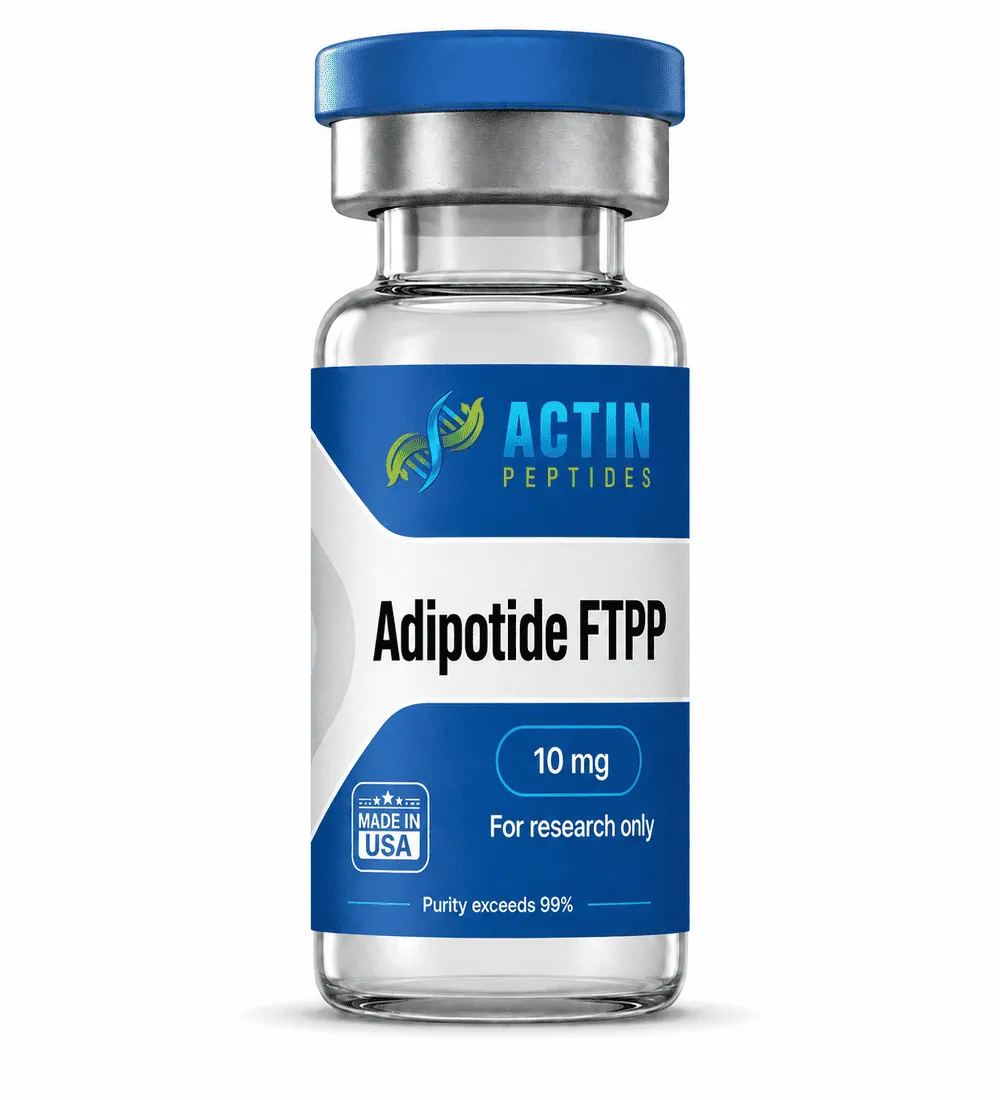
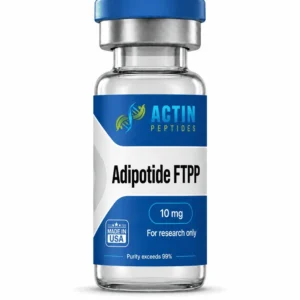
Adipotide Peptide (FTPP): Research, Mechanisms, and Scientific Studies
What Is Adipotide Peptide?
Adipotide, also known as FTPP (Fat-Targeted Proapoptotic Peptide) or Prohibitin-Targeting Peptide 1 (Prohibitin-TP01), is a synthetic peptide developed to target specific proteins found on the surface of white adipose tissue.
Researchers have studied Adipotide for its potential role in adipose tissue biology, obesity research, metabolic regulation, and cellular apoptosis. The peptide was originally investigated for its possible effects on tumor vasculature but later attracted significant interest due to observations involving fat tissue reduction in preclinical studies.
Adipotide is designed to bind to prohibitin (PHB1), a protein believed to play a role in cellular metabolism, growth regulation, inflammation, and vascular function. By targeting prohibitin-expressing cells within white adipose tissue, researchers suggest that Adipotide may influence pathways involved in fat storage, fatty acid transport, and adipocyte survival.
As research continues, Adipotide remains an important experimental compound for studying obesity-related pathways and metabolic function.
How Adipotide Works
Adipotide was created by combining a naturally occurring targeting peptide sequence with a proapoptotic peptide domain.
This design allows the peptide to:
- Identify specific proteins on adipose tissue vasculature
- Bind to prohibitin receptors
- Target fat-associated blood vessels
- Promote apoptosis in selected cells
- Influence adipose tissue metabolism
Researchers believe that Adipotide may selectively recognize proteins expressed on the endothelial cells that support white adipose tissue.
Interaction with Prohibitin and Annexin A2
Current research suggests that Adipotide may interact with:
- Prohibitin (PHB1)
- Annexin A2 (ANX2)
- CD36 fatty acid transport pathways
These proteins are believed to contribute to fatty acid uptake and transport into adipocytes.
Studies indicate that prohibitin and annexin A2 may form complexes with CD36, helping regulate the movement of fatty acids from blood vessels into fat cells. By targeting these pathways, Adipotide may influence lipid transport, adipose tissue maintenance, and energy storage mechanisms.
Researchers continue to investigate how these interactions affect overall metabolic function and adipose tissue biology.
Chemical Properties
| Property | Value |
|---|---|
| Peptide Name | Adipotide |
| Alternative Name | FTPP |
| Other Names | Fat-Targeted Proapoptotic Peptide, Prohibitin-TP01 |
| Molecular Formula | C152H252N44O42 |
| Molecular Weight | 2611.41 g/mol |
| Classification | Proapoptotic Targeting Peptide |
Research and Scientific Studies
Obesity and Fat Loss Research
One of the most widely discussed areas of Adipotide research involves its potential role in adipose tissue reduction and obesity-related studies.
Researchers suggest that Adipotide may target blood vessels supplying white adipose tissue. This process may reduce the support systems required for adipocyte survival, potentially leading to reductions in fat tissue volume.
Initial Preclinical Findings
In preclinical primate studies, researchers administered Adipotide daily for four weeks without altering diet or exercise routines.
Reported observations included:
- Approximately 11% reduction in body weight
- Approximately 39% reduction in body fat stores
- Improvements in metabolic markers
- Reduced insulin resistance
These findings generated significant interest in Adipotide as a research tool for studying obesity and adipose tissue regulation.
Potential Effects on Appetite and Energy Balance
Some studies also observed apparent reductions in food intake during treatment periods.
Researchers continue to investigate whether Adipotide may influence:
- Appetite regulation
- Satiety signaling
- Energy expenditure
- Metabolic adaptation
However, the precise mechanisms remain under investigation and require additional research.
Adipose Tissue Biology Research
Adipotide has also become an important compound for studying the biological mechanisms involved in adipose tissue function.
Fatty Acid Transport Pathways
Research suggests that prohibitin and annexin A2 play important roles in transporting fatty acids into adipocytes.
Studies indicate that:
- ANX2 deficiency may reduce adipose tissue growth
- Fatty acid uptake may depend on ANX2-prohibitin interactions
- CD36-mediated transport may influence fat storage
Researchers theorize that Adipotide may interfere with these pathways, potentially altering how adipose tissue acquires and stores fatty acids.
White Adipose Tissue Function
Investigations into white adipose tissue biology have suggested that targeting prohibitin-related pathways may influence:
- Fat cell survival
- Lipid storage
- Fatty acid transport
- Adipocyte metabolism
- Energy balance
These observations continue to support ongoing research into adipose tissue regulation and metabolic health.
Metabolic Health and Diabetes Research
Researchers have also explored Adipotide’s potential effects on glucose metabolism and insulin sensitivity.
In studies involving heavier animal models, improvements in glucose regulation were observed within days of peptide exposure.
Potential Effects on Glucose Homeostasis
Research findings suggested:
- Improved glucose tolerance
- Reduced circulating insulin levels
- Lower triglyceride concentrations
- Altered metabolic processing
Interestingly, some of these changes appeared before significant reductions in body weight occurred, suggesting potential mechanisms beyond weight loss alone.
Effects on Mitochondrial Function
Microarray analyses suggested that Adipotide may influence pathways involved in:
- Mitochondrial activity
- Oxidative phosphorylation
- Energy metabolism
- Amino acid degradation
Researchers observed that several metabolic pathways altered by high-fat diets appeared to move toward normal activity following Adipotide exposure.
These findings have contributed to growing interest in the peptide’s potential role in metabolic research.
Adipotide and Insulin Resistance Research
Early primate studies also suggested potential improvements in insulin sensitivity.
Researchers observed:
- Reduced insulin resistance markers
- Improved metabolic responses
- Enhanced glucose regulation
Although these findings remain preliminary, they have encouraged additional investigations into how adipose tissue targeting may influence insulin signaling and metabolic health.
Further studies are needed to determine the exact mechanisms involved.
Adipotide and Cancer Research
Adipotide was originally developed during investigations focused on tumor vasculature.
Researchers studying cancer biology identified several vascular markers expressed in different tissues and tumor-associated blood vessels.
Potential Targeting of Vascular Markers
Research identified multiple ligand-receptor interactions that may be involved in:
- Tumor blood vessel development
- Tissue-specific vascular function
- Cellular signaling pathways
Examples included:
- Integrin α4 / Annexin A4
- Cathepsin B / Apolipoprotein E3
These findings contributed to the development of targeted peptides such as Adipotide, which are designed to selectively recognize specific vascular markers.
Although Adipotide is now more commonly associated with obesity and metabolic research, investigations into vascular targeting mechanisms continue to provide valuable scientific insights.
Why Researchers Study Adipotide
Interest in Adipotide stems from its unique ability to target proteins associated with white adipose tissue vasculature.
Current areas of research include:
- Obesity research
- Adipose tissue biology
- Fat metabolism
- Lipid transport
- Glucose regulation
- Insulin resistance
- Metabolic health
- Cellular apoptosis
- Vascular targeting
- Energy balance
As scientific understanding evolves, Adipotide continues to serve as an important research tool for investigating pathways involved in metabolism and adipose tissue function.
Frequently Asked Questions
What is Adipotide?
Adipotide is a synthetic fat-targeting peptide designed to bind proteins expressed within white adipose tissue vasculature. It is commonly studied in obesity and metabolic research.
What does FTPP stand for?
FTPP stands for Fat-Targeted Proapoptotic Peptide, one of the most commonly used names for Adipotide.
How does Adipotide work?
Research suggests that Adipotide binds to prohibitin-related targets on adipose tissue blood vessels and may influence pathways involved in adipocyte survival and fat metabolism.
What areas of research involve Adipotide?
Researchers currently study Adipotide in areas including:
- Obesity
- Fat metabolism
- Glucose regulation
- Insulin resistance
- Adipose tissue biology
- Metabolic health
- Cellular apoptosis
Does Adipotide affect glucose metabolism?
Preclinical studies suggest that Adipotide may influence glucose tolerance, insulin sensitivity, and triglyceride metabolism. Additional research is required to better understand these mechanisms.
Why was Adipotide originally developed?
The peptide was initially investigated for its ability to target vascular markers associated with tumor tissues before researchers observed its potential effects on adipose tissue.
Is Adipotide approved for human use?
No. Adipotide is intended exclusively for laboratory and scientific research. It is not approved for human consumption, medical treatment, or therapeutic use.
Adipotide (FTPP) for Research Use
Adipotide (FTPP) is intended strictly for laboratory and scientific research purposes only. It is not approved for human consumption or therapeutic use.
Before placing an order, please review our Terms and Conditions.

 English
Reviews
There are no reviews yet.