
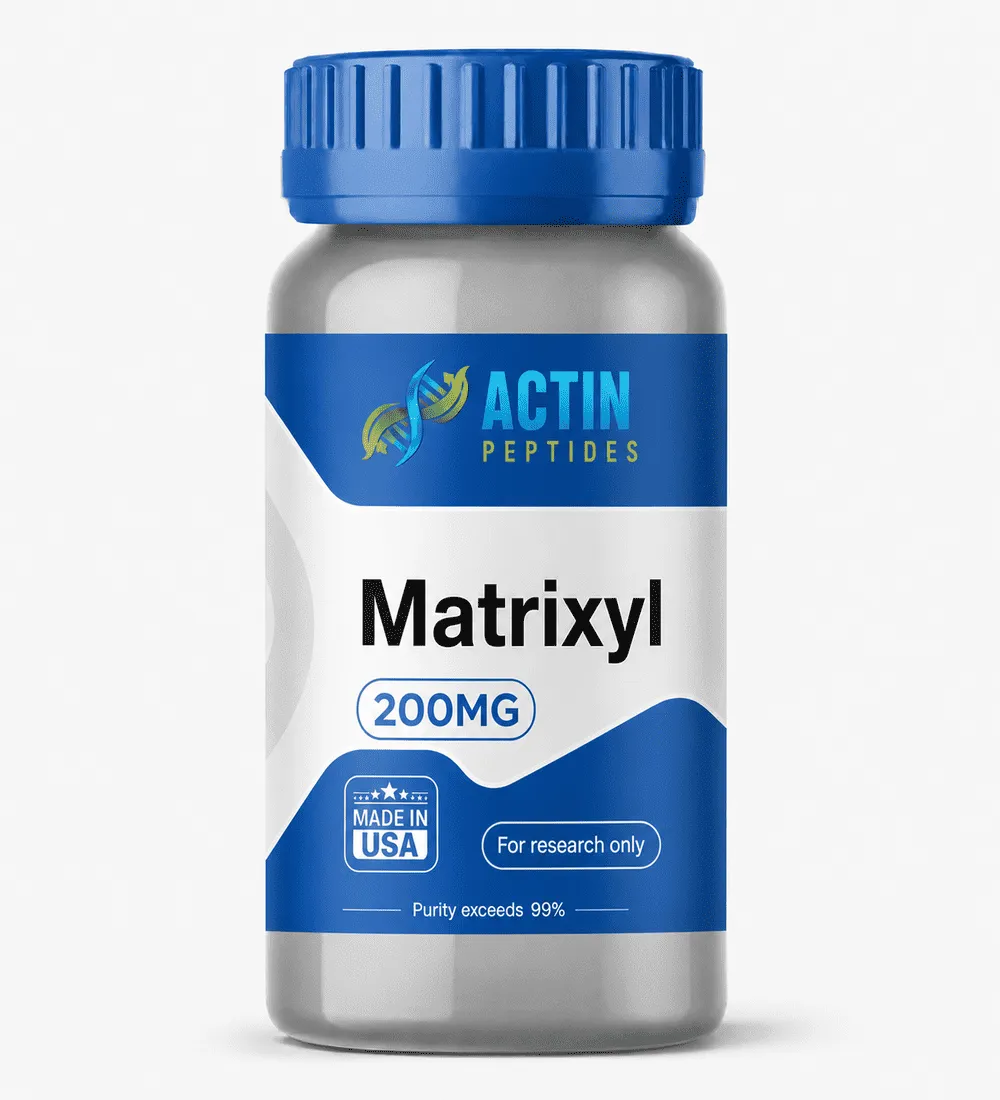
Description
Matrixyl Peptide: Research, Benefits, Mechanism of Action, and Skin Science
What Is Matrixyl Peptide?
Matrixyl® (Palmitoyl Pentapeptide-4) is a synthetic signal peptide widely studied for its potential role in supporting collagen production, skin renewal, and visible signs of skin aging. It belongs to a class of peptides known as matrikines, which are messenger molecules that may communicate with skin cells and influence extracellular matrix (ECM) activity.
Matrixyl consists of a peptide chain attached to a palmitic acid molecule, enhancing its stability and helping improve skin penetration. Researchers have investigated Matrixyl for its potential ability to stimulate fibroblasts, support collagen synthesis, and improve the appearance of wrinkles, fine lines, and skin texture.
Because collagen production naturally declines with age, Matrixyl has become one of the most researched peptides in modern cosmetic science and anti-aging skincare formulations.
How Matrixyl Works
Research suggests Matrixyl acts as a signaling peptide that may mimic fragments naturally released during collagen breakdown.
When fibroblasts detect these peptide fragments, they may interpret them as a signal that tissue repair is needed. This process may stimulate the production of:
- Collagen Type I
- Collagen Type III
- Fibronectin
- Elastin-supporting proteins
- Extracellular matrix components
Scientists believe this signaling mechanism may help support healthier-looking skin and improve visible signs of aging over time.
Matrixyl Chemical Information
| Property | Value |
|---|---|
| Peptide Name | Matrixyl® |
| INCI Name | Palmitoyl Pentapeptide-4 |
| Former Name | Palmitoyl Pentapeptide-3 |
| Molecular Formula | C39H75N7O10 |
| Molecular Weight | 802.05 g/mol |
| Classification | Matrikine Signal Peptide |
Matrixyl Peptide Research Applications
Matrixyl and Collagen Production
One of the primary reasons Matrixyl has gained attention is its potential role in collagen synthesis.
Research suggests Matrixyl may signal fibroblasts to increase production of important structural proteins that help maintain skin firmness and elasticity.
Scientists have observed increases in:
- Collagen formation
- Extracellular matrix proteins
- Fibroblast activity
- Tissue remodeling pathways
These findings have made Matrixyl a key ingredient in anti-aging skincare research.
Matrixyl for Wrinkles
Several studies have investigated Matrixyl’s potential effects on visible skin aging.
Research suggests regular exposure to Matrixyl may help improve:
- Fine lines
- Crow’s feet
- Forehead wrinkles
- Skin roughness
- Overall skin texture
In controlled studies, participants using Matrixyl-containing formulations demonstrated measurable improvements in wrinkle depth and skin smoothness compared to placebo groups.
Matrixyl and Skin Firmness
Collagen and elastin are essential for maintaining youthful-looking skin.
Because Matrixyl may support collagen production, researchers have explored its potential impact on:
- Skin firmness
- Elasticity
- Density
- Structural support
These properties have contributed to Matrixyl’s reputation as one of the leading cosmetic peptides for age-related skin concerns.
Matrixyl and Scar Formation
Emerging research suggests Matrixyl peptides may influence fibroblast behavior during tissue repair.
Studies have indicated that Matrixyl may:
- Reduce α-SMA expression
- Influence fibroblast differentiation
- Support balanced collagen remodeling
- Potentially reduce excessive scar formation
Researchers continue to investigate its role in wound healing and tissue regeneration.
Matrixyl for Skin Repair
Experimental studies have examined Matrixyl’s potential role in wound-healing processes.
Research findings suggest Matrixyl may support:
- Tissue regeneration
- Fibroblast activity
- Collagen remodeling
- Cellular communication involved in repair pathways
Animal studies have reported enhanced wound closure rates compared with untreated controls.
Why Matrixyl Is Popular in Anti-Aging Skincare
Matrixyl has become one of the most widely used cosmetic peptides because it may support multiple aspects of skin health simultaneously:
- Collagen production
- Wrinkle reduction
- Skin firmness
- Elasticity support
- Texture improvement
- Skin repair pathways
Unlike many active ingredients that focus on a single mechanism, Matrixyl is often included in formulations designed to address multiple visible signs of aging.
Frequently Asked Questions About Matrixyl Peptide
What Does Matrixyl Peptide Do?
Matrixyl is a signal peptide that may encourage fibroblasts to produce more collagen and extracellular matrix proteins. Research suggests it may help improve skin firmness, smoothness, and the appearance of fine lines and wrinkles.
Is Matrixyl Better Than Retinol?
Matrixyl and retinol work differently.
Retinol accelerates skin cell turnover, while Matrixyl focuses on signaling collagen production. Many skincare professionals consider them complementary rather than competitors. Matrixyl is often preferred by individuals seeking anti-aging support with less potential irritation.
Can I Use Matrixyl Under My Eyes?
Yes. Matrixyl is commonly included in eye creams and serums because it is generally considered gentle and may help improve the appearance of crow’s feet, fine lines, and skin texture around the eye area.
What Should You Not Use With Matrixyl?
Matrixyl is generally compatible with most skincare ingredients, including:
- Hyaluronic Acid
- Niacinamide
- Vitamin C
- Ceramides
- Peptide Complexes
Some formulators recommend avoiding highly acidic products immediately before peptide application, as extreme pH environments may affect peptide stability.
How Long Does It Take to See Results From Matrixyl?
Results vary depending on formulation and skin condition. Many studies evaluating Matrixyl reported visible improvements in skin texture and wrinkle appearance after approximately 4 to 8 weeks of consistent use.
What Is the Most Effective Peptide for Skin?
There is no single “best” peptide for every skin concern. Popular skincare peptides include:
- Matrixyl® (Palmitoyl Pentapeptide-4)
- Matrixyl 3000®
- Copper Peptides (GHK-Cu)
- Acetyl Hexapeptide-8 (Argireline®)
- Palmitoyl Tripeptide-1
- Palmitoyl Tetrapeptide-7
The most effective choice depends on individual skincare goals.
Can I Use Matrixyl Every Day?
Yes. Matrixyl is commonly used once or twice daily in skincare formulations and is generally considered suitable for long-term use.
What Works 11 Times Faster Than Retinol?
Some marketing claims suggest certain peptide complexes may deliver visible anti-aging benefits faster than retinol in specific studies. However, there is no universally accepted scientific evidence proving that a single ingredient works “11 times faster” than retinol across all measures of skin aging.
What Do Koreans Use Instead of Retinol?
Many Korean skincare formulations emphasize alternatives such as:
- Peptides
- Bakuchiol
- Centella Asiatica
- Ginseng Extract
- Fermented Ingredients
- Growth Factor Complexes
These ingredients are often selected to support skin renewal while minimizing irritation.
Is It Better to Use Matrixyl at Night or Morning?
Matrixyl may be used in the morning, evening, or both. Many skincare routines incorporate Matrixyl twice daily for consistent peptide exposure.
Is Matrixyl Anti-Aging?
Matrixyl is widely regarded as an anti-aging skincare ingredient because research suggests it may support collagen production and help improve visible signs of aging, including wrinkles, fine lines, and loss of skin firmness.
What Should You Apply After Matrixyl?
After applying a Matrixyl serum, many skincare professionals recommend following with:
- Moisturizer
- Hyaluronic Acid
- Ceramide Cream
- Sunscreen (during daytime use)
This may help support hydration and protect the skin barrier.
Why Researchers Study Matrixyl
Matrixyl remains one of the most extensively studied cosmetic peptides due to its potential influence on collagen production and skin repair pathways.
Key research areas include:
- Collagen synthesis
- Wrinkle reduction
- Skin elasticity
- Anti-aging skincare
- Fibroblast signaling
- Scar remodeling
- Tissue repair
- Extracellular matrix health
Its unique signaling mechanism continues to make Matrixyl a cornerstone ingredient in advanced peptide-based skincare formulations.
Research Use Disclaimer
Matrixyl peptide is intended for cosmetic and laboratory research applications. Researchers should review all relevant regulations and product guidelines before use. This information is provided for educational and scientific purposes only and is not intended as medical advice. Please review and adhere to our Terms and Conditions before ordering.
 English
Reviews
There are no reviews yet.