
Description
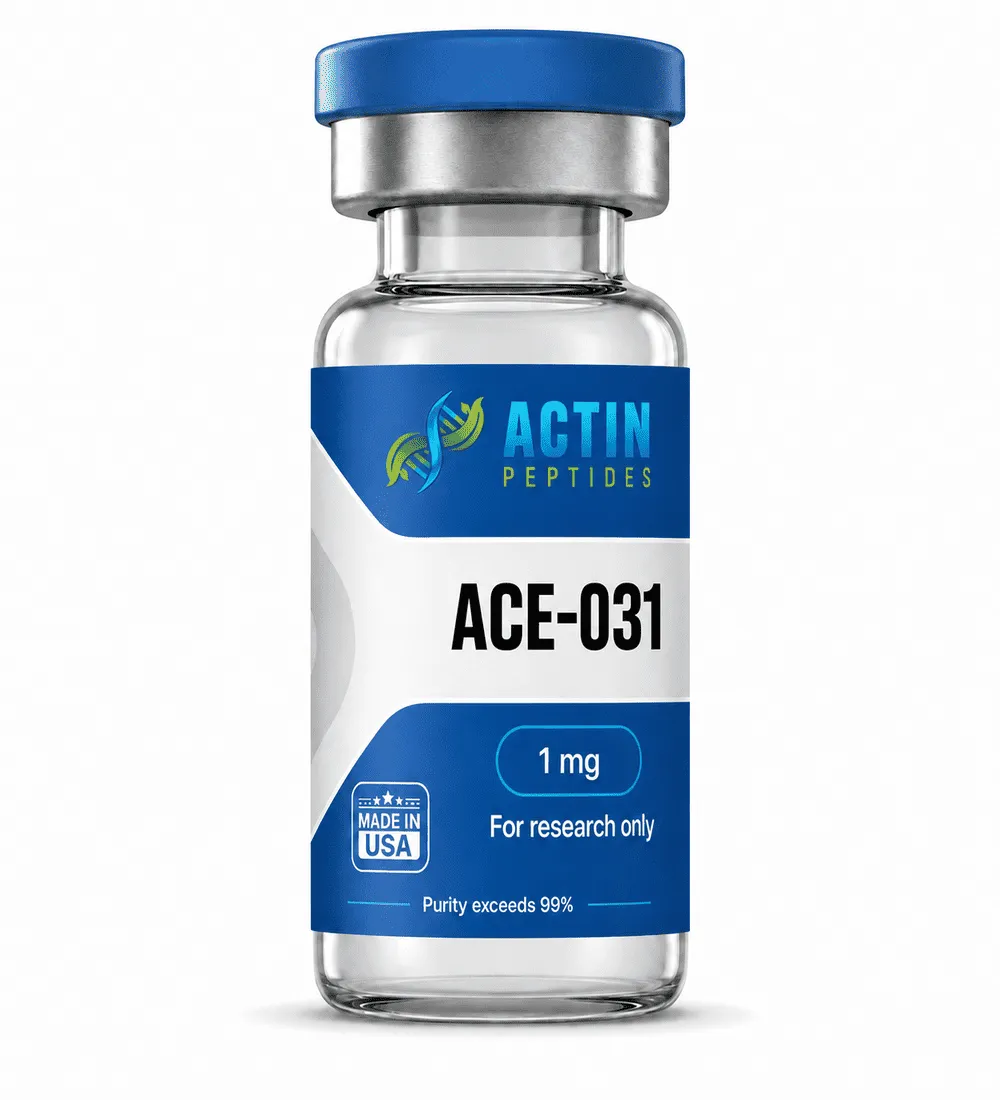
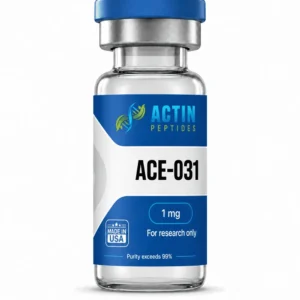
ACE-031 Peptide (ActRIIB-IgG1): Research, Mechanisms, and Scientific Studies
What Is ACE-031 Peptide?
ACE-031 peptide, also known as ActRIIB-IgG1 or soluble activin type IIB receptor, is a recombinant fusion protein designed to bind and neutralize specific members of the transforming growth factor-beta (TGF-β) superfamily, particularly myostatin (GDF-8).
ACE-031 consists of two primary components:
- The extracellular portion of the Activin Receptor Type IIB (ActRIIB)
- A recombinant IgG1 Fc antibody fragment
This unique structure allows ACE-031 to function as a myostatin inhibitor, potentially preventing myostatin from interacting with native ActRIIB receptors located on muscle cells.
Researchers have shown significant interest in ACE-031 because myostatin is considered a major negative regulator of skeletal muscle growth. By binding circulating myostatin and related ligands, ACE-031 may support pathways involved in muscle hypertrophy, body composition, bone metabolism, and energy regulation.
Understanding Myostatin and Muscle Growth
Myostatin, also known as Growth Differentiation Factor-8 (GDF-8), is a naturally occurring protein primarily expressed in skeletal muscle tissue.
Research suggests that myostatin may:
- Limit muscle growth
- Suppress satellite cell activation
- Reduce muscle regeneration
- Influence fat accumulation
- Regulate overall muscle mass
Since its discovery in 1997, myostatin has become one of the most extensively studied targets in muscle biology. Elevated myostatin activity has been associated with reduced muscle development, while reduced myostatin signaling has been linked to increased muscle size in numerous experimental models.
ACE-031 is designed to intercept myostatin and other related ligands before they bind to ActRIIB receptors, potentially allowing muscle growth pathways to remain active.
How ACE-031 Works
ACE-031 acts as a soluble decoy receptor.
Rather than allowing myostatin and related TGF-β family proteins to bind to cell-surface Activin Type IIB receptors, ACE-031 binds these circulating molecules directly.
Researchers suggest this mechanism may:
- Reduce myostatin signaling
- Promote muscle hypertrophy
- Support lean muscle mass development
- Influence bone metabolism
- Affect fat storage and energy utilization
Because ActRIIB receptors interact with multiple growth-regulating ligands, ACE-031 has attracted interest beyond muscle research and is being studied in areas involving metabolism and skeletal health.
Chemical Properties
| Property | Value |
|---|---|
| Peptide Name | ACE-031 |
| Alternative Name | ActRIIB-IgG1 |
| Molecular Formula | C3418H5188N928O1062S38 |
| Molecular Weight | 77,489.82 g/mol |
| Classification | Soluble Activin Type IIB Receptor Fusion Protein |
Research and Scientific Studies
Muscle Growth and Hypertrophy Research
One of the most widely discussed areas of ACE-031 research involves its potential effects on skeletal muscle hypertrophy.
In a double-blind, placebo-controlled study, researchers evaluated the pharmacokinetics and biological effects of ACE-031. The peptide demonstrated an estimated half-life of approximately 10–15 days.
Measurements obtained using:
- Dual-energy X-ray absorptiometry (DEXA)
- Magnetic resonance imaging (MRI)
suggested measurable increases in lean body mass and muscle volume following administration.
Reported observations included:
- Approximately 3.3% increase in total lean body mass
- Approximately 5.1% increase in quadriceps muscle volume
These findings generated significant interest in ACE-031 as a research tool for studying pathways involved in muscle growth and muscle preservation.
Potential Mechanisms Behind Muscle Hypertrophy
Researchers believe ACE-031 may support muscle development by:
- Blocking myostatin signaling
- Enhancing satellite cell activity
- Promoting protein synthesis pathways
- Reducing inhibitory growth signals
Because myostatin normally suppresses muscle development, inhibiting its activity may allow greater activation of pathways involved in muscle growth and regeneration.
Fat Metabolism Research
Research has also explored the relationship between myostatin signaling and obesity.
Several experimental studies have reported elevated levels of myostatin and ActRIIB receptors in obesity models. Increased myostatin activity has been associated with:
- Reduced muscle mass
- Increased fat accumulation
- Lower metabolic activity
Conversely, reduced myostatin signaling has been linked to improvements in body composition.
Potential Effects on Fat Metabolism
Researchers have proposed several mechanisms through which myostatin inhibition may influence fat metabolism.
Increased Fatty Acid Oxidation
Reduced myostatin activity may increase expression of enzymes involved in fatty acid utilization, including:
- CPT1a
- CPT2
Enhanced activity of these enzymes may promote greater fatty acid oxidation and reduce lipid accumulation.
Promotion of Brown Fat Formation
Studies suggest that reduced myostatin signaling may encourage the conversion of white adipose tissue into metabolically active brown or beige fat.
Brown fat contributes to:
- Thermogenesis
- Energy expenditure
- Fat utilization
Experimental findings have indicated that ACE-031 may help reduce obesity-related changes in models consuming high-fat diets.
Muscle Strength and Contractile Force Research
Beyond muscle growth, ACE-031 has also been investigated for its potential influence on muscle performance and contractile force.
Research using magnetic resonance imaging (MRI) and phosphorus magnetic resonance spectroscopy (31P-MRS) examined changes in muscle function following ACE-031 exposure.
Observed Findings
Studies reported:
- Approximately 33% increase in muscle volume
- Increased oxygen consumption
- Increased energy expenditure
- Enhanced contractile force production
Researchers observed:
- Approximately 40% increase in maximum contractile force
- Approximately 24% increase in total contractile force
Interestingly, improvements in force production appeared without significant changes in muscle fiber distribution.
Potential Impact on Muscle Metabolism
Research also suggests that ACE-031 may influence:
- Oxidative metabolism
- Energy utilization
- Mitochondrial activity
Although some findings indicated altered mitochondrial ATP production capacity, the precise implications of these observations remain under investigation.
Bone Density and Skeletal Health Research
ACE-031 has also been studied for its potential effects on bone density and skeletal strength.
One investigation evaluated the peptide in murine models of Duchenne Muscular Dystrophy (DMD), a condition characterized by progressive muscle degeneration and increased fracture risk.
Potential Effects on Bone Tissue
Researchers observed:
- Increased body weight
- Increased muscle mass
- Enhanced bone volume
- Increased trabecular bone number
Micro-CT analysis suggested substantial improvements in femoral bone architecture, including:
- Approximately 80% increase in bone volume
- Approximately 70% increase in trabecular number
Additional observations suggested increases in vertebral bone mass and improvements in overall bone structure.
Potential Influence on Bone Remodeling
Histological analysis indicated:
- Reduced osteoclast activity
- Increased osteoblast marker expression
These findings suggest that ACE-031 may influence both sides of bone remodeling by reducing bone resorption while supporting bone formation.
Researchers also reported improvements in biomechanical testing, including increases in:
- Maximum bone strength
- Bone stiffness
These observations have contributed to ongoing interest in ACE-031 within skeletal biology and bone metabolism research.
Why Researchers Study ACE-031
Interest in ACE-031 stems from its unique ability to target myostatin and related growth-regulating proteins.
Current areas of research include:
- Skeletal muscle growth
- Muscle hypertrophy
- Muscle strength
- Fat metabolism
- Obesity research
- Bone density
- Bone remodeling
- Metabolic regulation
- Duchenne muscular dystrophy research
As scientific understanding continues to advance, ACE-031 remains an important tool for investigating pathways involved in muscle development, body composition, and skeletal health.
Frequently Asked Questions
What is ACE-031?
ACE-031 is a recombinant fusion protein composed of the Activin Receptor Type IIB extracellular domain and an IgG1 Fc fragment. It is commonly studied as a myostatin inhibitor.
How does ACE-031 work?
It functions as a soluble decoy receptor that binds circulating myostatin and related TGF-β family proteins before they can activate native ActRIIB receptors.
Is ACE-031 a myostatin inhibitor?
Yes. Researchers classify ACE-031 as a myostatin inhibitor because it prevents myostatin from activating pathways that normally suppress muscle growth.
What areas of research involve ACE-031?
Current studies have investigated its potential role in:
- Muscle hypertrophy
- Muscle strength
- Fat metabolism
- Bone density
- Skeletal health
- Metabolic regulation
Can ACE-031 affect body composition?
Research suggests that modulation of myostatin signaling may influence both lean muscle mass and fat accumulation. Further studies continue to examine these relationships.
Is ACE-031 being studied for bone health?
Yes. Experimental studies have reported improvements in bone volume, trabecular structure, and biomechanical strength following ACE-031 exposure.
Is ACE-031 approved for human use?
No. ACE-031 is intended exclusively for scientific and laboratory research. It is not approved for human consumption, medical treatment, or therapeutic use.
ACE-031 Peptide for Research Use
ACE-031 peptide is intended strictly for laboratory and scientific research purposes only. It is not approved for human consumption or therapeutic use.
Before placing an order, please review our Terms and Conditions.

 English
Reviews
There are no reviews yet.