
Description
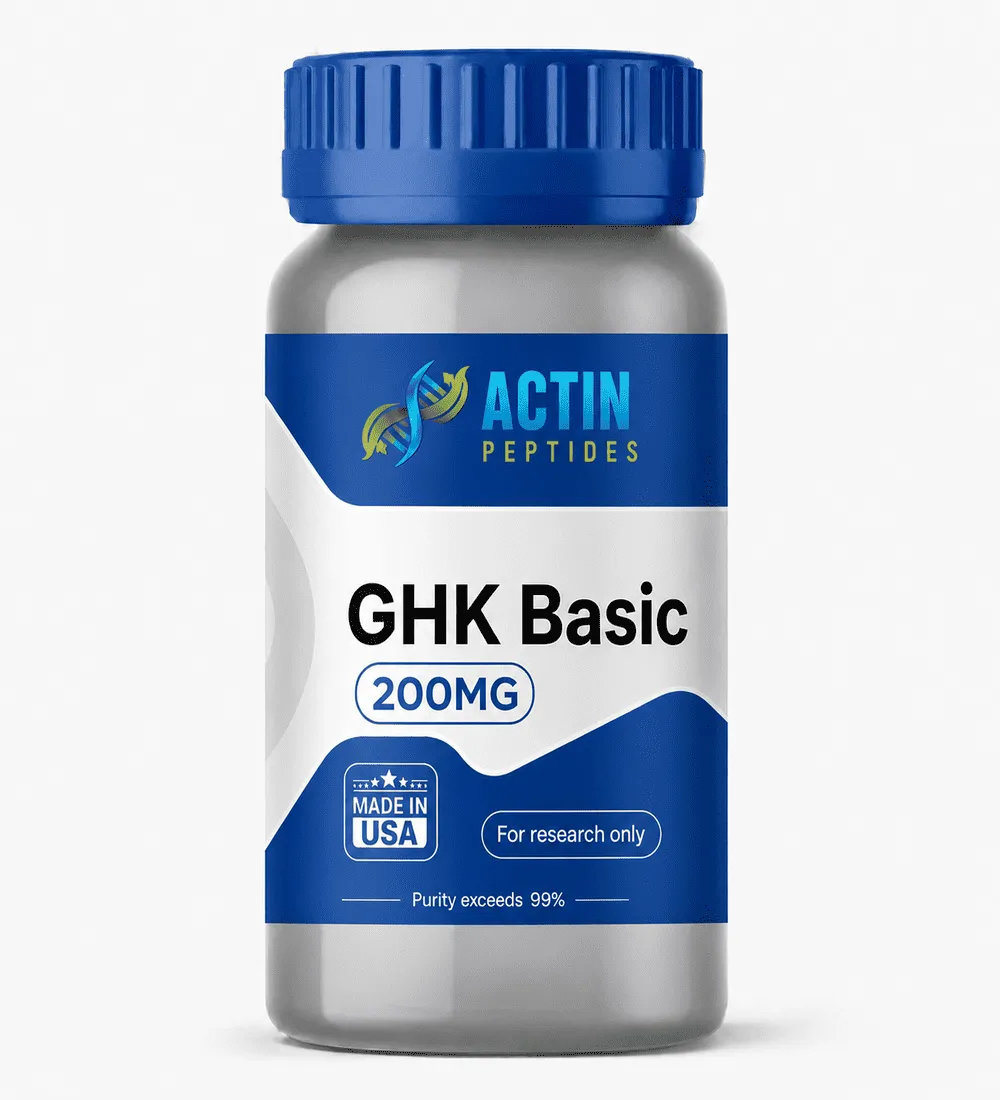
GHK Basic (Tripeptide-1) – Copper-Free GHK Peptide for Research
What Is GHK Basic (Tripeptide-1)?
GHK Basic (Tripeptide-1) is the copper-free form of the naturally occurring tripeptide glycyl-L-histidyl-L-lysine, commonly abbreviated as GHK. It consists of three amino acids—glycine, histidine, and lysine—and has been identified in biological fluids such as plasma, saliva, and urine.
Unlike GHK-Cu, which already contains a coordinated copper ion, GHK Basic is studied as the free peptide. This distinction is important in research because the unbound peptide can interact with copper present in the surrounding experimental environment. Scientists have investigated this copper-binding behavior alongside GHK’s potential roles in extracellular matrix signaling, fibroblast activity, collagen-related processes, cellular migration, and oxidative stress research. (EXOMA Peptides México)
GHK Basic is also known as:
- GHK peptide
- Tripeptide-1
- Gly-His-Lys
- Glycyl-L-histidyl-L-lysine
- Copper-free GHK
- NSC 379527
Because of its small size and endogenous origin, GHK Basic research focuses on how short peptide signals may influence communication between fibroblasts, keratinocytes, endothelial cells, immune cells, and the extracellular matrix.
Overview
GHK Basic is a short, naturally occurring signaling peptide that researchers have studied in the context of tissue remodeling and cellular communication.
The peptide has a strong affinity for copper ions. Therefore, a major distinction between GHK Basic and GHK-Cu is whether copper is already coordinated to the peptide before experimental exposure.
Researchers have investigated the GHK sequence for its possible involvement in:
- Fibroblast activity
- Collagen-related signaling
- Extracellular matrix remodeling
- Cellular migration
- Keratinocyte activity
- Endothelial cell behavior
- Oxidative stress research
- Inflammatory signaling
- Skin and tissue research models
Studies suggest that GHK may act as more than a structural amino acid sequence. It may function as a small biological signal that helps cells respond to changes in the extracellular environment. In particular, research has explored how GHK-related signaling may influence collagen, glycosaminoglycans, proteoglycans, matrix metalloproteinases, and other components involved in tissue remodeling. (PubMed Central (PMC))
For researchers interested in copper peptide biology, comparing free GHK Basic (Tripeptide-1) with copper-bound GHK-Cu may help distinguish peptide-specific activity from effects associated with the copper complex.
What Makes GHK Basic Unique?
GHK Basic is unique because it is the free, copper-unbound form of the GHK tripeptide. This makes it useful for research examining how the peptide interacts with copper and how copper availability may influence extracellular matrix and cellular signaling pathways. (EXOMA Peptides México)
Its small size is another point of scientific interest. GHK contains only three amino acids:
Glycine – Histidine – Lysine
Despite this simple structure, scientists have investigated the peptide’s interactions with several complex biological processes, particularly those involving fibroblasts, collagen organization, oxidative stress, and tissue remodeling.
GHK Basic (Tripeptide-1) Mechanism of Action
Copper Binding and Biological Signaling
One of the most studied characteristics of GHK Basic is its affinity for copper.
The histidine residue within the GHK sequence can contribute to copper coordination, allowing the peptide to form copper-associated complexes under appropriate conditions. The resulting GHK-Cu complex has been studied extensively in tissue and skin research.
This creates an important experimental distinction:
- GHK Basic: Free tripeptide without pre-coordinated copper
- GHK-Cu: GHK peptide already complexed with copper
Therefore, scientists may study GHK Basic to investigate how peptide activity changes when copper is introduced separately or is available from the surrounding environment.
Extracellular Matrix and Collagen Signaling
Research suggests that GHK-related signaling may influence the extracellular matrix (ECM).
The ECM provides structural and biochemical support for surrounding cells. Important components include:
- Collagen
- Elastin
- Glycosaminoglycans
- Proteoglycans
- Fibronectin
Scientists have investigated GHK because the sequence may occur as a peptide fragment associated with collagen degradation and tissue remodeling. The presence of such fragments may provide information to nearby cells about changes in the surrounding tissue environment.
Research suggests that GHK may influence:
- Fibroblast behavior
- Collagen-related protein synthesis
- Glycosaminoglycan production
- Metalloproteinase activity
- Extracellular matrix turnover
These processes have made the peptide relevant to Matrixyl research, SYN-COLL research, and other peptide models focused on extracellular matrix biology.
Fibroblast and Keratinocyte Research
Fibroblasts are central to connective tissue research because they synthesize and organize important extracellular matrix components.
Studies indicate that GHK-related compounds may influence fibroblast activity, including cell proliferation and extracellular matrix production. Researchers have also investigated possible interactions with keratinocytes, the primary cell type found in the epidermis.
This combination makes GHK Basic relevant to laboratory studies involving:
- Cell migration
- Extracellular matrix production
- Collagen organization
- Skin cell models
- Tissue remodeling
- Cellular recovery following experimental stress
Recent research has also examined GHK-based peptide modifications designed to increase interactions with cell surfaces, with results suggesting enhanced antioxidative, anti-apoptotic, and in-vitro skin repair activity compared with unmodified GHK in specific experimental systems. (PubMed)
Oxidative Stress and Inflammatory Signaling
Scientists have also investigated GHK and GHK-related complexes for possible interactions with oxidative stress.
Oxidative stress occurs when reactive molecules exceed the capacity of cellular antioxidant systems. Experimental research has examined whether GHK-related signaling may influence:
- Reactive oxygen species
- Antioxidant enzyme activity
- Lipid oxidation
- Iron-related oxidative processes
- Inflammatory signaling pathways
Research involving GHK-based compounds has explored pathways associated with NF-κB and p38 MAPK, as well as changes in inflammatory cytokine signaling under experimental conditions.
These findings have also created research interest in comparing GHK Basic with GHK-Cu, because copper coordination may influence the peptide’s biological behavior.
Chemical Makeup of GHK Basic (Tripeptide-1)
| Property | Specification |
|---|---|
| Primary Name | GHK Basic |
| Peptide Name | Tripeptide-1 |
| Amino Acid Sequence | Gly-His-Lys |
| Systematic Name | Glycyl-L-histidyl-L-lysine |
| Molecular Formula | C14H24N6O4 |
| Molecular Weight | 340.4 g/mol |
| Peptide Length | 3 amino acids |
| Copper Status | Copper-free / uncomplexed |
| Other Names | Tripeptide-1, GHK, NSC 379527 |
GHK Basic differs from GHK-Cu because it does not contain a pre-coordinated copper ion.
GHK Basic Research and Scientific Studies
GHK Basic and Wound-Healing Research
Study Objective
Researchers have investigated GHK and GHK-derived formulations to better understand their effects on cellular migration, extracellular matrix remodeling, vascular development, and wound-model closure.
Methodology
Experimental studies have examined GHK in animal models, collagen matrices, and cellular systems. Some research has incorporated modified GHK into biomaterial scaffolds to improve peptide localization and delivery.
Findings
Research models have associated GHK exposure with changes involving:
- Fibroblast activity
- Cellular migration
- Collagen deposition
- Granulation tissue
- Vascular development
- Antioxidant enzyme expression
For example, GHK incorporated into a collagen-based experimental matrix was associated with greater wound contraction, cell proliferation, and antioxidant enzyme activity than comparator groups in a rat wound model. The researchers also observed increased copper concentration at the experimental site, supporting the hypothesis that both peptide signaling and copper localization may contribute to observed effects. (PubMed)
Scientific Significance
These findings suggest that GHK Basic research may be particularly relevant to studying how peptide fragments interact with the extracellular matrix and how peptide delivery systems influence local cellular responses.
GHK Basic and Collagen Production Research
Study Objective
Scientists have investigated whether GHK-related signaling can influence the production and organization of extracellular matrix components.
Methodology
Researchers have studied fibroblast cultures and skin-related research models exposed to GHK or GHK-derived compounds.
Findings
Research suggests possible effects on:
- Collagen-related synthesis
- Glycosaminoglycan production
- Proteoglycan expression
- Fibroblast proliferation
- Extracellular matrix remodeling
GHK research is especially interesting because the peptide sequence has been associated with collagen biology and may act as a small signal released during extracellular matrix turnover. (PubMed Central (PMC))
Scientific Significance
This has made Tripeptide-1 a relevant research compound for studies involving Matrixyl, SYN-COLL, and GHK-Cu when researchers examine different approaches to peptide-mediated extracellular matrix signaling.
GHK Basic and Skin Cell Research
Study Objective
Scientists have explored whether GHK-related peptides can influence fibroblasts, keratinocytes, and other cells involved in skin-model research.
Methodology
Cell culture studies have examined peptide exposure using migration assays, scratch models, and cellular signaling measurements.
Findings
Experimental data suggest that GHK may influence:
- Fibroblast migration
- Keratinocyte activity
- Collagen-related signaling
- Glycosaminoglycan secretion
- Cellular responses to oxidative stress
Recent laboratory work has also investigated modified GHK peptides engineered to improve cell-surface interactions. These modified versions showed stronger effects than unmodified GHK in certain experimental antioxidant and skin-model assays. (PubMed)
Scientific Significance
These results support continued research into how GHK Basic interacts with cellular surfaces and whether delivery systems or peptide modifications alter its experimental behavior.
GHK Basic and Oxidative Stress Research
Study Objective
Researchers have investigated whether GHK-related compounds may influence oxidative stress markers and cellular antioxidant responses.
Methodology
Studies have used cellular and animal models exposed to oxidative or inflammatory stimuli.
Findings
Research involving GHK and GHK-related compounds has reported changes in:
- Reactive oxygen species
- Superoxide dismutase activity
- Lipid oxidation
- Inflammatory cytokine signaling
- NF-κB-related pathways
However, researchers should distinguish findings obtained with free GHK from findings obtained with GHK-Cu, because copper coordination can alter chemical behavior and biological activity.
Scientific Significance
The copper-free nature of GHK Basic (Tripeptide-1) makes it particularly useful for comparative research designed to examine how copper availability influences peptide-mediated cellular signaling.
GHK Basic and Gene Expression Research
Scientists have also investigated GHK-related compounds as potential modulators of gene expression.
Research suggests that GHK-associated signaling may influence genes involved in:
- Extracellular matrix organization
- Inflammatory regulation
- Cellular stress responses
- Growth factor signaling
- Collagen metabolism
- Antioxidant activity
Gene-expression research remains an important area because it may help explain how a very small tripeptide can influence complex cellular behavior.
Importantly, most mechanistic evidence remains based on laboratory, cellular, animal, and formulation-specific research rather than demonstrating a single established mechanism across all experimental systems.
GHK Basic vs. GHK-Cu
| Feature | GHK Basic (Tripeptide-1) | GHK-Cu |
|---|---|---|
| Peptide | Gly-His-Lys | Gly-His-Lys |
| Copper | Not pre-coordinated | Coordinated with copper |
| Molecular Structure | Free tripeptide | Copper-peptide complex |
| Primary Research Interest | Copper binding and peptide signaling | Copper-mediated peptide signaling |
| Common Research Areas | ECM biology, fibroblasts, cellular signaling | Collagen, skin models, angiogenesis, oxidative stress |
The main difference is straightforward: GHK Basic provides the free peptide, while GHK-Cu provides GHK with copper already complexed to the molecule.
Researchers investigating copper peptide biology may use both to explore the role of copper coordination in cellular signaling.
What Is GHK Basic (Tripeptide-1) Researched For?
GHK Basic (Tripeptide-1) is researched primarily for its potential roles in extracellular matrix signaling, fibroblast activity, collagen-related processes, cellular migration, oxidative stress, and peptide–copper interactions.
Key areas of interest include:
- Peptide research
- Skin cell models
- Fibroblast research
- Collagen production research
- Extracellular matrix remodeling
- Cellular signaling
- Oxidative stress research
- Inflammatory signaling
- Copper-binding studies
For hair and follicular research involving copper peptides, researchers may also compare GHK-related compounds with AHK-Cu and GHK-Cu.
What Makes GHK Basic Different From Other Research Peptides?
GHK Basic is a naturally occurring three-amino-acid peptide studied in its copper-free form. Its strong copper-binding affinity makes it especially useful for research investigating how copper availability may influence peptide activity and extracellular matrix signaling.
Unlike larger peptides, GHK has an extremely simple molecular structure. Nevertheless, research has connected GHK-related signaling to several interconnected processes involving fibroblasts, endothelial cells, keratinocytes, collagen, extracellular matrix turnover, and oxidative stress.
Buy GHK Basic (Tripeptide-1) for Research
Researchers looking to buy GHK Basic should verify product identity, purity documentation, storage requirements, and intended laboratory application before ordering.
When evaluating GHK Basic peptide for sale, it is important to distinguish clearly between:
- Free GHK / Tripeptide-1
- GHK-Cu
- Other copper peptides
- Palmitoylated GHK derivatives
These compounds may share the same core GHK sequence while exhibiting different chemical and biological properties in research environments.
FAQ: GHK Basic (Tripeptide-1)
What is GHK Basic?
GHK Basic is the copper-free form of the naturally occurring tripeptide glycyl-L-histidyl-L-lysine, also known as GHK or Tripeptide-1.
Is GHK Basic the same as GHK-Cu?
No. GHK Basic is the free, uncomplexed peptide, while GHK-Cu contains GHK coordinated with a copper ion.
What is GHK Basic researched for?
Research has investigated GHK Basic in relation to extracellular matrix remodeling, fibroblast behavior, collagen-related signaling, cellular migration, oxidative stress, and copper-peptide interactions.
Does GHK Basic contain copper?
GHK Basic does not contain pre-coordinated copper. However, the peptide has a strong affinity for copper and may form copper complexes when copper is available in an experimental system.
What is Tripeptide-1?
Tripeptide-1 is another name for the GHK sequence, which consists of glycine, histidine, and lysine.
What is the molecular weight of GHK Basic?
The molecular weight of GHK Basic is approximately 340.4 g/mol.
What is the molecular formula of GHK Basic?
The molecular formula is C14H24N6O4.
Conclusion
GHK Basic (Tripeptide-1) is the copper-free form of the naturally occurring GHK tripeptide and is being researched for its interactions with copper, fibroblasts, extracellular matrix signaling, collagen-related processes, cellular migration, and oxidative stress pathways.
Its small structure does not make its research profile simple. Instead, GHK has become an important model for studying how short peptide fragments may influence complex cellular communication networks. The distinction between free GHK and copper-bound GHK-Cu is particularly important when interpreting experimental findings.
Current research remains largely experimental, and scientists continue to investigate how GHK’s peptide structure, copper-binding properties, concentration, delivery method, and research environment influence observed biological effects.
Research Disclaimer
GHK Basic (Tripeptide-1) is available strictly for research and laboratory purposes only. It is not approved for human consumption, therapeutic use, or diagnostic applications. Please review our Terms and Conditions before placing an order.
Would you like the next version optimized as product page SEO copy, long-form blog content, or WooCommerce description + meta title/meta description?
 English
 French
Reviews
There are no reviews yet.