
Description
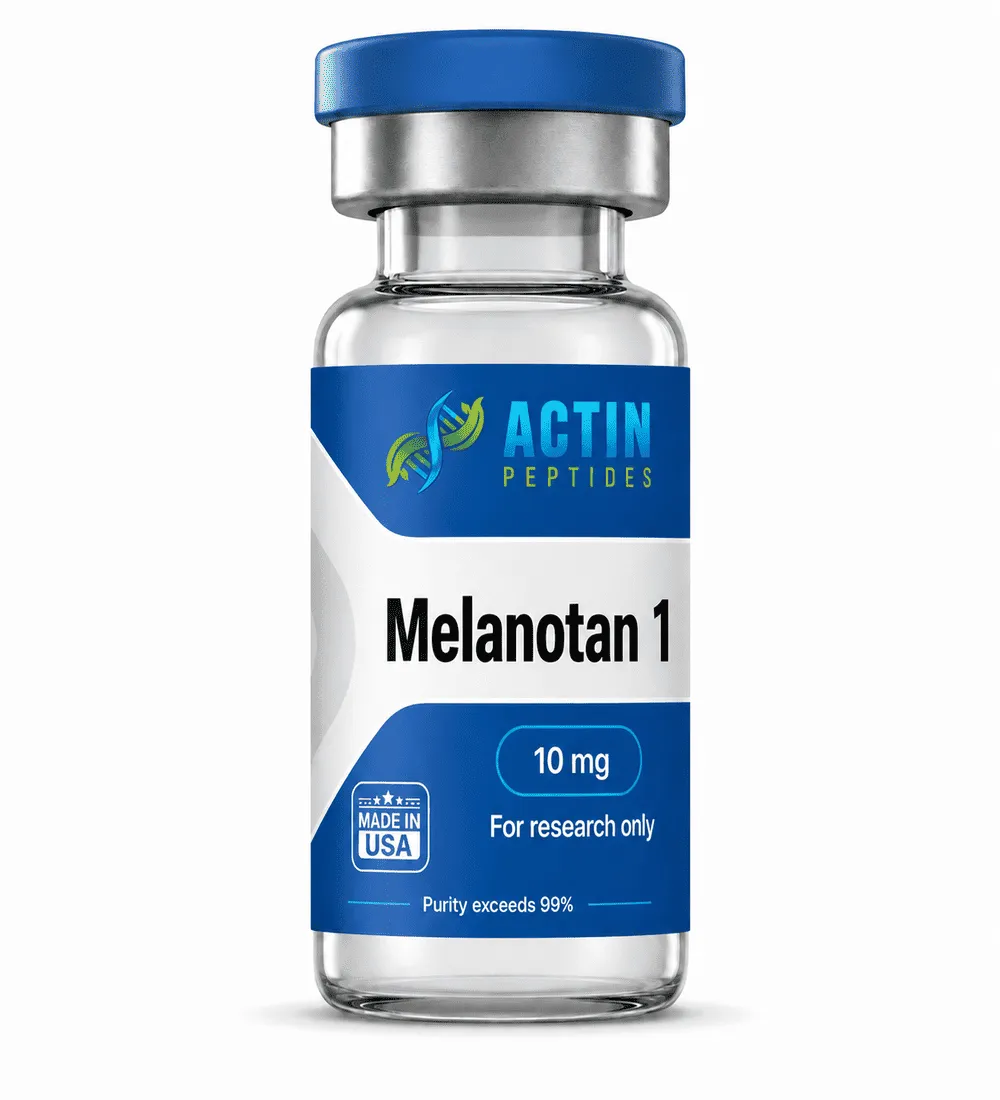
Melanotan 1 Peptide (Afamelanotide): Research, Mechanism of Action, Benefits, and Scientific Studies
What Is Melanotan 1?
Melanotan 1, also known as Afamelanotide, is a synthetic analog of the naturally occurring hormone alpha-melanocyte-stimulating hormone (α-MSH). Researchers developed Melanotan 1 to mimic the biological activity of α-MSH while providing greater stability and a longer duration of action.
The peptide contains 13 amino acids and differs from natural α-MSH by two amino acid substitutions. These modifications are believed to enhance receptor affinity and increase resistance to enzymatic degradation.
Melanotan 1 has been extensively studied for its interaction with the melanocortin system, particularly the melanocortin-1 receptor (MC1R), which plays a critical role in melanin production, pigmentation, and the skin’s response to ultraviolet (UV) radiation.
How Melanotan 1 Works
Research suggests that Melanotan 1 acts by binding to melanocortin receptors, primarily MC1R receptors found on melanocytes.
When activated, MC1R signaling may stimulate the production of eumelanin, the darker form of melanin associated with natural photoprotection. Increased eumelanin production may contribute to:
- Enhanced skin pigmentation
- Increased UV resistance
- Improved cellular defense mechanisms
- Activation of DNA repair pathways
- Reduced susceptibility to UV-induced damage
Researchers believe this mechanism may explain why Melanotan 1 continues to be investigated in studies involving pigmentation and photoprotection.
Melanotan 1 Chemical Information
| Property | Value |
|---|---|
| Peptide Name | Melanotan 1 |
| Alternate Name | Afamelanotide |
| Abbreviation | MT-1 |
| Molecular Formula | C78H111N21O19 |
| Molecular Weight | 1646.87 g/mol |
| Classification | Melanocortin Receptor Agonist |
Understanding the Melanocortin System
The melanocortin system consists of five known receptors:
MC1R
Associated primarily with skin and hair pigmentation through melanin production.
MC2R
Located primarily in the adrenal cortex and involved in cortisol-related signaling.
MC3R
Associated with appetite regulation and energy balance.
MC4R
Linked to energy homeostasis, feeding behavior, and neurological pathways.
MC5R
Found throughout multiple tissues and believed to participate in various exocrine functions.
Among these receptors, Melanotan 1 demonstrates the strongest affinity toward MC1R, making it particularly interesting for pigmentation-related research.
Melanotan 1 Research Applications
Melanotan 1 and Skin Pigmentation
One of the most extensively studied properties of Melanotan 1 is its potential ability to stimulate eumelanin production.
Research suggests activation of MC1R may trigger intracellular signaling pathways involving cyclic AMP (cAMP), which subsequently activates melanogenesis-related proteins and enzymes.
Scientists have observed increased pigmentation responses in studies involving Melanotan 1, even in the absence of significant sun exposure.
Because eumelanin is considered the body’s natural defense against UV radiation, researchers continue to investigate Melanotan 1’s role in supporting photoprotective pathways.
Melanotan 1 and UV Protection Research
Melanin functions as a natural biological shield against ultraviolet radiation.
Research suggests that increased eumelanin production may help:
- Absorb UV radiation
- Reduce oxidative stress
- Support DNA repair mechanisms
- Improve cellular resilience following UV exposure
Several studies have explored Melanotan 1’s potential role in enhancing the skin’s natural protective responses to sunlight.
Melanotan 1 and MC1R Signaling
MC1R activation influences multiple biological pathways beyond pigmentation.
Research indicates that MC1R signaling may contribute to:
- Cellular repair processes
- Genomic stability
- Anti-inflammatory responses
- Protection against oxidative stress
Scientists continue to investigate whether enhanced MC1R activity may provide benefits extending beyond visible pigmentation.
Melanotan 1 and Inflammation Research
Emerging research suggests that α-MSH analogs such as Melanotan 1 may possess anti-inflammatory properties.
Experimental studies have reported that melanocortin receptor activation may influence:
- Pro-inflammatory cytokine activity
- Fibrotic signaling pathways
- Cellular adhesion molecules
- Tissue remodeling processes
Researchers have explored these mechanisms in models involving inflammatory and fibrotic conditions.
Melanotan 1 and Erythropoietic Protoporphyria (EPP)
One of the most notable areas of clinical research involving Afamelanotide has been Erythropoietic Protoporphyria (EPP), a rare condition characterized by extreme sensitivity to sunlight.
Clinical investigations reported that participants receiving Afamelanotide were able to tolerate significantly more time in direct sunlight compared to placebo groups.
These findings contributed to growing scientific interest in Melanotan 1’s photoprotective mechanisms.
Melanotan 1 and Sunlight Exposure
Multiple clinical studies have examined how Melanotan 1 interacts with UV exposure.
Researchers observed that participants receiving Melanotan 1 often demonstrated:
- Increased melanin production
- Enhanced pigmentation responses
- More pronounced tanning effects
- Greater UV tolerance
These observations support the theory that Melanotan 1 may amplify the body’s natural melanogenic pathways.
Why Researchers Study Melanotan 1
Melanotan 1 remains an important peptide in scientific research because of its potential influence on:
- Melanin production
- Skin pigmentation
- UV protection
- MC1R signaling
- Photoprotection
- Oxidative stress pathways
- Cellular repair mechanisms
- Inflammatory responses
Its highly selective action on melanocortin receptors continues to make it a valuable tool in pigmentation and dermatological research.
Frequently Asked Questions About Melanotan 1
What Is Melanotan 1 Used For?
In research settings, Melanotan 1 is primarily studied for its ability to stimulate melanin production and activate melanocortin receptors involved in pigmentation and photoprotection.
How Long Does a Melanotan 1 Tan Last?
Research observations suggest that increased pigmentation may persist for several weeks or months depending on melanin levels, sun exposure, skin type, and individual biological factors.
Does Melanotan 1 Change Eye Color?
There is no conclusive scientific evidence demonstrating that Melanotan 1 permanently changes eye color. Most research focuses on skin pigmentation and melanocyte activity.
What Are the Benefits of MT-1?
Researchers have investigated Melanotan 1 for its potential role in:
- Increasing melanin production
- Supporting UV resistance
- Enhancing pigmentation
- Activating MC1R pathways
- Promoting photoprotective responses
- Supporting cellular defense mechanisms
Does Melanotan 1 Work Without Sun Exposure?
Research suggests Melanotan 1 may stimulate melanin production independently of UV exposure. However, studies indicate pigmentation effects are often enhanced when combined with sunlight or UV exposure.
Which Is Better: Melanotan 1 or Melanotan 2 for Weight Loss?
Neither Melanotan 1 nor Melanotan 2 is approved for weight loss purposes.
While Melanotan 2 interacts more strongly with receptors involved in appetite regulation, Melanotan 1 is generally considered more selective for pigmentation-related MC1R receptors.
Does Melanotan 1 Darken Hair?
Because MC1R receptors influence pigmentation pathways, researchers have speculated that melanocortin signaling may affect hair pigmentation. However, evidence remains limited and further studies are needed.
What Are the Results of Melanotan 1?
Research findings commonly report:
- Increased eumelanin production
- Enhanced skin pigmentation
- Improved tanning responses
- Increased UV tolerance
- Activation of melanocortin signaling pathways
The extent of these effects may vary based on individual biological factors and research conditions.
Melanotan 1 vs Melanotan 2
Although both peptides belong to the melanocortin family, they differ significantly:
| Feature | Melanotan 1 | Melanotan 2 |
|---|---|---|
| Primary Target | MC1R | Multiple MCRs |
| Main Research Focus | Pigmentation & UV Protection | Pigmentation & Broad Melanocortin Activity |
| Selectivity | High | Lower |
| Alternate Name | Afamelanotide | MT-2 |
Researchers generally consider Melanotan 1 to be the more selective melanocortin receptor agonist.
Research Use Disclaimer
Melanotan 1 (Afamelanotide) is intended strictly for laboratory and scientific research purposes. It is not approved for human consumption, diagnosis, treatment, or prevention of any disease unless specifically authorized by regulatory agencies. Researchers should review all applicable regulations and guidelines before conducting studies involving this peptide. Please review and adhere to our Terms and Conditions before ordering.
 English
Reviews
There are no reviews yet.