
Description
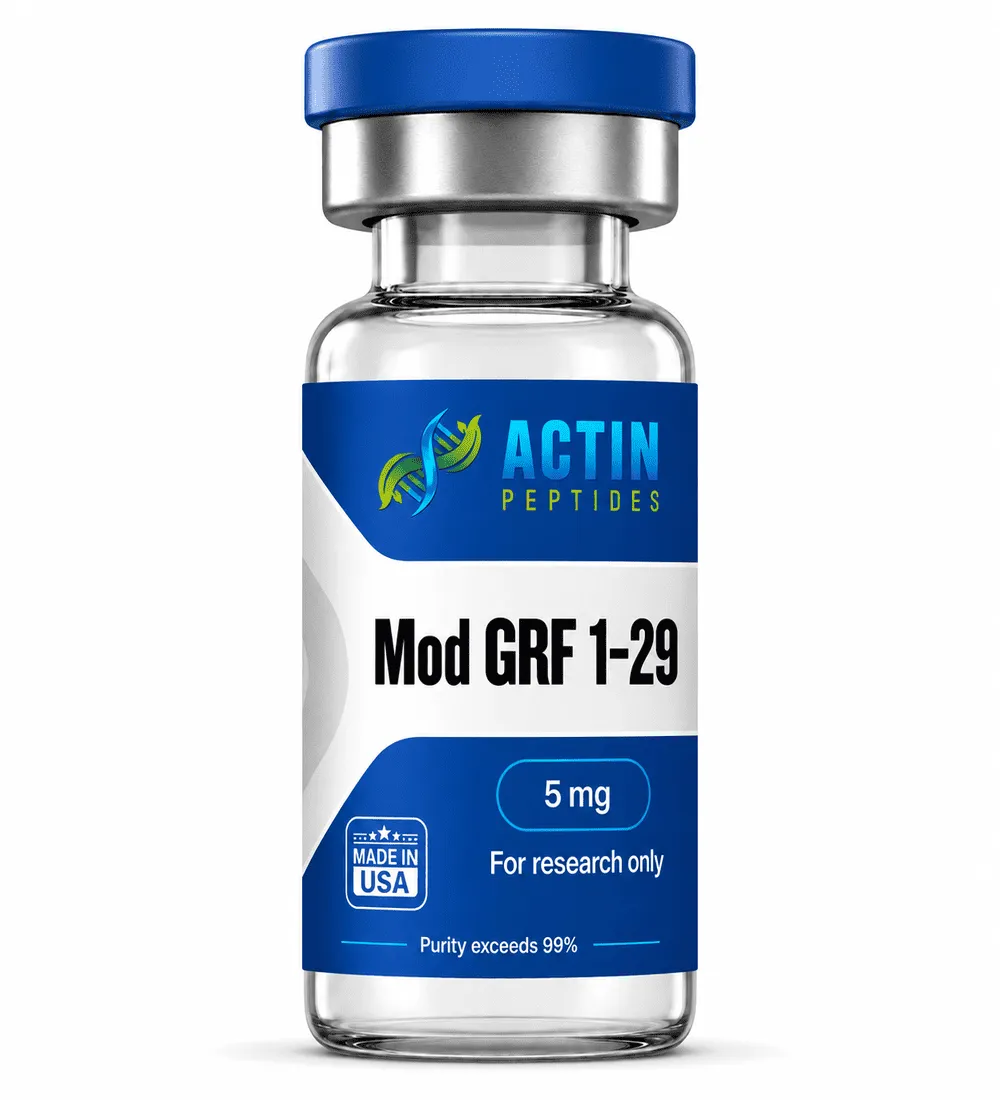
CJC-1295 No DAC (Mod GRF 1-29) Peptide – Research Overview
Introduction
CJC-1295 No DAC, also known as Modified GRF (1-29) or Mod GRF 1-29, is a synthetic 29-amino-acid analog of growth hormone-releasing hormone (GHRH). Scientists designed this peptide from the biologically active N-terminal region of GHRH and introduced four amino-acid substitutions to improve resistance to enzymatic degradation.
The naming of this research compound can create confusion. CJC-1295 No DAC, Modified GRF (1-29), Mod GRF 1-29, and tetrasubstituted GRF (1-29) commonly refer to the same short-acting peptide backbone. In contrast, CJC-1295 with a Drug Affinity Complex (DAC) contains an additional albumin-binding component and has substantially different pharmacokinetic characteristics.
CJC-1295 No DAC research primarily examines the GHRH receptor, anterior pituitary signaling, growth hormone secretion, growth hormone pulsatility, insulin-like growth factor-1 (IGF-1), and the broader GH–IGF-1 signaling axis. Because the peptide lacks DAC, researchers have studied it as a shorter-acting GHRH analog rather than as the prolonged-acting DAC-bearing compound.
What Is CJC-1295 No DAC?
CJC-1295 No DAC is a tetra-substituted analog of GHRH (1-29), the 29-amino-acid fragment of growth hormone-releasing hormone that retains biological activity at the GHRH receptor.
The peptide contains four modifications intended to improve molecular stability. It lacks the Drug Affinity Complex (DAC) found in conventional long-acting CJC-1295.
Researchers also refer to the compound as:
- Modified GRF (1-29)
- Mod GRF 1-29
- CJC-1295 without DAC
- Tetrasubstituted GRF (1-29)
- Modified GHRH (1-29)
Therefore, CJC-1295 No DAC and Mod GRF 1-29 generally describe the same research peptide, while CJC-1295 with DAC represents a chemically distinct, longer-acting version.
Overview of CJC-1295 No DAC and Mod GRF 1-29
Native human GHRH contains 44 amino acids. However, early peptide research established that the first 29 amino acids contain the primary receptor-binding and growth hormone-releasing activity.
This shorter sequence became known as GRF (1-29).
The native GRF (1-29) fragment is rapidly degraded by enzymes. Scientists subsequently investigated structural modifications that could improve resistance to enzymatic and chemical breakdown while preserving activity at the GHRH receptor.
Modified GRF (1-29) contains substitutions at positions 2, 8, 15, and 27:
- Position 2: L-alanine → D-alanine
- Position 8: Asparagine → glutamine
- Position 15: Glycine → alanine
- Position 27: Methionine → leucine
These changes have been investigated for their potential to:
- Increase resistance to enzymatic degradation
- Improve resistance to DPP-4-mediated cleavage
- Reduce chemical instability
- Reduce oxidation-related degradation
- Extend the peptide’s research half-life relative to native GRF (1-29)
Unlike DAC-bearing CJC-1295, Mod GRF 1-29 does not contain an albumin-binding Drug Affinity Complex. As a result, its research profile is associated with shorter-duration receptor stimulation and growth hormone pulsatility rather than prolonged systemic exposure.
How Does CJC-1295 No DAC Work?
Research suggests that CJC-1295 No DAC works by interacting with the growth hormone-releasing hormone receptor (GHRHR) on somatotroph cells in the anterior pituitary.
GHRH receptor activation may initiate intracellular signaling involving G proteins and cyclic adenosine monophosphate (cAMP). These pathways may contribute to growth hormone synthesis and secretion.
Because the peptide lacks the long-acting DAC component, scientists generally distinguish its shorter research activity profile from that of CJC-1295 with DAC.
GHRH Receptor Interaction
The GHRH receptor (GHRHR) is expressed primarily on somatotroph cells in the anterior pituitary gland.
Research suggests the following sequence:
- Modified GRF (1-29) interacts with the GHRH receptor.
- The receptor undergoes a conformational change.
- Intracellular G proteins may become activated.
- Secondary signaling molecules, including cAMP, may increase.
- Protein kinases may activate downstream cellular targets.
- Growth hormone-containing secretory vesicles may undergo exocytosis.
Through this process, GHRH analogs have been investigated for their ability to influence growth hormone secretion and pulsatile GH signaling.
CJC-1295 No DAC and cAMP Signaling
The primary cellular mechanism associated with GHRH receptor activation involves G-protein signaling and cyclic AMP (cAMP).
When the GHRH receptor is activated, adenylyl cyclase activity may increase. This process may elevate intracellular cAMP and activate protein kinase A (PKA).
Downstream signaling may influence:
- Growth hormone synthesis
- Growth hormone secretion
- Transcription factor activity
- Somatotroph cell signaling
- GH-related gene expression
This mechanism distinguishes CJC-1295 No DAC from growth hormone secretagogues, which may stimulate GH release through different receptors and signaling systems.
CJC-1295 No DAC and Growth Hormone Pulsatility
CJC-1295 No DAC has been studied as a shorter-acting GHRH analog associated with pulsatile growth hormone signaling.
The natural growth hormone system operates through pulses rather than continuous secretion. Because Modified GRF (1-29) lacks the albumin-binding DAC extension, researchers distinguish it from the DAC-bearing form that produces substantially more prolonged exposure.
The shorter activity profile has made Mod GRF 1-29 relevant to research investigating:
- Growth hormone pulsatility
- Somatotroph signaling
- GH secretion dynamics
- GHRH receptor activity
- The GH–IGF-1 axis
However, direct human clinical research specifically investigating the no-DAC molecule remains limited. Findings from DAC-bearing CJC-1295 or related GHRH analogs should not automatically be treated as direct evidence for Mod GRF 1-29.
CJC-1295 No DAC vs CJC-1295 With DAC
CJC-1295 No DAC
CJC-1295 No DAC:
- Is also known as Modified GRF (1-29)
- Contains 29 amino acids
- Contains four stabilizing substitutions
- Does not contain a Drug Affinity Complex
- Has a shorter research activity profile
- Has been studied in relation to pulsatile GHRH receptor signaling
CJC-1295 With DAC
CJC-1295 with DAC:
- Contains the modified GHRH backbone plus a DAC component
- Uses an albumin-binding strategy to prolong circulation
- Has a substantially longer research half-life
- Has different pharmacokinetic characteristics
What makes CJC-1295 No DAC unique is its combination of structural stabilization and the absence of the DAC extension. This distinction is critical when reviewing peptide research, because studies involving the DAC-bearing compound do not necessarily apply directly to Modified GRF (1-29).
Chemical Makeup
| Property | CJC-1295 No DAC / Mod GRF 1-29 |
|---|---|
| Molecular Formula | C152H252N44O42 |
| Molecular Weight | Approximately 3367.9 g/mol |
| Amino Acid Length | 29 amino acids |
| Peptide Class | Modified GHRH analog |
| Other Names | Modified GRF (1-29), Mod GRF 1-29, CJC-1295 without DAC |
| DAC | Not present |
| Parent Hormone | Growth hormone-releasing hormone (GHRH) |
Research and Studies on CJC-1295 No DAC
CJC-1295 No DAC and the Pituitary Gland
Study Objective
Researchers have investigated how modified GHRH peptides interact with the anterior pituitary and influence growth hormone secretion.
Methodology
Experimental research examining GHRH receptor activity has evaluated how modified GRF analogs interact with somatotroph cells and intracellular signaling systems.
Findings
Research suggests that GHRH receptor activation may:
- Activate G-protein signaling
- Increase intracellular cAMP
- Activate protein kinase pathways
- Influence transcriptional activity
- Promote growth hormone-containing vesicle release
Scientific Significance
These findings support continued CJC-1295 No DAC research into the relationship between GHRH receptor activation and the GH–IGF-1 signaling axis.
CJC-1295 No DAC and Growth Hormone Research
Study Objective
Scientists have investigated modified GHRH analogs for their ability to influence growth hormone and IGF-1 signaling.
Methodology
Research involving modified GHRH peptides has examined hormone responses, pituitary signaling, and downstream biological effects associated with the growth hormone axis.
Findings
Studies involving the broader family of modified GHRH analogs indicate potential increases in growth hormone and IGF-1 signaling.
Some experimental research has also investigated the downstream relationship between the GH–IGF-1 axis and:
- Fibroblast activity
- Skin cell proliferation
- Collagen-associated signaling
- Muscle tissue biology
- Cellular metabolism
Scientific Significance
The GH–IGF-1 axis remains central to research involving Modified GRF (1-29). However, results involving DAC-bearing CJC-1295 or other GHRH analogs should be clearly distinguished from direct evidence involving CJC-1295 No DAC.
Researchers studying growth factor signaling may also compare related compounds such as IGF-1 LR3 and MGF, which interact with different stages or components of growth-related cellular signaling.
CJC-1295 No DAC and Gastrointestinal Signaling Research
Study Objective
Scientists have investigated whether GHRH-related peptides may interact with receptor systems outside the pituitary.
Methodology
Experimental models have examined GHRH analog interactions with receptor pathways expressed in gastrointestinal smooth muscle and related tissues.
Findings
Preclinical findings suggest that some GHRH-related compounds may interact with additional signaling systems, including pathways involving VPAC-related receptors.
Scientific Significance
These observations demonstrate that GHRH analog research extends beyond the anterior pituitary. Nevertheless, the biological relevance of these findings specifically to CJC-1295 No DAC requires further investigation.
CJC-1295 No DAC and Cardiovascular Research
Study Objective
Researchers have explored GHRH analogs in experimental models of cardiac cellular stress and tissue signaling.
Methodology
Preclinical research has evaluated selected GHRH agonists in laboratory and animal models examining cardiac cellular responses.
Findings
Experimental findings suggest that GHRH receptor agonists may influence:
- Cellular survival signaling
- Cardiac tissue remodeling
- Angiogenesis-related pathways
- Cardiomyocyte biology
Scientific Significance
These studies remain preliminary and primarily concern GHRH analogs as a broader molecular class. They should not be interpreted as evidence that CJC-1295 No DAC has established therapeutic activity.
CJC-1295 No DAC and Peptide Combination Research
CJC-1295 No DAC has been researched alongside growth hormone secretagogues because GHRH and ghrelin receptor signaling act through different mechanisms.
Modified GRF (1-29) targets the GHRH receptor. In contrast, growth hormone secretagogues target the growth hormone secretagogue receptor, also known as the ghrelin receptor.
This has created scientific interest in complementary receptor pathways.
CJC-1295 No DAC and Ipamorelin
One of the most frequently discussed research combinations pairs Modified GRF (1-29) with Ipamorelin.
The two peptides are studied for different receptor interactions:
- CJC-1295 No DAC: GHRH receptor signaling
- Ipamorelin: Growth hormone secretagogue/ghrelin receptor signaling
Researchers have investigated whether simultaneous stimulation of these separate pathways may produce complementary effects on growth hormone secretion.
This represents a research hypothesis based on receptor biology and GH secretagogue studies. It should not be interpreted as an established therapeutic benefit.
For additional GH-axis research, Actin Peptides also offers related research compounds including Sermorelin, GHRP-2, and Hexarelin.
What Is CJC-1295 No DAC Researched For?
CJC-1295 No DAC is primarily researched for GHRH receptor activation, pulsatile growth hormone signaling, pituitary somatotroph biology, and GH–IGF-1 axis regulation.
Current research interests include:
- GHRH receptor signaling
- Growth hormone secretion
- Growth hormone pulsatility
- Pituitary cell biology
- cAMP signaling
- IGF-1 axis research
- Growth factor signaling
- Cellular metabolism
- Peptide stability and degradation resistance
What Are the Potential Benefits of CJC-1295 No DAC Research?
In a research context, scientists investigate the compound’s potential relationship to:
- Pulsatile GH signaling
- GHRH receptor activation
- Growth hormone research
- IGF-1 signaling
- Cellular growth-factor pathways
- Fibroblast and connective tissue biology
- Muscle-related cellular signaling
- Metabolic signaling
These are research applications and hypotheses, not established human benefits or therapeutic claims.
CJC-1295 No DAC vs Mod GRF 1-29: Are They the Same?
Yes. In peptide research and the commercial research-peptide market, CJC-1295 No DAC and Modified GRF (1-29) generally refer to the same 29-amino-acid tetra-substituted GHRH analog.
The main distinction is between:
- CJC-1295 No DAC / Mod GRF 1-29: Shorter-acting, no Drug Affinity Complex
- CJC-1295 with DAC: DAC-conjugated, longer-acting compound
Understanding this difference helps researchers evaluate the scientific literature more accurately.
What Makes CJC-1295 No DAC Unique?
The defining feature of CJC-1295 No DAC is that it combines four stability-oriented amino-acid substitutions with the absence of the albumin-binding DAC extension.
This structure creates a distinct research profile characterized by:
- 29 amino acids
- GHRH receptor activity
- Improved stability relative to native GRF (1-29)
- Shorter activity compared with DAC-bearing CJC-1295
- Research interest in pulsatile GH signaling
Related Peptides for Growth Factor and GH-Axis Research
Researchers interested in CJC-1295 No DAC peptide research may also examine:
- Ipamorelin for ghrelin receptor and GH secretagogue research
- Sermorelin for native GHRH-fragment research
- IGF-1 LR3 for IGF-related signaling studies
- MGF for mechanistic growth-factor research
- Follistatin 344 for activin and muscle-related signaling research
- CJC-1295 DAC for comparison of prolonged GHRH analog pharmacokinetics, where available
FAQ
What is CJC-1295 No DAC?
CJC-1295 No DAC is a synthetic 29-amino-acid analog of growth hormone-releasing hormone. It is also known as Modified GRF (1-29), Mod GRF 1-29, or tetrasubstituted GRF (1-29).
Is CJC-1295 No DAC the same as Mod GRF 1-29?
Yes. CJC-1295 No DAC and Mod GRF 1-29 generally refer to the same tetra-substituted 29-amino-acid GHRH analog.
How does CJC-1295 No DAC work?
Research suggests that it interacts with the GHRH receptor on anterior pituitary somatotroph cells, potentially activating G-protein and cAMP signaling pathways involved in growth hormone secretion.
What does “No DAC” mean?
No DAC means the peptide does not contain the Drug Affinity Complex used in long-acting CJC-1295. Without this albumin-binding extension, the peptide has a substantially shorter research activity profile.
What is CJC-1295 No DAC researched for?
Scientists have investigated CJC-1295 No DAC for GHRH receptor signaling, growth hormone pulsatility, pituitary biology, GH–IGF-1 signaling, and peptide stability.
Is CJC-1295 No DAC the same as CJC-1295 with DAC?
No. They share a modified GHRH backbone, but CJC-1295 with DAC contains an additional Drug Affinity Complex that substantially changes its pharmacokinetic profile.
Is there direct human clinical research on Mod GRF 1-29?
Direct human clinical evidence specifically involving the no-DAC form is limited. Research involving DAC-bearing CJC-1295 and related GHRH analogs should not automatically be considered direct evidence for Modified GRF (1-29).
Is CJC-1295 No DAC approved for human use?
No. This compound is offered strictly for laboratory and research purposes and should not be represented as an approved therapeutic product.
Conclusion
CJC-1295 No DAC, also known as Modified GRF (1-29) or Mod GRF 1-29, is a tetra-substituted 29-amino-acid GHRH analog designed to provide greater stability than native GRF (1-29). The peptide lacks the Drug Affinity Complex found in long-acting CJC-1295, giving it a distinct short-acting research profile.
Current research primarily focuses on its interaction with the GHRH receptor, anterior pituitary signaling, cAMP-mediated pathways, growth hormone pulsatility, and the broader GH–IGF-1 axis. Its four amino-acid substitutions also make the peptide relevant to studies of enzymatic stability and peptide design.
Importantly, researchers should distinguish CJC-1295 No DAC / Mod GRF 1-29 from CJC-1295 with DAC, particularly when evaluating published findings. The compounds differ in structure and pharmacokinetic behavior, and evidence for one form should not automatically be applied to the other.
Research Disclaimer
CJC-1295 No DAC (Modified GRF 1-29) is available strictly for research and laboratory purposes only. It is not approved for human consumption, therapeutic use, or diagnostic applications. Please review our Terms and Conditions before placing an order.

 English
 French
Reviews
There are no reviews yet.