
Description
Sermorelin Peptide: GHRH Receptor Research, Growth Hormone Signaling, and Cellular Studies
Introduction
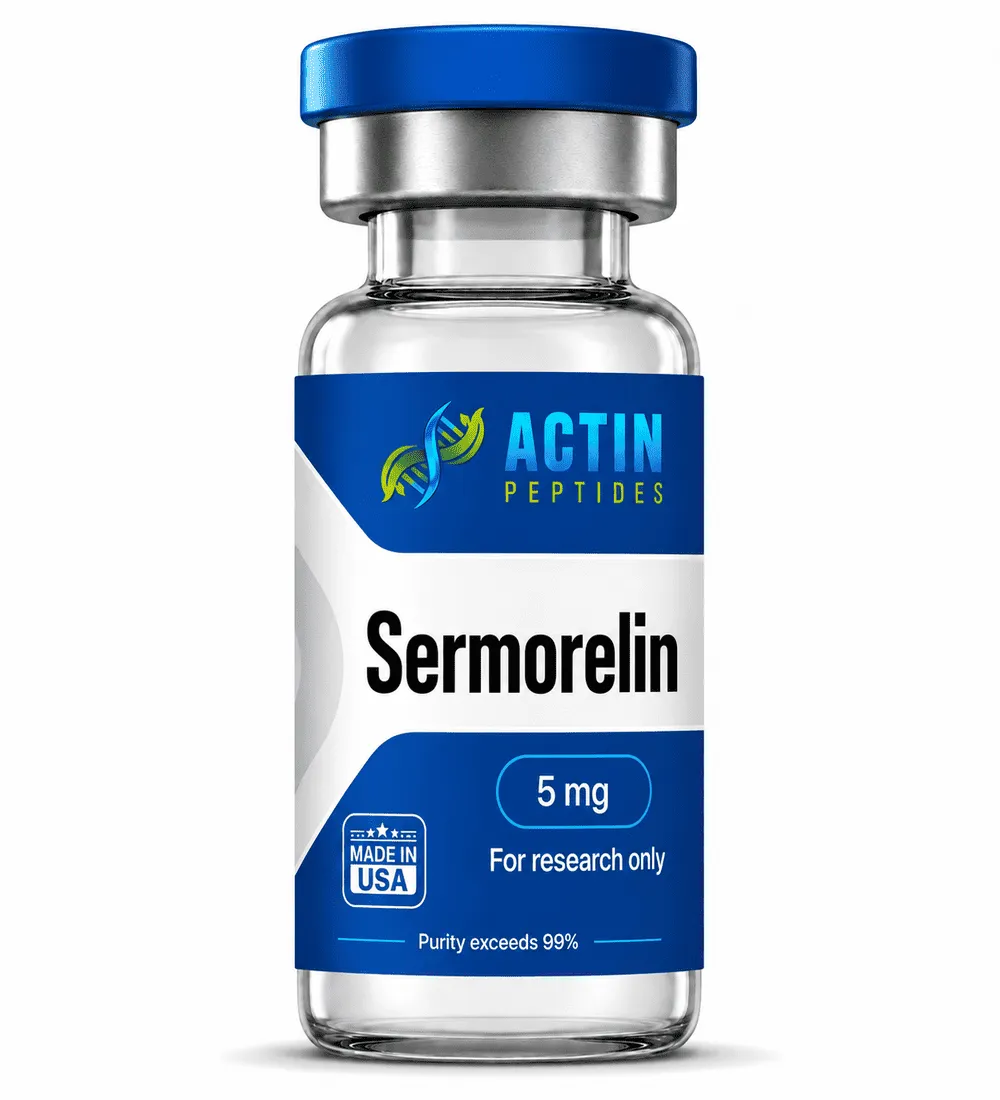
Sermorelin peptide (buy Sermorelin peptide, Sermorelin for sale, research-grade Sermorelin) is a synthetic 29-amino-acid peptide modeled on the N-terminal sequence of growth hormone-releasing hormone (GHRH). Scientists have studied Sermorelin primarily because of its ability to interact with GHRH receptors and potentially influence growth hormone (GH) signaling in experimental models.
Sermorelin research has examined the peptide in areas including growth hormone regulation, insulin-like growth factor-1 (IGF-1) signaling, body-composition research, cognition, endocrine signaling, and cellular proliferation. Because Sermorelin is structurally related to GHRH, researchers have used it as a tool for investigating the biological relationship between GHRH receptor activation, pituitary signaling, and downstream growth hormone activity.
For researchers evaluating Sermorelin studies, Sermorelin dosage research, and Sermorelin peptide mechanism of action, understanding its mechanism is particularly important because the peptide does not function as growth hormone itself. Instead, research has focused on its potential interaction with the body’s GHRH signaling pathway.
What Is Sermorelin Peptide?
Sermorelin (Sermorelin acetate, GRF 1-29 peptide, GHRH 1-29 analog) is a synthetic 29-amino-acid fragment based on the first 29 amino acids of human growth hormone-releasing hormone (GHRH). It has been studied as a GHRH receptor agonist and as a research tool for examining growth hormone secretion and downstream IGF-1 signaling.
Key characteristics
- Peptide length: 29 amino acids
- Primary research target: GHRH receptor
- Related molecule: Growth hormone-releasing hormone (GHRH)
- Major downstream pathway: cAMP/PKA signaling
- Downstream research marker: Insulin-like growth factor-1 (IGF-1)
- Estimated half-life: Approximately 11–12 minutes according to the supplied research material
- Other known title: GRF 1-29, Sermorelin acetate peptide
Sermorelin belongs to the broader category of growth-hormone-related research peptides. Other compounds in this area include CJC-1295 and other GHRH-related peptides investigated for their effects on GH signaling.
Common search terms include:
- buy Sermorelin peptide online
- Sermorelin peptide for research use
- Sermorelin acetate 5mg / 10mg vial
- research grade Sermorelin powder
- Sermorelin GHRH analog peptide
How Does Sermorelin Work?
The Sermorelin mechanism of action (MOA) centers on its interaction with GHRH receptors located on pituitary somatotroph cells.
When Sermorelin interacts with the GHRH receptor, researchers propose that it can activate intracellular signaling involving adenylate cyclase, cyclic adenosine monophosphate (cAMP), and protein kinase A (PKA).
GHRH receptor activation
Sermorelin structurally resembles the biologically active N-terminal region of GHRH. Researchers therefore investigate whether the peptide can bind to GHRH receptors and reproduce aspects of GHRH signaling.
The proposed sequence is:
Sermorelin → GHRH receptor → adenylate cyclase → cAMP → PKA → GH secretion → IGF-1 signaling
This pathway provides a useful framework for understanding why scientists have investigated Sermorelin in growth-hormone research and Sermorelin peptide studies.
cAMP and PKA signaling
Following GHRH receptor activation, adenylate cyclase may increase intracellular cAMP concentrations. cAMP acts as a second messenger within cells and can activate PKA.
PKA can subsequently phosphorylate downstream proteins involved in cellular signaling. In pituitary somatotroph models, this signaling cascade may contribute to the secretion of growth hormone.
Growth hormone and IGF-1
Growth hormone represents an important component of the endocrine growth axis. Researchers also monitor IGF-1, a downstream growth factor associated with several biological effects of GH signaling.
Consequently, Sermorelin studies frequently evaluate both GH and IGF-1 as measurable research endpoints in Sermorelin peptide research protocols.
Sermorelin and Growth Hormone Signaling
Sermorelin research has primarily focused on whether selective GHRH receptor stimulation can influence endogenous growth hormone secretion.
Unlike directly administering growth hormone, GHRH-related peptides are investigated for their ability to interact with the signaling system that regulates pituitary GH release.
This distinction is important when interpreting Sermorelin benefits research, Sermorelin results, and Sermorelin peptide reviews in scientific literature: observed changes in experimental GH or IGF-1 levels do not establish therapeutic efficacy, and results can vary according to the research model, dose, timing, age, and physiological condition of the subjects.
Chemical Makeup of Sermorelin
| Property | Details |
|---|---|
| Molecular Formula | C149H246N44O42S |
| Molecular Weight | 3357.93 g/mol |
| Peptide Length | 29 amino acids |
| Other Known Titles | GRF 1-29, Sermorelin acetate |
| Peptide Class | GHRH-related synthetic peptide |
| Primary Research Target | GHRH receptor |
Sermorelin Research and Clinical Studies
Sermorelin and GHRH Receptor Signaling
Study objective
Researchers have investigated whether Sermorelin can reproduce important signaling events associated with endogenous GHRH.
Methodology
Experimental research has examined Sermorelin interaction with GHRH receptors and subsequent intracellular signaling pathways involving adenylate cyclase, cAMP, and PKA.
Findings
Research suggests that GHRH receptor activation may initiate a signaling cascade that ultimately promotes GH release from pituitary somatotroph cells.
The downstream increase in GH can also influence IGF-1 signaling.
Scientific significance
These findings establish the central biological rationale behind Sermorelin research: the peptide provides a model for studying GHRH receptor-mediated regulation of growth hormone secretion.
Sermorelin and Growth Velocity Research
Study objective
Researchers investigated whether Sermorelin could influence growth-related outcomes in experimental models characterized by reduced growth hormone activity.
Methodology
Experimental animal models were exposed to Sermorelin over an extended research period.
Findings
The supplied research material reports increases in growth and height velocity during approximately 12 months of continuous peptide exposure, with reported effects persisting for an additional period in the research models.
Scientific significance
These observations contributed to continued interest in Sermorelin as a research compound for studying the relationship between GHRH receptor signaling, GH secretion, and longitudinal growth.
Because these findings come from specific experimental settings, they should not be interpreted as evidence of human therapeutic efficacy.
Sermorelin and Growth Hormone Research Outcomes
Study objective
Researchers have examined whether Sermorelin exposure can alter circulating growth hormone and IGF-1 levels.
Methodology
One investigation evaluated changes in GH following Sermorelin exposure, while another study examined hormonal and body-composition parameters over a 16-week period.
Findings
The supplied research describes:
- An approximately 82% increase in average GH levels in one investigation
- Reported GH increases of up to approximately 107% in another study
- An approximately 28% increase in IGF-1
- A reported increase in lean body mass of approximately 1.26 kg
- Increased skin thickness in the research population
- No significant reported change in fat mass in the cited study
Scientific significance
These findings provide research data for examining how buy Sermorelin peptide research models and GHRH receptor stimulation may influence the GH/IGF-1 axis and body-composition markers.
However, individual study outcomes should not be generalized beyond their specific populations and experimental conditions.
Sermorelin and Lipodystrophy Research
Study objective
Researchers investigated the effects of Sermorelin on endocrine and body-composition markers in a controlled study involving subjects with HIV-associated lipodystrophy.
Methodology
The study involved 31 participants divided into Sermorelin and placebo groups. Researchers monitored hormonal and body-composition parameters during a 12-week research period.
Findings
The supplied study reports:
- Increased growth hormone levels
- Increased IGF-1 levels
- Increased lean body mass
- Reduced abdominal visceral fat
- Changes in the trunk-to-lower-extremity fat ratio
- No reported significant changes in glucose or insulin levels
Scientific significance
This study provides human research data concerning the interaction between GHRH signaling, endocrine markers, and body-composition measurements.
Importantly, these findings represent results from a specific clinical research population and should not be interpreted as proof that Sermorelin produces the same effects in other populations.
Sermorelin and Cognition Research
Study objective
Researchers explored the relationship between age-related changes in growth hormone secretion and cognitive performance.
Methodology
Clinical research involving 89 older participants examined cognitive performance following Sermorelin exposure.
Researchers used assessments including the Wechsler Adult Intelligence Scale (WAIS) and related cognitive testing.
Findings
The supplied material reports apparent improvements in several cognitive test measures, including IQ-related, picture-arrangement, and verbal assessments.
Scientific significance
These observations contributed to research examining the potential relationship between the GH axis and cognitive function.
Sermorelin and Tumor-Cell Research
Study objective
Researchers investigated the sensitivity of glioma-derived experimental models to numerous compounds, including Sermorelin.
Methodology
The research evaluated more than 4,000 compounds across 1,018 glioma subjects and calculated drug-response scores for individual compounds.
Findings
The supplied material identifies Sermorelin as producing notable sensitivity within the experimental screening system.
Scientific significance
This research provides an example of how Sermorelin has been investigated in cellular proliferation and tumor-biology research models.
Sermorelin and Hypogonadism Research
Study objective
Researchers have investigated whether stimulation of the GHRH/GH axis could influence reproductive hormone signaling and body-composition parameters.
Methodology
Early research compared Sermorelin and GHRH 1-40 exposure in experimental groups. Additional research examined Sermorelin exposure in younger and older male participants.
Findings
The supplied research reports that Sermorelin stimulated the release of follicle-stimulating hormone (FSH) and luteinizing hormone (LH) in experimental settings.
What Is Sermorelin Researched For?
Sermorelin has been studied primarily in connection with:
- GHRH receptor signaling
- Growth hormone secretion
- IGF-1 signaling
- Growth velocity research
- Body-composition research
- Endocrine signaling
- Cognitive research
- Cellular proliferation studies
- Reproductive hormone signaling
- Sermorelin peptide mechanism research
- Sermorelin acetate research applications
What Makes Sermorelin Unique?
Sermorelin is distinctive because it represents a relatively short synthetic fragment of GHRH that retains biological activity at the GHRH receptor.
This makes it widely referenced in Sermorelin peptide for sale research contexts, Sermorelin acetate studies, and GHRH analog peptide research, particularly for studying upstream endocrine signaling.
Sermorelin Compared With Other Growth-Hormone Research Peptides
Sermorelin belongs to a broader research category involving peptides that interact with growth hormone signaling.
For example, researchers have separately investigated:
- CJC-1295 for GHRH-related signaling research
- Ipamorelin for growth hormone secretagogue research
- IGF-1 LR3 for downstream growth-factor signaling research
Sermorelin Research: Key Takeaways
- Sermorelin is a 29-amino-acid GHRH-related peptide
- Its primary research target is the GHRH receptor
- It is widely studied in Sermorelin peptide research and GH signaling models
- GHRH receptor activation can involve cAMP and PKA signaling
- Researchers evaluate its effects on GH and IGF-1 levels
- It is frequently referenced in Sermorelin acetate and GRF 1-29 studies
- Findings vary by model and do not imply therapeutic use
Frequently Asked Questions
What is Sermorelin peptide?
Sermorelin is a synthetic 29-amino-acid peptide modeled on GHRH, commonly studied in Sermorelin peptide research and GHRH receptor signaling studies.
Where can I buy Sermorelin peptide for research?
Sermorelin is typically available through research chemical suppliers offering research-grade Sermorelin peptide, Sermorelin acetate vials, and GRF 1-29 peptide for laboratory use only.
What is Sermorelin used for in research?
It is used in studies involving growth hormone secretion, IGF-1 signaling, endocrine regulation, and cellular research models.
Is Sermorelin the same as growth hormone?
No. It is a GHRH analog studied for its ability to stimulate endogenous growth hormone release pathways.
Conclusion
Sermorelin remains a widely studied research peptide in the field of GHRH receptor biology, growth hormone signaling, and IGF-1 pathway research. Its role as a GRF 1-29 analog makes it a key tool in endocrine and cellular signaling studies.
Research Disclaimer
Sermorelin is available strictly for research and laboratory purposes only. It is not approved for human consumption, therapeutic use, or diagnostic applications. Please review our Terms and Conditions before placing an order.
 English
Reviews
There are no reviews yet.