
Description
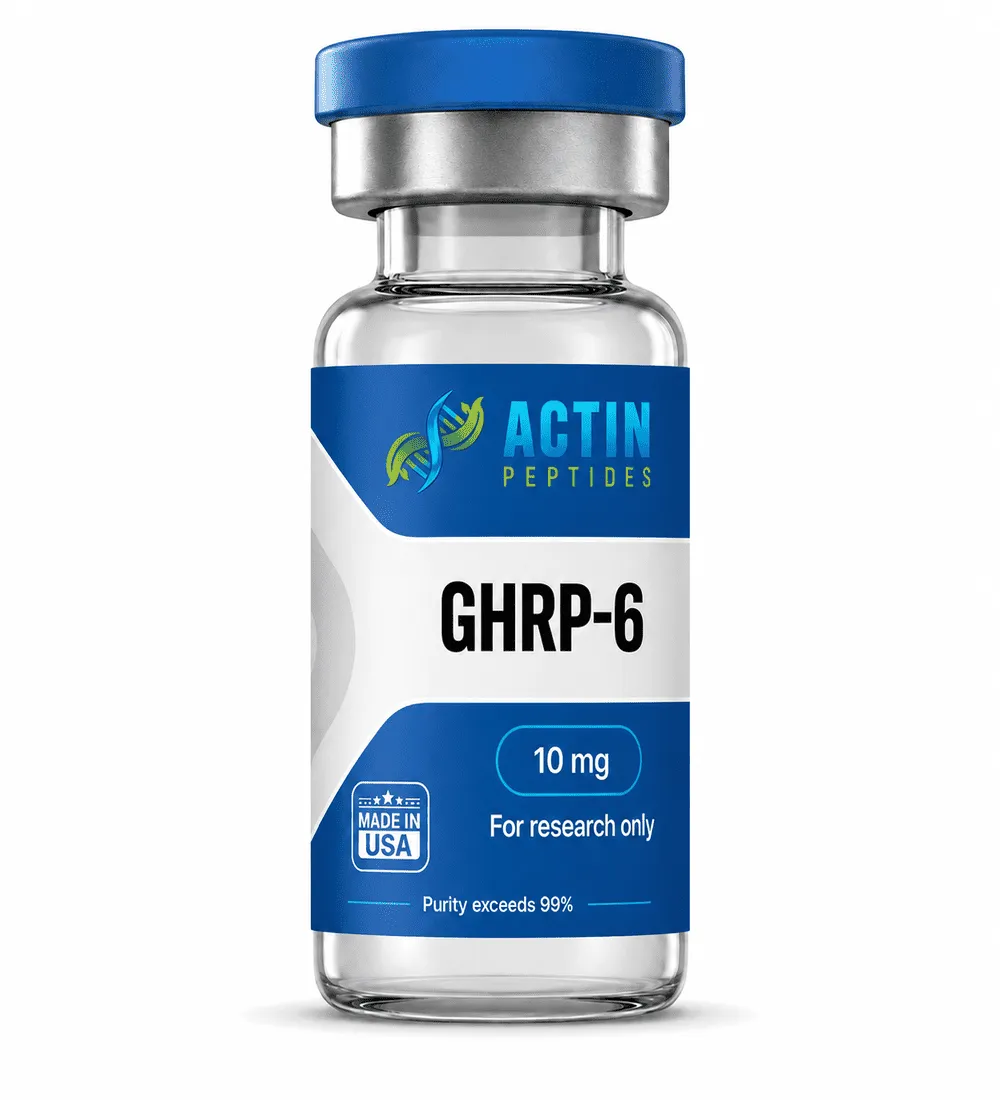
GHRP-6 Peptide: Research, Mechanism of Action, Benefits, and Scientific Studies
What Is GHRP-6?
GHRP-6 (Growth Hormone Releasing Peptide-6) is a synthetic hexapeptide belonging to the family of growth hormone secretagogues (GHS). Researchers have investigated GHRP-6 for its potential ability to stimulate the release of growth hormone (GH) by interacting with specific receptors involved in hormone regulation.
Originally developed to explore alternative pathways for growth hormone stimulation, GHRP-6 differs from traditional Growth Hormone Releasing Hormones (GHRHs) by primarily targeting the Growth Hormone Secretagogue Receptor (GHS-R1a), commonly known as the ghrelin receptor. Ghrelin is a naturally occurring hormone associated with appetite regulation, metabolism, and growth hormone secretion.
Due to its unique receptor interactions, GHRP-6 has become an important peptide in scientific research investigating growth hormone pathways, tissue regeneration, metabolic function, gastrointestinal health, and cellular protection.
How GHRP-6 Works
Research suggests that GHRP-6 may stimulate growth hormone release through multiple biological mechanisms.
When introduced into research models, GHRP-6 appears to bind to:
- GHS-R1a (Ghrelin Receptors) – associated with growth hormone secretion and appetite regulation.
- CD36 Receptors – involved in lipid metabolism, inflammation regulation, cellular signaling, and tissue recovery.
Studies indicate that endogenous Growth Hormone Releasing Hormone (GHRH) may be required for GHRP-6 to exert its full growth hormone-releasing potential. Researchers have also proposed that GHRP-6 may influence both the hypothalamus and pituitary gland, contributing to its unique biological profile.
GHRP-6 Chemical Information
| Property | Value |
|---|---|
| Peptide Name | Growth Hormone Releasing Peptide-6 |
| Abbreviation | GHRP-6 |
| Molecular Formula | C46H56N12O6 |
| Molecular Weight | 873.03 g/mol |
| Classification | Growth Hormone Secretagogue (GHS) |
| Receptor Targets | GHS-R1a, CD36 |
Potential Research Applications of GHRP-6
Growth Hormone Research
GHRP-6 is most widely studied for its potential ability to stimulate growth hormone release. Multiple investigations have reported significant increases in GH secretion following exposure to GHRP-6 compared with baseline physiological secretion.
Researchers believe this effect may occur through activation of ghrelin receptors and interaction with hypothalamic-pituitary signaling pathways.
GHRP-6 and Metabolic Function
Because GHRP-6 interacts with ghrelin receptors, researchers have explored its potential influence on:
- Nutrient utilization
- Energy metabolism
- Appetite signaling
- Body composition regulation
Ongoing studies continue to investigate how growth hormone secretagogues may impact metabolic pathways.
GHRP-6 and Hypothyroidism Research
Reduced growth hormone secretion is commonly associated with hypothyroid conditions. Experimental studies have suggested that GHRP-6 may stimulate growth hormone release more effectively than GHRH alone in hypothyroid research models.
Scientists have proposed that GHRP-6 may operate through mechanisms distinct from traditional GHRH signaling, potentially providing valuable insights into endocrine regulation.
GHRP-6 and Cortisol Secretion
Research examining overnight hormone patterns has shown that GHRP-6 may influence both:
- Growth hormone secretion
- Adrenocorticotropic hormone (ACTH) release
- Cortisol production
These findings suggest that GHRP-6 may interact with broader neuroendocrine pathways beyond growth hormone regulation alone.
GHRP-6 and Gastrointestinal Function
Ghrelin signaling plays an important role in digestive physiology. Several preclinical investigations have evaluated GHRP-6 for its potential effects on:
- Gastric emptying
- Intestinal transit
- Digestive motility
Research involving diabetic animal models reported improvements in gastric and intestinal transit following GHRP-6 administration, highlighting an area of continued scientific interest.
GHRP-6 and Neuroprotection
Emerging research has explored the relationship between GHRP-6 and the brain’s Insulin-Like Growth Factor-1 (IGF-1) system.
Studies suggest that GHRP-6 may:
- Increase IGF-1 expression in specific brain regions
- Activate cellular survival pathways
- Support anti-apoptotic signaling
- Influence neuroendocrine regulation
These findings have generated interest in the peptide’s potential role in neurological and cognitive research.
GHRP-6 and Muscle Tissue Research
Scientists have investigated whether GHRP-6 may influence muscle-related biological processes through its potential effects on growth hormone and IGF-1 signaling.
Experimental studies have suggested possible increases in:
- Myogenic marker proteins
- Collagen Type I synthesis
- Cellular metabolism
- Growth factor expression
Researchers continue to study how these pathways may contribute to muscle tissue development and recovery mechanisms.
GHRP-6 and Tissue Recovery
One of the most intriguing areas of GHRP-6 research involves tissue repair and cellular regeneration.
Preclinical studies suggest GHRP-6 may:
- Reduce inflammatory signaling
- Support wound healing processes
- Modulate fibrotic pathways
- Influence tissue remodeling
- Promote cellular survival mechanisms
Research involving skin, intestinal, and liver tissue models has demonstrated potential regenerative effects that warrant further investigation.
GHRP-6 and Organ Protection
Studies evaluating multiple organ injury models have reported that GHRP-6 may contribute to:
- Reduced oxidative stress
- Improved epithelial cell migration
- Enhanced tissue preservation
- Protection against inflammatory damage
Researchers have also observed synergistic effects when GHRP-6 was combined with Epidermal Growth Factor (EGF) in experimental settings.
Why Researchers Study GHRP-6
GHRP-6 remains one of the most extensively researched growth hormone secretagogues due to its unique ability to interact with both ghrelin and CD36 receptor systems.
Areas of ongoing scientific interest include:
- Growth hormone regulation
- IGF-1 signaling
- Muscle biology
- Tissue regeneration
- Gastrointestinal function
- Neuroprotection
- Endocrine health
- Cellular survival pathways
As research advances, scientists continue to investigate the full range of biological mechanisms associated with this peptide.
Important Research Disclaimer
GHRP-6 is intended strictly for laboratory and scientific research purposes. This product is not approved for human consumption, medical use, diagnosis, treatment, or prevention of any disease. Researchers should review all applicable regulations and guidelines before purchasing or conducting studies involving GHRP-6.
Please review and adhere to our Terms and Conditions before ordering.
 English
Reviews
There are no reviews yet.