
Description
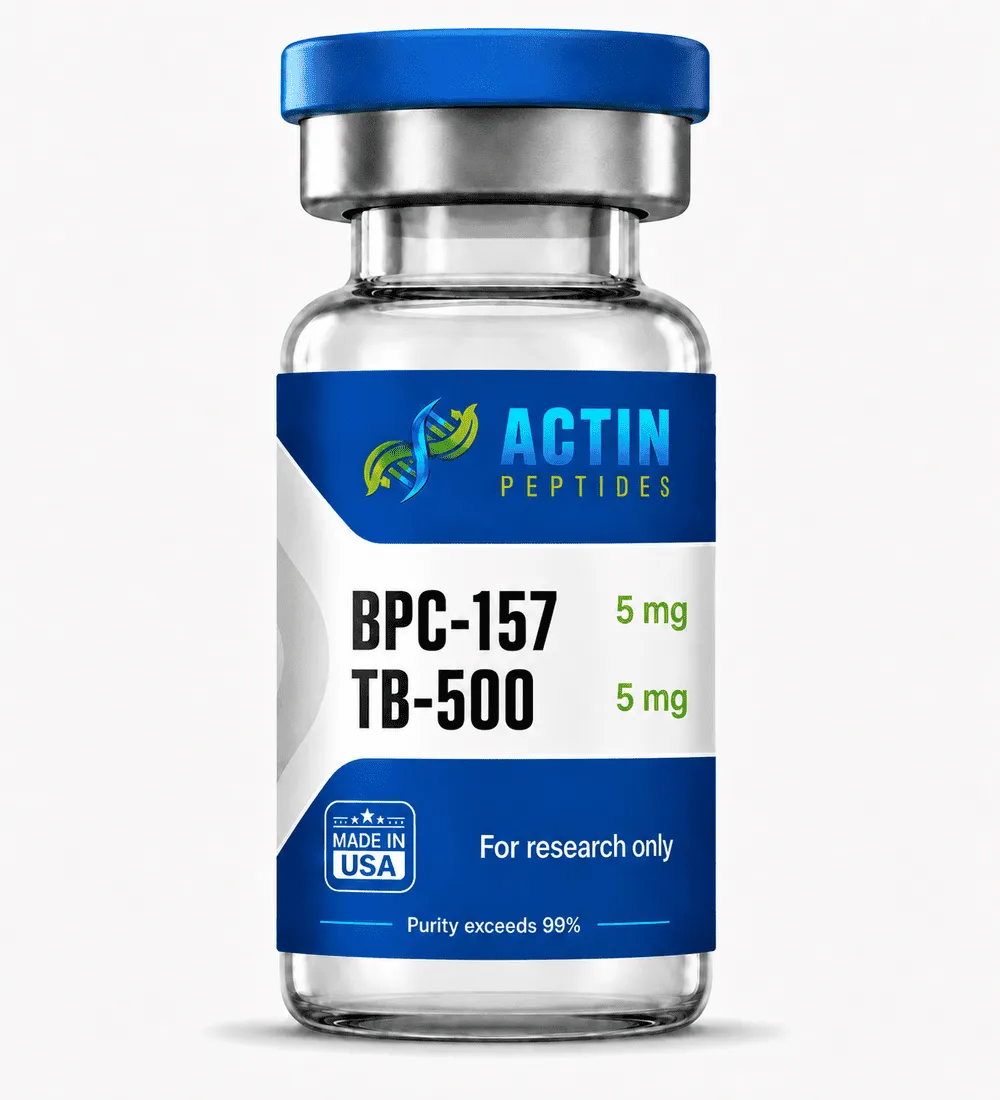
BPC-157 & TB-500 Peptide Blend | Research, Mechanism of Action & Laboratory Studies
BPC-157 & TB-500 Peptide Blend
The BPC-157 & TB-500 peptide blend combines two extensively researched synthetic peptides that scientists have investigated for their potential roles in cellular repair, tissue regeneration, angiogenesis, extracellular matrix remodeling, and inflammatory signaling. While no published studies have evaluated both peptides together in the same experimental model, individual research suggests they may influence complementary biological pathways involved in tissue recovery and cellular communication.
BPC-157 peptide is a synthetic pentadecapeptide consisting of 15 amino acids. Researchers have investigated it for its potential interactions with angiogenic signaling pathways, nitric oxide (NO) regulation, fibroblast migration, collagen organization, and endothelial cell function. Experimental models also suggest it may support connective tissue integrity and cellular regeneration.
TB-500 peptide, a synthetic analogue of the naturally occurring Thymosin Beta-4 (Tβ4) protein, consists of 43 amino acids. Scientists have studied TB-500 for its possible influence on cell migration, cytoskeletal organization, angiogenesis, wound repair, extracellular matrix remodeling, and inflammatory signaling. Research also suggests the peptide may participate in pathways that regulate endothelial cell movement and tissue remodeling following cellular injury.
Because these peptides appear to influence different yet complementary signaling mechanisms, researchers have proposed that simultaneous exposure may support multiple biological processes associated with tissue remodeling, vascular development, and collagen organization.
Researchers studying connective tissue repair may also be interested in related compounds including BPC-157, TB-500 and KPV Peptide.
What is BPC-157 & TB-500 Peptide Blend?
BPC-157 & TB-500 is a research peptide combination consisting of Body Protection Compound-157 (BPC-157) and Synthetic Thymosin Beta-4 (TB-500). Scientists are investigating this blend because each peptide appears to influence different aspects of tissue repair, angiogenesis, collagen remodeling, and cellular signaling.
How Does BPC-157 & TB-500 Work?
Research suggests that the blend may support multiple biological pathways simultaneously.
- Cellular migration
- Endothelial cell function
- Angiogenesis
- Fibroblast activity
- Collagen organization
- Nitric oxide signaling
- Cytoskeletal remodeling
- Extracellular matrix repair
- Inflammatory signaling regulation
Rather than acting through a single receptor, both peptides appear to influence several intracellular signaling networks that coordinate tissue remodeling after cellular stress.
Overview of BPC-157 and TB-500 Blend
Although BPC-157 and TB-500 have distinct molecular structures, researchers suggest they share several overlapping biological characteristics while influencing different signaling pathways.
TB-500 primarily appears to regulate cell movement through interactions with the actin cytoskeleton. Scientists suggest that the peptide binds globular actin (G-actin), helping regulate cytoskeletal dynamics that enable endothelial cells, fibroblasts, and other structural cells to migrate toward damaged tissue. This mechanism has made TB-500 an important research compound in studies involving wound repair, angiogenesis, and extracellular matrix remodeling.
In addition, laboratory investigations indicate TB-500 may influence inflammatory signaling by increasing expression of microRNA-146a (miR-146a). Elevated miR-146a appears to suppress signaling proteins including IRAK1 and TRAF6, two important mediators involved in Toll-like receptor (TLR) signaling and downstream NF-κB activation. Researchers believe this interaction may contribute to the peptide’s observed modulation of inflammatory responses.
BPC-157 appears to complement these activities through different biological mechanisms. Studies suggest it may interact with the nitric oxide (NO) system, promote endothelial stability, regulate vascular function, and influence growth factor expression associated with tissue remodeling. Researchers have also linked BPC-157 with activation of repair-associated signaling molecules including Early Growth Response-1 (Egr-1) and its regulatory protein NAB2, both of which participate in extracellular matrix organization and collagen synthesis.
Experimental findings further indicate that BPC-157 may activate FAK-paxillin signaling, an intracellular pathway responsible for cell adhesion, migration, and fibroblast movement throughout connective tissue.
Together, these complementary mechanisms have led researchers to investigate whether combining both peptides may influence several biological processes involved in tissue regeneration more comprehensively than either peptide alone.
Mechanism of Action
BPC-157 and Nitric Oxide Signaling
Research suggests BPC-157 may help maintain endothelial integrity by interacting with nitric oxide signaling pathways.
Scientists have proposed that balanced nitric oxide activity supports:
- Blood vessel function
- Endothelial survival
- Cellular communication
- Angiogenic signaling
- Tissue remodeling
Laboratory studies also associate BPC-157 with increased fibroblast migration, collagen organization, and extracellular matrix formation.
TB-500 and Cytoskeletal Remodeling
TB-500 appears to regulate cell migration by interacting with globular actin (G-actin), an essential component of the cellular cytoskeleton.
Researchers suggest this interaction may support:
- Endothelial migration
- Fibroblast movement
- Cellular differentiation
- Tissue remodeling
- Angiogenesis
TB-500 has also been investigated for its influence on VEGF, Notch, and NF-κB signaling pathways involved in vascular development and cellular regeneration.
Complementary Cellular Activity
Because the peptides influence different signaling pathways, scientists continue investigating whether combined exposure may simultaneously support:
- Angiogenesis
- Endothelial protection
- Collagen production
- Fibroblast migration
- Extracellular matrix remodeling
- Connective tissue organization
- Cellular communication
Importantly, no published study has directly evaluated both peptides together in the same experimental model.
Chemical Makeup
| Property | BPC-157 | TB-500 |
|---|---|---|
| Other Name | Body Protection Compound-157 | Synthetic Thymosin Beta-4 |
| Amino Acids | 15 | 43 |
| Molecular Formula | C62H98N16O22 | C212H350N56O78S |
| Molecular Weight | 1419.5 g/mol | 4963 g/mol |
Research and Clinical Studies
BPC-157 & TB-500 Research on Tissue Repair
Scientists have independently investigated both peptides for their potential influence on tissue regeneration.
Early studies involving Thymosin Beta-4 reported increased re-epithelialization and accelerated wound contraction in experimental models compared with controls. Researchers suggested that enhanced epithelial migration and extracellular matrix remodeling contributed to these observations.
Similarly, laboratory studies involving BPC-157 reported increased collagen deposition, improved vascular formation, and greater blood vessel density within injured tissue compared with untreated controls.
Although these findings originated from separate investigations, both peptides continue to attract research interest because they appear to influence complementary mechanisms associated with connective tissue repair.
For additional tissue repair research compounds, researchers may also explore BPC-157, TB-500 and KPV Peptide.
Research on Ligament and Tendon Remodeling
Studies investigating TB-500 suggest the peptide may influence collagen alignment during ligament remodeling.
Researchers observed:
- More organized collagen fibers
- Greater collagen fibril diameter
- Improved structural alignment
- Enhanced biomechanical characteristics
BPC-157 studies similarly indicate increased tendon fibroblast migration, enhanced F-actin formation, activation of focal adhesion kinase (FAK), and phosphorylation of paxillin. Together, these cellular events appear important for connective tissue organization and extracellular matrix repair.
Researchers investigating connective tissue biology frequently compare these findings with peptides including MGF and IGF-1 LR3 because of their roles in muscle and connective tissue research.
Research on Muscle and Cellular Regeneration
Experimental studies have also evaluated BPC-157 in skeletal muscle injury models.
Researchers reported improvements in structural organization and restoration of muscle architecture compared with untreated controls.
Separately, TB-500 research suggests the peptide may support cardiac cell migration, endothelial movement, angiogenesis, and myocardial remodeling under laboratory conditions.
Scientists continue investigating how these pathways influence cellular regeneration across multiple tissue types.
Related research compounds include ACE-031, Follistatin-344 and MGF.
What Makes BPC-157 & TB-500 Unique?
Unlike many research peptides that target a single biological pathway, the BPC-157 & TB-500 blend combines two compounds investigated for complementary mechanisms involving:
- Cell migration
- Angiogenesis
- Collagen organization
- Endothelial function
- Fibroblast activity
- Cytoskeletal remodeling
- Extracellular matrix repair
- Inflammatory signaling regulation
Although direct combination studies remain unavailable, scientists continue exploring how these pathways may interact during tissue regeneration research.
Frequently Asked Questions
What is BPC-157 & TB-500?
BPC-157 & TB-500 is a research peptide blend consisting of Body Protection Compound-157 and Synthetic Thymosin Beta-4. Scientists investigate both peptides for their potential roles in tissue remodeling, angiogenesis, collagen organization, and cellular signaling.
How does BPC-157 & TB-500 work?
Research suggests the blend may influence endothelial function, fibroblast migration, cytoskeletal remodeling, nitric oxide signaling, collagen synthesis, extracellular matrix organization, and inflammatory signaling pathways.
What is BPC-157 & TB-500 researched for?
Scientists continue studying the blend for laboratory investigations involving tissue regeneration, connective tissue biology, angiogenesis, endothelial function, collagen remodeling, wound repair, and cellular communication.
Can BPC-157 and TB-500 be used together?
Although researchers frequently discuss the complementary biological properties of both peptides, no published study has directly evaluated simultaneous exposure in the same experimental model.
Conclusion
The BPC-157/TB-500 peptide blend combines two extensively researched synthetic peptides that appear to influence complementary biological pathways involved in cellular regeneration, connective tissue remodeling, angiogenesis, endothelial function, and extracellular matrix organization.
Current evidence comes from independent investigations of each peptide rather than combination studies. Nevertheless, research suggests both compounds may influence overlapping mechanisms involved in collagen formation, fibroblast migration, cytoskeletal regulation, and inflammatory signaling. As a result, scientists continue investigating their individual and potential complementary roles in laboratory models of tissue repair.
Research Disclaimer
BPC-157 & TB-500 Peptide Blend is available strictly for research and laboratory purposes only. It is not approved for human consumption, therapeutic use, or diagnostic applications. Please review and adhere to our Terms and Conditions before ordering.
 English
Reviews
There are no reviews yet.