
Description
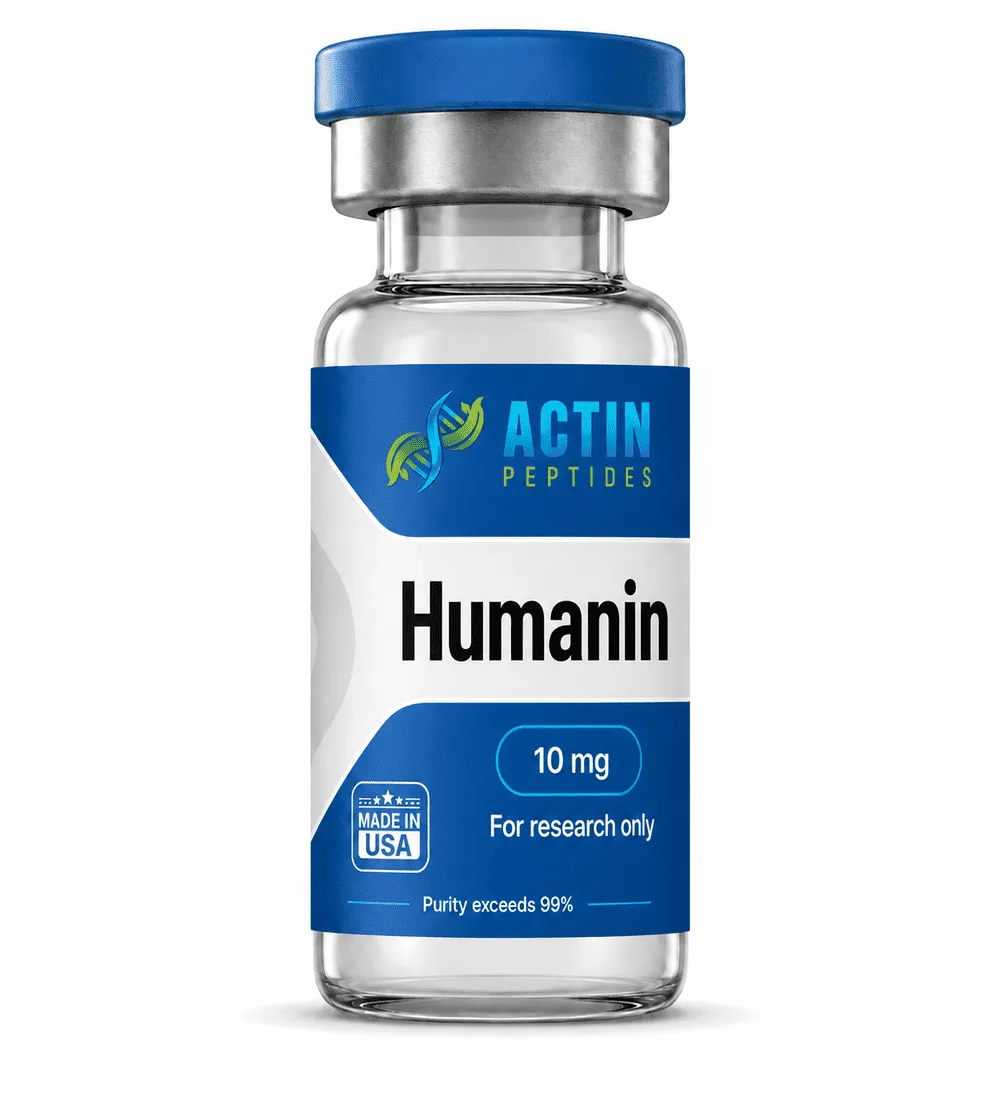
Humanin Peptide: Research, Benefits, Mechanisms, and Scientific Studies
What Is Humanin Peptide?
Humanin is a naturally occurring mitochondrial-derived peptide (MDP) that has attracted significant scientific interest for its potential role in cellular protection, metabolic regulation, mitochondrial health, and neurobiology.
First identified within the mitochondrial genome, Humanin is believed to be encoded by the 16S ribosomal RNA gene. Depending on where it is synthesized, Humanin may consist of either 21 amino acids (within mitochondria) or 24 amino acids (within the cytosol). Both forms have demonstrated biological activity in experimental research.
Because Humanin originates from mitochondria—the energy-producing structures within cells—it has become an important focus of studies exploring aging, oxidative stress, neurological health, insulin sensitivity, and cellular survival mechanisms.
Understanding Humanin and Mitochondrial Function
Mitochondria are often referred to as the “powerhouses of the cell” because they generate the energy required for cellular function. Beyond energy production, mitochondria play critical roles in:
- Cellular metabolism
- Apoptosis (programmed cell death)
- Oxidative stress regulation
- Calcium signaling
- Heme synthesis
- Cellular communication
Researchers suggest that Humanin may function as a protective signaling molecule produced by mitochondria to help cells respond to biological stress and maintain cellular integrity.
How Humanin peptide Works
Scientific studies indicate that Humanin may exert its biological effects through multiple pathways.
Interaction with Bax Protein
One of Humanin’s most studied mechanisms involves its interaction with Bcl-2-associated X protein (Bax), a key regulator of programmed cell death.
Researchers suggest that Humanin may bind to inactive Bax proteins, potentially preventing their activation and reducing apoptosis under conditions of cellular stress.
Cell Survival Signaling
Humanin has also been shown to interact with several intracellular proteins associated with cellular survival, including:
- Actinin-4
- Phosphoprotein 8
- Bax-associated pathways
Through these interactions, Humanin may support cellular resilience and protective signaling mechanisms.
Neurological Receptor Activity
Research suggests Humanin may interact with specific G protein-coupled receptors, including:
- FPRL-1 (Formyl Peptide Receptor-Like 1)
- FPRL-2 (Formyl Peptide Receptor-Like 2)
These receptors are involved in neurological signaling and inflammatory responses. Scientists believe Humanin may help modulate receptor activity and potentially influence pathways associated with neurodegenerative processes.
Humanin Peptide Chemical Information
| Property | Value |
|---|---|
| Peptide Name | Humanin |
| Molecular Formula | C119H204N34O32S2 |
| Molecular Weight | 2687.3 g/mol |
| Classification | Mitochondrial-Derived Peptide (MDP) |
| Alternate Name | HNGF6A Protein |
Humanin Peptide Research Applications
Humanin and Mitochondrial Health
One of the most promising areas of Humanin research involves mitochondrial protection.
Mitochondria are highly vulnerable to oxidative damage caused by reactive oxygen species (ROS). Excessive ROS production can impair energy generation and accelerate cellular dysfunction.
Studies have suggested that Humanin may:
- Reduce oxidative stress
- Improve mitochondrial efficiency
- Support cellular energy production
- Protect cells from mitochondrial degeneration
Research involving retinal pigment epithelial cells demonstrated that Humanin exposure appeared to reduce ROS formation and restore cellular bioenergetics following oxidative stress.
Humanin and Healthy Aging
Humanin has emerged as a significant peptide in longevity and aging research.
Experimental studies have identified a relationship between Humanin levels and hormones such as:
- Growth Hormone (GH)
- Insulin-Like Growth Factor-1 (IGF-1)
Researchers observed that animal models with elevated GH and IGF-1 levels exhibited lower Humanin concentrations and shorter lifespans. Conversely, models with lower GH and IGF-1 levels demonstrated higher Humanin concentrations and increased longevity.
These findings have led scientists to investigate Humanin’s potential role in cellular aging and lifespan regulation.
Humanin and Brain Health
Humanin is widely studied for its potential neuroprotective properties.
Research suggests the peptide may help support:
- Learning and memory
- Neuronal survival
- Cognitive function
- Protection against oxidative stress
Experimental studies involving models with elevated amyloid protein accumulation reported improvements in memory and learning performance following Humanin administration.
Researchers continue to investigate whether Humanin may influence pathways involved in age-related neurological decline.
Humanin and Neuroprotection
Additional studies have examined Humanin’s ability to protect neurons from toxic cellular environments.
Research findings suggest Humanin may:
- Preserve neuronal viability
- Reduce oxidative damage
- Support mitochondrial function
- Modulate tau protein phosphorylation
- Influence cellular survival signaling
Scientists have proposed that these mechanisms may contribute to Humanin’s observed neuroprotective activity in preclinical research.
Humanin Peptide and Insulin Sensitivity
Humanin has also become an important focus in metabolic research.
Studies suggest the peptide may influence:
- Glucose metabolism
- Insulin sensitivity
- Energy expenditure
- Weight regulation
In several experimental models, Humanin exposure appeared to improve glucose tolerance and reduce markers associated with insulin resistance.
Researchers have also linked Humanin activity to the STAT3 signaling pathway within the hypothalamus, which may contribute to metabolic regulation and insulin responsiveness.
Humanin and Metabolic Health
Research involving high-fat diet animal models reported that Humanin Peptide may contribute to:
- Increased energy expenditure
- Reduced weight gain
- Improved glucose regulation
- Enhanced metabolic efficiency
Although these findings remain under investigation, they have expanded scientific interest in Humanin’s metabolic functions.
Humanin and Hypoxia Research
Hypoxia occurs when cells experience reduced oxygen availability, often leading to oxidative stress and cellular injury.
Studies suggest Humanin may help protect cells exposed to hypoxic conditions by:
- Reducing oxidative damage
- Preserving mitochondrial function
- Supporting cellular survival pathways
- Limiting apoptosis
Research involving retinal cells exposed to chemically induced hypoxia demonstrated protective effects following Humanin administration.
Humanin and Ischemia
Another major area of Humanin research involves ischemic injury, where blood flow and oxygen delivery become restricted.
Preclinical studies have suggested that Humanin may:
- Reduce tissue damage following ischemia
- Decrease infarct size
- Support cellular recovery
- Improve post-ischemic outcomes
Researchers believe these effects may result from Humanin’s combined antioxidant, anti-apoptotic, and mitochondrial protective properties.
Humanin Peptide and Inflammation
Growing evidence suggests Humanin may influence inflammatory signaling pathways.
Scientists continue investigating its potential role in:
- Cellular stress responses
- Cytokine regulation
- Tissue protection
- Immune system modulation
These anti-inflammatory mechanisms may contribute to many of the peptide’s observed protective effects across different tissues.
Additional Areas of Humanin Research
Researchers continue exploring Humanin’s potential involvement in:
- Anxiety-related pathways
- Cellular stress adaptation
- Organ protection
- Cardiovascular health
- Tissue recovery
- Cellular resilience
- Healthy aging processes
As understanding of mitochondrial-derived peptides expands, Humanin remains one of the most extensively studied molecules within this emerging field.
Why Researchers Study Humanin
Humanin is unique among research peptides because it originates naturally from the mitochondrial genome and appears to influence multiple biological systems simultaneously.
Key areas of scientific interest include:
- Mitochondrial function
- Cellular longevity
- Neuroprotection
- Cognitive health
- Insulin sensitivity
- Metabolic regulation
- Oxidative stress
- Cellular survival pathways
Its broad range of biological activities has made Humanin an increasingly important subject in modern peptide research.
Research Use Disclaimer
Humanin peptide is intended strictly for laboratory and scientific research purposes only. This product is not approved for human consumption, medical use, diagnosis, treatment, or prevention of any disease. Researchers should review all applicable regulations and guidelines before purchasing or conducting studies involving Humanin. Please review and adhere to our Terms and Conditions before ordering.
 English
Reviews
There are no reviews yet.