
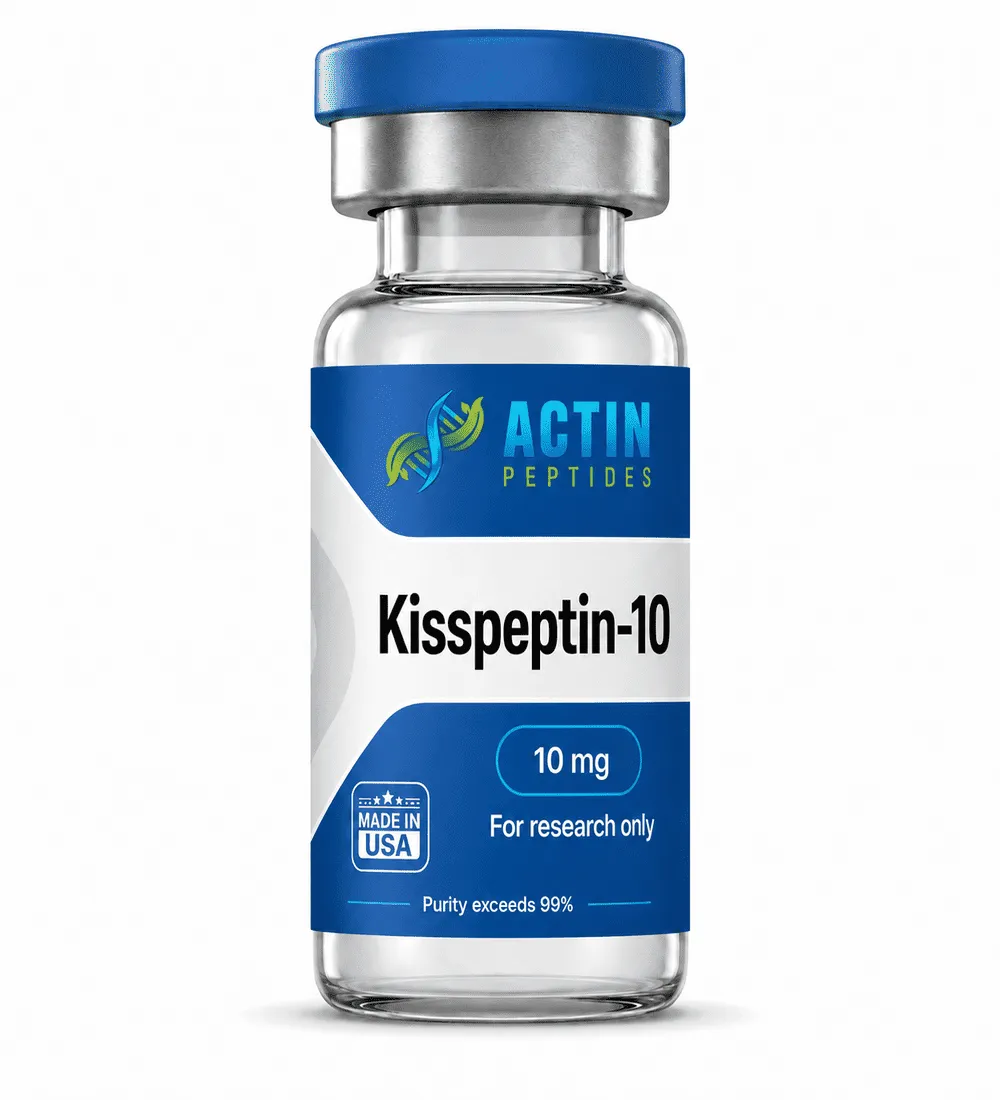
Description
Kisspeptin-10 Peptide: Research, Mechanism of Action, Benefits, and Scientific Studies
What Is Kisspeptin-10?
Kisspeptin-10 is a naturally occurring peptide derived from the KISS1 gene, a gene initially identified for its potential role in suppressing cancer metastasis. The peptide represents the smallest biologically active fragment of the kisspeptin family and consists of 10 amino acids corresponding to the C-terminal region of the larger kisspeptin protein.
Over time, researchers discovered that kisspeptins play a critical role in regulating the hypothalamic-pituitary-gonadal (HPG) axis, making Kisspeptin-10 an important subject in reproductive, endocrine, neurological, and metabolic research.
Today, Kisspeptin-10 is widely studied for its potential involvement in reproductive hormone regulation, gonadotropin-releasing hormone (GnRH) signaling, fertility pathways, appetite control, and neuroprotection.
How Kisspeptin-10 Works
Research suggests that Kisspeptin-10 exerts its biological activity primarily by binding to the KISS1 receptor (KISS1R), also known as GPR54.
Activation of GPR54 may stimulate neurons responsible for releasing Gonadotropin-Releasing Hormone (GnRH). GnRH subsequently signals the pituitary gland to release:
- Luteinizing Hormone (LH)
- Follicle-Stimulating Hormone (FSH)
These hormones are considered essential regulators of reproductive function and hormonal balance.
Researchers believe that the Kisspeptin-GPR54 signaling pathway serves as a master regulator of reproductive hormone activity and fertility-related processes.
Kisspeptin-10 Chemical Information
| Property | Value |
|---|---|
| Peptide Name | Kisspeptin-10 |
| Alternate Name | Kisspeptin 45-54 |
| Molecular Formula | C63H83N17O14 |
| Molecular Weight | 1302.4 g/mol |
| Receptor Target | GPR54 (KISS1R) |
| Classification | Neuropeptide |
Kisspeptin-10 Research Applications
Kisspeptin-10 and Reproductive Hormone Regulation
One of the primary areas of Kisspeptin-10 research involves its potential role in regulating reproductive hormone release.
Studies suggest that Kisspeptin-10 may stimulate the secretion of:
- Gonadotropin-Releasing Hormone (GnRH)
- Luteinizing Hormone (LH)
- Follicle-Stimulating Hormone (FSH)
Because of these effects, researchers frequently investigate Kisspeptin-10 in models related to reproductive endocrinology and fertility signaling.
Scientific evidence continues to support the hypothesis that the KISS1/KISS1R system functions as a critical regulator of reproductive hormone pathways.
Kisspeptin-10 and Fertility Research
Kisspeptin signaling is considered essential for normal reproductive development and fertility.
Research has explored whether disruptions in the KISS1-GPR54 pathway may contribute to conditions involving impaired reproductive hormone production.
Scientists have proposed that Kisspeptin-10 may influence:
- Pubertal development
- Fertility signaling
- Gonadal hormone regulation
- Reproductive maturation
- Endocrine communication within the HPG axis
This has made Kisspeptin-10 a valuable peptide in fertility-related research.
Kisspeptin-10 and Delayed Puberty Research
Researchers have examined Kisspeptin-10 in studies involving delayed hormonal development and reduced reproductive hormone activity.
Experimental investigations reported that some subjects exposed to Kisspeptin-10 demonstrated increased luteinizing hormone (LH) release, suggesting potential activation of reproductive hormone pathways.
These findings continue to support research into the peptide’s role as a regulator of reproductive maturation.
Kisspeptin-10 and Brain Function
Beyond reproduction, Kisspeptin-10 is widely distributed throughout several regions of the brain.
Research suggests it may influence:
- Limbic system activity
- Emotional processing
- Behavioral responses
- Social bonding pathways
- Neuroendocrine communication
Neuroimaging studies have reported increased activation in brain regions associated with emotional and reproductive processing following Kisspeptin exposure.
These observations have generated growing interest in the peptide’s broader neurological functions.
Kisspeptin-10 and Mood Research
Researchers continue to investigate the relationship between Kisspeptin signaling and emotional regulation.
Preclinical studies suggest that Kisspeptin may interact with neural circuits involved in:
- Mood regulation
- Emotional processing
- Social behavior
- Reward pathways
While research remains ongoing, these findings highlight the peptide’s potential role beyond reproductive physiology.
Kisspeptin-10 for Appetite Regulation
Kisspeptin receptors are found in several areas of the hypothalamus involved in appetite control and energy balance.
Research suggests Kisspeptin-10 may influence:
- Feeding behavior
- Meal frequency
- Appetite signaling
- Energy regulation
Experimental studies observed changes in food intake patterns following Kisspeptin-10 exposure, leading scientists to investigate its interaction with appetite-regulating pathways.
Kisspeptin-10 and Metabolic Function
Emerging evidence suggests the KISS1 signaling system may play a role in metabolic regulation.
Researchers have explored potential interactions between Kisspeptin-10 and:
- Glucose metabolism
- Energy expenditure
- Body weight regulation
- Neuroendocrine signaling
Animal studies involving impaired kisspeptin signaling have demonstrated alterations in body composition and glucose tolerance, further supporting investigation into metabolic pathways.
Kisspeptin 10 and Neuroprotection
One of the most exciting areas of current research involves Kisspeptin-10’s potential neuroprotective properties.
Studies suggest that Kisspeptin-10 may interact with proteins associated with neurodegenerative processes, including:
- Amyloid-beta (Aβ)
- Alpha-synuclein (α-syn)
- Prion proteins
Researchers have proposed that Kisspeptin-10 may help reduce protein-induced cellular stress and support neuronal survival under experimental conditions.
Kisspeptin-10 and Cellular Protection
Laboratory studies indicate that Kisspeptin-10 may:
- Reduce neuronal apoptosis
- Support mitochondrial function
- Protect against oxidative stress
- Promote cellular survival pathways
Researchers continue to investigate whether these actions occur independently of traditional GPR54 receptor activation, suggesting potentially unique biological mechanisms.
Why Researchers Study Kisspeptin-10 Peptide
Kisspeptin-10 has become one of the most important neuroendocrine peptides studied today because of its central role in reproductive hormone regulation and emerging influence on neurological and metabolic pathways.
Key areas of scientific interest include:
- Reproductive endocrinology
- Fertility research
- GnRH regulation
- LH and FSH signaling
- Pubertal development
- Appetite regulation
- Metabolic health
- Neuroprotection
- Brain function
Its broad biological activity continues to drive growing interest in both endocrine and neuroscience research.
Frequently Asked Questions About Kisspeptin-10
What is Kisspeptin-10?
Kisspeptin-10 is a naturally occurring peptide derived from the KISS1 gene and is considered the shortest biologically active form of the kisspeptin family.
What does Kisspeptin-10 do?
Research suggests Kisspeptin-10 activates the KISS1 receptor (GPR54), which may stimulate the release of Gonadotropin-Releasing Hormone (GnRH) and influence reproductive hormone signaling.
Why is Kisspeptin-10 important?
Kisspeptin-10 is considered a key regulator of reproductive hormone pathways and is extensively studied in fertility, endocrine, neurological, and metabolic research.
What is Kisspeptin-10 researched for?
Scientists investigate Kisspeptin-10 for its potential role in reproductive hormone regulation, fertility pathways, appetite control, neuroprotection, emotional processing, and metabolic health.
Research Use Disclaimer
Kisspeptin-10 peptide is intended strictly for laboratory and scientific research purposes only. This product is not approved for human consumption, medical use, diagnosis, treatment, or prevention of any disease. Researchers should review all applicable regulations and guidelines before purchasing or conducting studies involving Kisspeptin-10. Please review and adhere to our Terms and Conditions before ordering.
 English
Reviews
There are no reviews yet.