
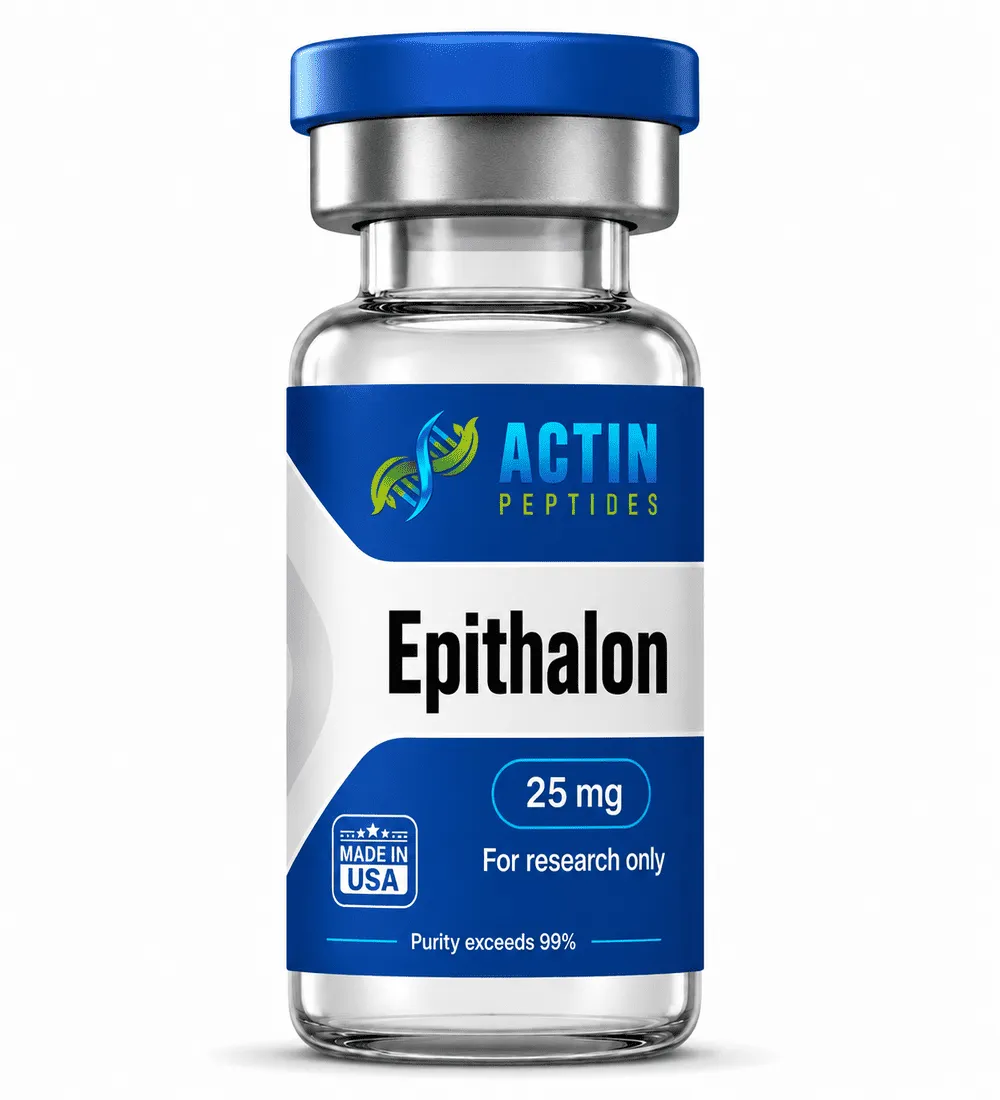
Description
Epithalon Peptide: Research on Cellular Aging, Oxidative Stress, and Telomere Biology
Introduction
Epithalon peptide, also known as Epitalon, Epithalone, or the AEDG peptide, is a synthetic tetrapeptide composed of alanine, glutamic acid, aspartic acid, and glycine. Researchers developed Epithalon as a synthetic analogue of peptide preparations associated with the pineal gland, particularly Epithalamin.
Epithalon research has focused on several areas of cellular biology, including telomere biology, oxidative stress, cellular aging, gene expression, apoptosis, mitochondrial function, melatonin-related signaling, and retinal research. Studies have also investigated how the peptide may interact with chromatin and cellular regulatory mechanisms in experimental models.
Because many published findings involve cell cultures and animal models, researchers continue to investigate the mechanisms and reproducibility of these observations. Epithalon should therefore be considered a research compound rather than a clinically established intervention.
What Is Epithalon Peptide?
Epithalon is a synthetic tetrapeptide with the amino acid sequence Ala-Glu-Asp-Gly (AEDG). Research has examined its potential interaction with cellular processes associated with aging, oxidative stress, gene expression, and telomere maintenance.
The compound was developed as a synthetic peptide related to naturally occurring pineal peptide preparations and has subsequently become the subject of experimental research involving cellular aging and longevity biology.
Epithalon Peptide Overview
Epithalon research covers several interconnected areas of cellular biology.
Scientists have investigated the peptide in relation to:
- Telomere length and cellular replicative capacity
- Oxidative stress and reactive oxygen species (ROS)
- Mitochondrial function
- Cellular apoptosis
- Gene expression and chromatin organization
- Stem-cell differentiation
- Melatonin-related pineal signaling
- Retinal cellular activity
- Chromosomal stability
- Cellular proliferation and senescence
These research areas overlap with broader investigations into cellular aging and longevity biology. For example, researchers studying related peptide bioregulators may also examine compounds such as Humanin peptide and FOXO4-DRI because of their relevance to cellular stress, senescence, and aging-related signaling.
Epithalon Peptide Mechanism of Action
Epithalon and Gene Expression
One area of Epithalon mechanism research involves potential interactions with histones and chromatin.
Histones are proteins that package DNA within the nucleus. Their interaction with DNA can influence how accessible particular genes are to transcription machinery.
Experimental research has proposed that Epithalon may interact with histone proteins and influence chromatin organization. Researchers have consequently investigated whether these interactions could alter the expression of genes associated with cellular differentiation and other biological processes.
Epithalon and Telomere Biology
Telomeres are protective DNA-protein structures located at chromosome ends. Their length and integrity are closely associated with cellular replicative history.
Research involving cultured fibroblasts has investigated whether Epithalon exposure may influence telomere length and replicative capacity. In these experimental models, researchers reported changes in telomere characteristics and an apparent extension of cellular divisions.
These observations have contributed to interest in Epithalon as a research compound for studying telomere biology and cellular senescence.
Epithalon and Oxidative Stress
Oxidative stress occurs when reactive oxygen species exceed the cell’s ability to maintain redox balance.
Studies indicate that Epithalon may influence intracellular ROS levels in certain experimental cell models. Research involving aged oocytes also examined potential changes in:
- Reactive oxygen species
- Mitochondrial membrane potential
- Mitochondrial DNA copy number
- DNA damage markers
- Apoptosis
- Cellular structural integrity
These findings have contributed to further investigation into the relationship between Epithalon, oxidative stress, and cellular aging.
Epithalon and Apoptosis
Apoptosis is a regulated form of programmed cell death that plays an essential role in normal tissue biology.
Researchers have investigated whether Epithalon may influence apoptosis-associated proteins and pathways, including caspase activity. Some experimental studies reported reduced markers associated with apoptosis in particular aging-related cell models.
However, these observations remain model-dependent and should not be interpreted as evidence of a therapeutic effect.
Epithalon and Melatonin-Related Signaling
The pineal gland plays an important role in melatonin production and circadian signaling.
Because Epithalon was developed in connection with research into pineal peptide preparations, scientists have investigated whether the peptide may influence melatonin-related activity. Experimental research involving aging models has reported changes in melatonin levels following peptide exposure.
This research has helped establish a connection between Epithalon studies and the broader scientific investigation of pineal gland function, circadian biology, and age-associated changes in melatonin signaling.
Chemical Makeup of Epithalon Peptide
| Property | Details |
|---|---|
| Peptide Name | Epithalon |
| Amino Acid Sequence | Ala-Glu-Asp-Gly (AEDG) |
| Molecular Formula | C14H22N4O9 |
| Molecular Weight | 390.34 g/mol |
| Peptide Type | Synthetic tetrapeptide |
| Other Names | Epitalon, Epithalone, AEDG peptide |
Epithalon Peptide Research and Studies
Epithalon and Cellular Aging
Study Objective
Researchers investigated whether Epithalon could influence gene expression and protein synthesis in human gingival mesenchymal stem cells and related stem-cell models.
Methodology
Cell cultures were exposed to Epithalon and subsequently analyzed for changes in molecular markers associated with neuronal differentiation and cellular gene expression.
Researchers examined markers including:
- Nestin
- GAP43
- β-Tubulin III
- Doublecortin
Findings
The experimental models showed increased expression of several neuronal differentiation markers following Epithalon exposure. Reported increases in mRNA expression ranged approximately from 1.6- to 1.8-fold for some markers.
Scientific Significance
These findings suggest that Epithalon may influence gene-expression programs associated with cellular differentiation. The results provide a basis for further research into peptide interactions with chromatin, histones, and stem-cell signaling.
Epithalon and Oxidative Stress Research
Study Objective
Researchers investigated whether Epithalon could influence oxidative stress and cellular integrity in aged oocyte models.
Methodology
Aged oocytes were exposed to different concentrations of Epithalon and evaluated for markers associated with oxidative stress, mitochondrial function, DNA damage, and apoptosis.
Findings
Researchers reported potential changes involving:
- Reduced intracellular ROS
- Mitochondrial membrane potential
- Mitochondrial DNA copy number
- Spindle organization
- Cortical granule distribution
- DNA damage markers
- Apoptosis indicators
Scientific Significance
The findings support continued investigation into Epithalon’s relationship with oxidative stress, mitochondrial biology, and cellular aging.
Importantly, these results come from experimental models and do not establish clinical efficacy.
Epithalon and Cellular Senescence
Study Objective
Researchers investigated whether Epithalon could influence markers associated with cellular proliferation and aging.
Methodology
Cell cultures representing different stages of cellular aging were examined following exposure to the peptide. Researchers evaluated markers associated with proliferation and apoptosis.
Findings
Experimental observations included potential increases in markers such as Ki-67 and CD98hc, alongside changes in matrix metalloproteinase and caspase-3 activity.
Scientific Significance
These findings have contributed to research examining how peptide compounds might interact with cellular senescence, proliferation, and apoptosis pathways.
Epithalon and Telomere Research
Study Objective
Researchers investigated the relationship between Epithalon exposure and telomere characteristics in aging fetal fibroblast cultures.
Methodology
Pulmonary fibroblasts derived from fetal tissue were cultured through successive passages. Researchers observed changes in cellular proliferation and telomere length as the cultures aged.
Findings
The study reported shortened telomeres and reduced proliferative capacity in later-passage cells. Following Epithalon exposure, researchers observed apparent changes in telomere length accompanied by additional cellular divisions compared with controls.
Scientific Significance
This research is particularly relevant to Epithalon telomere research, because it provides an experimental model for investigating the relationship between telomere biology and cellular replicative capacity.
The findings should nevertheless be interpreted as preclinical observations rather than proof that the compound extends human lifespan.
Epithalon and Lymphocyte Research
Study Objective
Researchers examined whether Epithalon could influence chromatin organization and ribosomal gene activity in lymphocytes obtained from older subjects.
Methodology
Cultured lymphocytes were exposed to Epithalon and subsequently evaluated for changes in ribosomal gene activity and heterochromatin structure.
Findings
Researchers reported apparent activation of ribosomal genes and changes in heterochromatin organization following peptide exposure.
Scientific Significance
These observations provide another research pathway for studying how Epithalon may interact with chromatin structure and age-associated changes in gene expression.
Epithalon and Chromosomal Stability
Study Objective
A mouse study investigated whether Epithalon exposure could influence chromosomal aberrations associated with accelerated aging.
Methodology
Researchers examined different mouse models, including an accelerated-aging model, and evaluated chromosomal abnormalities in bone marrow cells.
Findings
The study reported reductions in observed chromosomal aberrations following Epithalon exposure, with the most notable changes reported in the accelerated-aging model.
Scientific Significance
These results have contributed to research examining the relationship between Epithalon, genomic stability, and age-associated cellular changes.
Epithalon and Cancer-Related Research
Study Objective
Researchers investigated Epithalon in animal models containing mammary and ovarian tumor models.
Methodology
Older female mice were divided into control and experimental groups. Researchers subsequently monitored tumor-related outcomes following repeated peptide exposure.
Findings
The experimental group showed differences in tumor progression and metastatic observations compared with controls.
Scientific Significance
These findings have generated interest in the relationship between Epithalon and tumor-associated cellular signaling. However, animal tumor research cannot establish that Epithalon prevents, treats, or controls cancer in humans.
Epithalon and Melatonin Research
Study Objective
Researchers investigated whether Epithalon could influence melatonin levels in aging animal models.
Methodology
Aging models were evaluated before and after peptide exposure, with researchers measuring changes in melatonin-related activity.
Findings
The research reported increases in melatonin levels following Epithalon exposure.
Scientific Significance
These findings have contributed to continued research into the relationship between pineal peptides, melatonin signaling, circadian biology, and aging.
Epithalon and Retinal Research
Study Objective
Researchers examined the potential relationship between Epithalon exposure and retinal functional activity in older experimental subjects.
Methodology
Researchers evaluated bioelectric and functional characteristics of retinal tissue following peptide exposure.
Findings
The study reported changes in retinal functional measurements and preservation of certain morphological characteristics.
Scientific Significance
These observations have contributed to research into the molecular similarities between pineal and retinal tissues and their potential relationship to age-associated cellular changes.
Epithalon and Geroprotection Research
Study Objective
Researchers investigated peptide bioregulators, including Epithalon and Thymalin, in older subjects over an extended observation period.
Methodology
More than 260 older subjects were monitored over several years, with different groups receiving different peptide bioregulator protocols.
Findings
The research reported changes in several physiological parameters, including cardiovascular, endocrine, immune, nervous-system, metabolic, and hemostatic measures.
Scientific Significance
This work represents one of the broader areas of Epithalon research and has contributed to interest in peptide bioregulators and gerontology.
Nevertheless, the study design and historical research context should be considered when interpreting these findings, and they do not establish Epithalon as an approved longevity treatment.
What Is Epithalon Peptide Research Focused On?
Epithalon peptide research focuses primarily on cellular aging, telomere biology, oxidative stress, gene expression, apoptosis, mitochondrial function, pineal signaling, and retinal biology.
Researchers continue to investigate how the AEDG sequence interacts with cellular regulatory mechanisms and whether the observed effects can be reproduced across different experimental systems.
What Makes Epithalon Unique?
Epithalon is notable because it is a very short tetrapeptide that has been investigated across several interconnected areas of aging biology.
Its research profile includes potential interactions with:
- Telomere biology
- Chromatin and histone proteins
- Oxidative stress
- Mitochondrial function
- Apoptosis
- Cellular proliferation
- Melatonin-related signaling
- Retinal activity
This combination makes it an interesting compound for laboratory research into cellular aging and longevity-associated mechanisms.
Epithalon Peptide and Related Research Areas
Epithalon sits within a broader research landscape involving peptides associated with cellular stress, senescence, mitochondrial biology, and tissue signaling.
For example, researchers studying mitochondrial and cellular-aging mechanisms may also investigate Humanin peptide, while studies of cellular senescence and gene-regulatory mechanisms may examine FOXO4-DRI.
Researchers interested in broader peptide-based skin and connective-tissue biology may also explore GHK-Cu, although its research mechanisms differ substantially from those investigated for Epithalon.
For research involving cellular growth-factor signaling, IGF-1 LR3 represents another distinct research category.
Frequently Asked Questions About Epithalon Peptide
What is Epithalon peptide?
Epithalon is a synthetic tetrapeptide composed of Ala-Glu-Asp-Gly (AEDG). Scientists have investigated it primarily in relation to cellular aging, telomere biology, oxidative stress, gene expression, apoptosis, pineal signaling, and retinal research.
What is Epithalon researched for?
Epithalon is researched for its potential interactions with cellular aging mechanisms, telomeres, oxidative stress, mitochondrial function, chromatin organization, apoptosis, melatonin-related signaling, and retinal cellular activity.
How does Epithalon work?
The precise mechanism remains under investigation. Research has proposed interactions involving histones, chromatin organization, gene expression, oxidative-stress pathways, mitochondrial function, and apoptosis-related signaling.
Does Epithalon affect telomeres?
Experimental research has reported changes in telomere characteristics in cultured fibroblast models exposed to Epithalon. These findings provide a basis for further telomere research but do not establish a corresponding effect in humans.
Is Epithalon an approved medication?
Epithalon should not be represented as an FDA-approved medication or established therapeutic treatment. The research described above primarily concerns experimental and preclinical models.
Is Epithalon available for research?
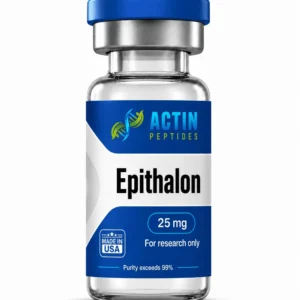
Actin Peptides provides peptide products for research and laboratory applications. Researchers should evaluate applicable regulations, analytical documentation, handling requirements, and intended-use restrictions before ordering.
Conclusion
Epithalon peptide research spans several areas of modern cellular biology, particularly telomere research, oxidative stress, mitochondrial function, apoptosis, chromatin organization, gene expression, pineal signaling, and retinal biology.
Experimental studies have reported potentially relevant changes in cellular and molecular markers following Epithalon exposure. However, these findings vary according to the research model, experimental conditions, concentration, and biological system studied.
Consequently, Epithalon remains a compound of scientific interest rather than a clinically established longevity or anti-aging intervention. Continued research will be necessary to clarify its molecular mechanisms, reproducibility, biological significance, and relevance across different experimental systems.
Research Disclaimer
Epithalon is available strictly for research and laboratory purposes only. It is not approved for human consumption, therapeutic use, or diagnostic applications. Please review our Terms and Conditions before placing an order.

 English
Reviews
There are no reviews yet.