
Description
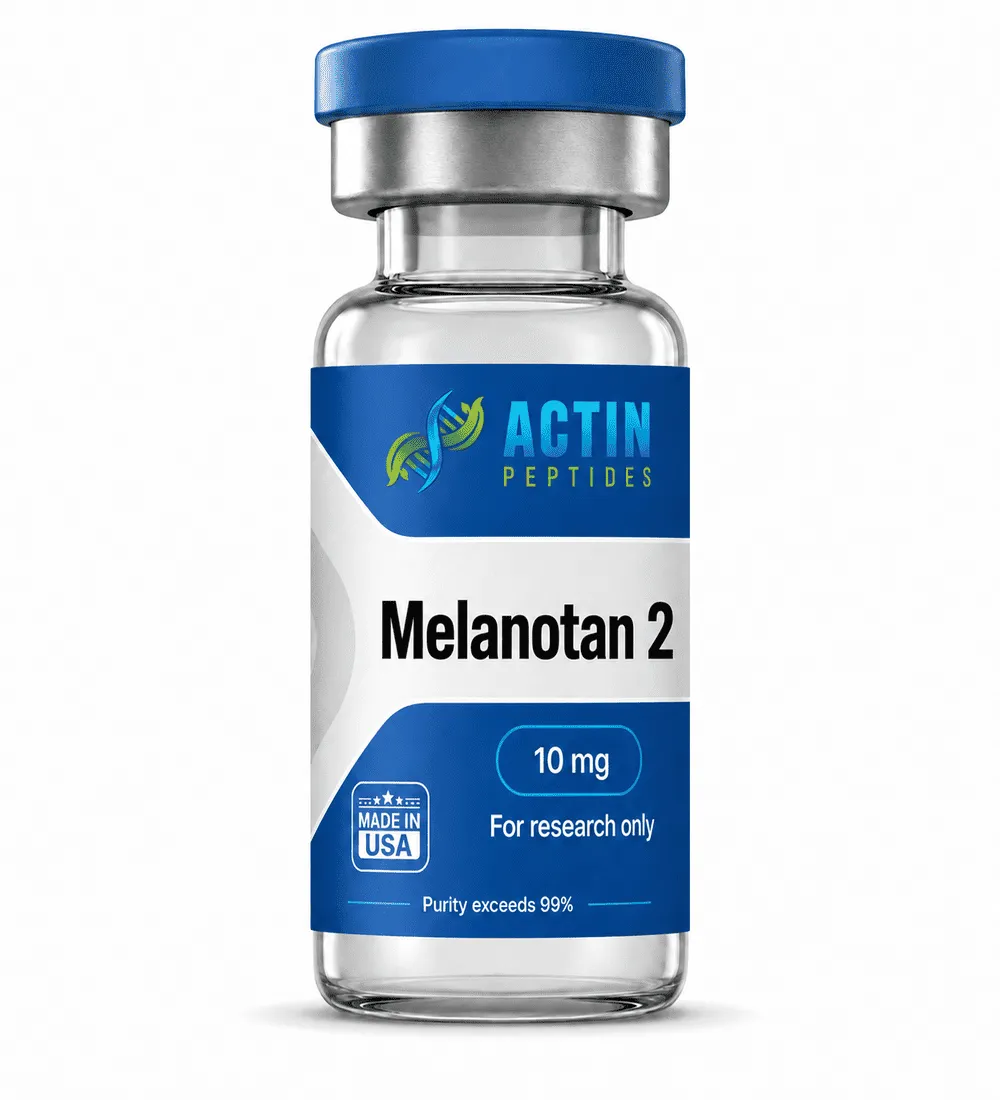
Melanotan 2 Peptide – Research on Melanocortin Receptor Signaling and Melanin Biology
Introduction
Melanotan 2 peptide (MT-II) is a synthetic cyclic heptapeptide developed as an analog of α-melanocyte-stimulating hormone (α-MSH). Research has investigated its interaction with melanocortin receptors and downstream cellular signaling associated with melanogenesis, pigmentation, appetite-related signaling, and neurobiological processes.
Unlike naturally occurring α-MSH, Melanotan 2 has been studied for its broader receptor activity. Preclinical and clinical research has examined its interaction with several melanocortin receptor subtypes, particularly MC1R and MC4R. Consequently, Melanotan 2 research encompasses multiple areas of peptide biology, including melanocyte signaling, pigmentation models, neural signaling, and receptor pharmacology.
What Is Melanotan 2 Peptide?
Melanotan 2 is a synthetic melanocortin receptor agonist structurally related to α-MSH. Scientists have investigated the compound primarily because of its ability to interact with melanocortin receptor pathways involved in pigmentation and neurobiological signaling.
Research suggests that Melanotan 2 may interact with four melanocortin receptor subtypes:
- MC1R (melanocortin 1 receptor): Primarily associated with melanocytes and melanin production.
- MC3R (melanocortin 3 receptor): Expressed in several tissues and investigated for its relationship with energy and appetite signaling.
- MC4R (melanocortin 4 receptor): Primarily studied within the central nervous system and associated with neuroendocrine signaling.
- MC5R (melanocortin 5 receptor): Distributed across multiple tissues, although its precise physiological role remains under investigation.
Because receptor distribution differs between tissues, scientists have investigated whether activation of different melanocortin receptors produces distinct biological responses.
Overview of Melanotan 2 Research
Melanotan 2 is particularly notable because its cyclic structure and receptor activity distinguish it from endogenous α-MSH.
Research has focused on several biological areas:
- Melanogenesis and melanocyte signaling
- MC1R receptor activity
- MC4R-mediated neural signaling
- Peripheral nerve research
- Neuroprotective mechanisms in experimental models
- Arousal-related neurosignaling
- Neurodevelopmental signaling models
- Pigmentation research
Importantly, these findings come from laboratory and experimental settings. They do not establish therapeutic efficacy or establish the compound as an approved treatment.
Melanotan 2 Mechanism of Action
MC1R and Melanin Signaling
The MC1R receptor plays an important role in melanocyte biology. When melanocortin signaling activates MC1R, researchers associate the pathway with increased synthesis of eumelanin, one of the primary forms of melanin pigment.
Studies therefore investigate Melanotan 2 as a research tool for examining:
- MC1R activation
- Melanocyte signaling
- Eumelanin synthesis
- Pigment-cell biology
- Receptor-mediated pigmentation pathways
This makes MC1R one of the most important molecular targets in Melanotan 2 studies.
MC4R and Central Nervous System Signaling
Melanotan 2 may also activate MC4R, a melanocortin receptor extensively studied within the central nervous system.
MC4R signaling has been investigated in relation to neuronal networks involved in:
- Neuroendocrine signaling
- Appetite-related pathways
- Motivational behavior
- Reproductive and arousal-related signaling
Researchers have proposed that Melanotan 2 may influence these pathways through MC4R activation and downstream neuronal signaling.
MC3R and Metabolic Signaling
MC3R is another receptor investigated in melanocortin research. Although its precise functions remain complex, studies have explored its potential involvement in energy balance and appetite-related signaling.
Consequently, MC3R provides another area of interest when researchers evaluate the broader Melanotan 2 mechanism.
MC5R and Peripheral Signaling
MC5R occurs in several peripheral tissues. Scientists continue to investigate its biological functions and whether Melanotan 2 produces meaningful signaling through this receptor.
Because Melanotan 2 is not highly selective for a single melanocortin receptor, receptor distribution remains important when interpreting experimental findings.
Chemical Makeup
| Property | Melanotan 2 |
|---|---|
| Common Name | Melanotan 2 |
| Other Known Title | MT-II |
| Molecular Formula | C50H69N15O9 |
| Molecular Weight | 1024.19 g/mol |
| Structure | Synthetic cyclic heptapeptide |
| Research Classification | Melanocortin receptor agonist |
Research and Clinical Studies
Melanotan 2 and Peripheral Nerve Research
Study Objective
Scientists have investigated whether melanocortin receptor activation could influence neuronal recovery and neuroprotective processes following peripheral nerve injury.
Methodology
One preclinical study used experimental murine models with induced peripheral nerve injury. Researchers subsequently evaluated sensory function following exposure to Melanotan 2.
Additional experimental work examined whether the compound could influence nerve responses to chemically induced neurotoxicity.
Findings
The research models demonstrated indications of improved sensory recovery following peptide exposure. Researchers also reported partial protection against experimentally induced neurotoxicity.
The investigators proposed that MC4R signaling could contribute to these observations.
Scientific Significance
These findings have made Melanotan 2 peptide research relevant to the study of melanocortin-mediated neuronal signaling. However, the observations remain experimental and do not establish efficacy for treating neurological injuries.
Melanotan 2 and Arousal-Related Neurosignaling
Study Objective
Researchers have investigated whether melanocortin receptor activation influences neural pathways associated with sexual arousal and related neuroendocrine signaling.
Methodology
Clinical research evaluated responses following exposure to Melanotan 2 compared with placebo conditions.
Findings
The study reported increased arousal-related responses among a substantial proportion of participants receiving the peptide compared with the placebo group.
Researchers proposed that MC4R activation could interact with downstream neuronal systems involving dopaminergic and oxytocinergic signaling.
Scientific Significance
This research demonstrates that melanocortin receptor agonists can influence central neural pathways beyond pigmentation biology. It also illustrates why Melanotan 2 should be evaluated as a pharmacologically active research compound rather than simply as a pigmentation-related peptide.
Melanotan 2 and Neurodevelopmental Signaling
Study Objective
Scientists have explored whether melanocortin signaling could influence neural circuits associated with social behavior and neurodevelopmental processes.
Research Approach
Experimental research has focused on MC4R-sensitive neuronal populations, including hypothalamic circuits associated with oxytocin signaling.
Researchers have examined potential interactions between melanocortin activity and neurotransmitter systems involving:
- Oxytocin
- Serotonin
- Dopamine
- Glutamate
- GABA
Findings
Experimental models suggest that melanocortin receptor activation may modify neuronal communication and synaptic signaling.
Scientific Significance
These findings provide a basis for continued investigation of melanocortin pathways in neurobiology. However, they do not establish Melanotan 2 as a treatment for neurodevelopmental or psychiatric conditions.
Melanotan 2 and Melanogenesis Research
Study Objective
One of the principal areas of Melanotan 2 studies involves understanding how melanocortin receptor activation affects melanin production.
Mechanism Investigated
MC1R is expressed on melanocytes, the pigment-producing cells responsible for synthesizing melanin.
Research suggests that activating MC1R can increase signaling associated with eumelanin production. Because Melanotan 2 acts as a melanocortin receptor agonist, researchers have investigated its capacity to stimulate this pathway.
Findings
Experimental research has reported increased pigmentation following Melanotan 2 exposure, including darker pigmentation in several areas of experimental subjects.
Scientific Significance
This research provides an experimental model for studying:
- Melanocyte biology
- MC1R signaling
- Eumelanin production
- Melanogenesis
- Melanocortin receptor pharmacology
These findings should not be interpreted as establishing Melanotan 2 as a safe or approved sunless-tanning product.
What Is Melanotan 2 Researched For?
Melanotan 2 is being researched primarily for its interaction with melanocortin receptors and downstream signaling. Research areas include:
- Melanogenesis: Understanding how MC1R activation influences melanin production.
- Receptor pharmacology: Studying MC1R, MC3R, MC4R, and MC5R activity.
- Neurosignaling: Investigating melanocortin-mediated neuronal pathways.
- Peripheral nerve models: Examining potential neuroprotective signaling.
- Arousal-related signaling: Studying MC4R-mediated central nervous system activity.
- Neurodevelopmental models: Exploring melanocortin and oxytocin-related signaling networks.
What Makes Melanotan 2 Unique?
Melanotan 2 is distinctive because its cyclic peptide structure allows it to interact with multiple melanocortin receptor subtypes. This broad receptor activity makes it useful for researchers studying the relationship between melanogenesis, receptor signaling, and central nervous system pathways.
Its activity across both peripheral and central receptor systems also makes receptor selectivity an important consideration when interpreting Melanotan 2 research.
Melanotan 2 vs. Related Peptide Research
Melanotan 2 belongs to a different research category from peptides primarily investigated for tissue repair or collagen biology.
For example, researchers study GHK-Cu in connection with copper-dependent cellular signaling, extracellular matrix biology, and collagen-related pathways. Similarly, BPC-157 and TB-500 have been investigated in experimental models involving cellular migration, angiogenesis, and tissue-repair signaling.
These compounds should not be considered interchangeable. Each peptide has a distinct molecular structure, receptor profile, and research history.
Melanotan 2 Peptide Research Summary
| Research Area | Primary Research Focus |
|---|---|
| MC1R signaling | Melanocyte and melanin biology |
| MC3R signaling | Appetite and energy-related pathways |
| MC4R signaling | Central nervous system and neuroendocrine pathways |
| MC5R signaling | Peripheral receptor biology |
| Neurobiology | Neuronal signaling and nerve models |
| Melanogenesis | Eumelanin production |
| Arousal signaling | MC4R-related neural activity |
| Neuroprotection | Experimental peripheral nerve models |
Frequently Asked Questions
What is Melanotan 2 peptide?
Melanotan 2 is a synthetic cyclic heptapeptide and melanocortin receptor agonist studied primarily for its interactions with MC1R, MC3R, MC4R, and MC5R pathways.
How does Melanotan 2 work?
Research suggests that Melanotan 2 activates multiple melanocortin receptors. MC1R signaling is associated with melanogenesis, while MC4R signaling has been studied in relation to central nervous system and neuroendocrine pathways.
What is Melanotan 2 researched for?
Researchers investigate Melanotan 2 for melanogenesis, melanocortin receptor pharmacology, neuronal signaling, peripheral nerve models, and other experimental biological processes.
Does Melanotan 2 affect melanin production?
Preclinical research suggests that melanocortin receptor activation through MC1R can increase signaling associated with eumelanin production. The compound therefore serves as a research model for studying melanogenesis.
What receptors does Melanotan 2 interact with?
Research indicates activity at MC1R, MC3R, MC4R, and MC5R. The biological response can vary depending on receptor distribution and the tissue being studied.
Is Melanotan 2 FDA approved?
Melanotan 2 is not presented by Actin Peptides as an FDA-approved drug, treatment, or therapeutic product. The compound is offered strictly within a research and laboratory context.
Where can researchers buy Melanotan 2 peptide?
Researchers evaluating Melanotan 2 peptide for sale should consider supplier transparency, product documentation, identity and purity testing, and appropriate research-use labeling. Actin Peptides provides this compound strictly for research and laboratory purposes.
Conclusion
Melanotan 2 is a synthetic cyclic melanocortin peptide that researchers have investigated for its activity across multiple melanocortin receptor subtypes. Its strongest research association involves MC1R-mediated melanogenesis, while additional studies have examined MC4R-related neuronal signaling, peripheral nerve models, and other neurobiological pathways.
The available research makes Melanotan 2 a useful compound for studying receptor pharmacology and melanocortin biology. Nevertheless, experimental findings should remain distinct from established clinical evidence, and the available research does not establish therapeutic efficacy or clinical safety.
Research Disclaimer
Melanotan 2 peptide is available strictly for research and laboratory purposes only. It is not approved for human consumption, therapeutic use, or diagnostic applications. Please review our Terms and Conditions before placing an order.

 English
Reviews
There are no reviews yet.