
Description
BPC-157 & TB-500 Peptide Blend
The BPC-157 & TB-500 peptide blend combines two synthetic research peptides that scientists have investigated for their potential roles in cellular signaling, tissue remodeling, angiogenesis, fibroblast activity, and inflammatory pathways. BPC-157 is a 15-amino-acid peptide studied extensively in preclinical models of tissue injury, while TB-500 is associated with research on thymosin beta-4, actin dynamics, cellular migration, and vascular development.
Research on the individual peptides suggests several overlapping biological pathways. However, it is important to distinguish research on the individual compounds from research on the combination: no published study identified in the supplied material has evaluated BPC-157 and TB-500 together in the same experimental model. Therefore, claims about synergistic effects of the blend remain hypothetical.
What Is BPC-157 & TB-500 Peptide Blend?
The BPC-157 & TB-500 blend combines two synthetic polypeptides:
- BPC-157: A 15-amino-acid peptide investigated in laboratory models involving cellular signaling, vascular responses, fibroblast activity, and tissue remodeling.
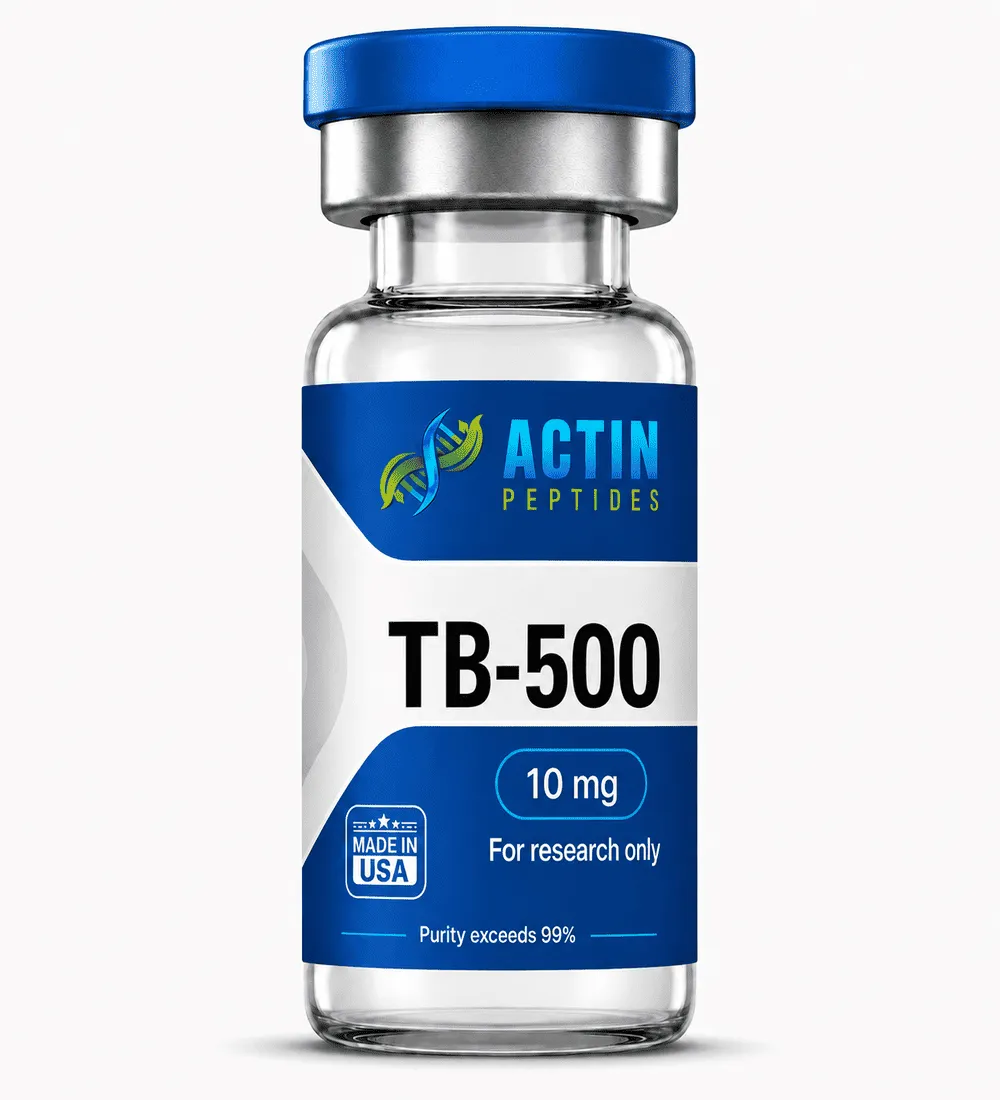
- TB-500: A synthetic peptide associated with thymosin beta-4 research and investigated for actin binding, cellular migration, angiogenesis, and inflammatory signaling.
Researchers have studied both compounds independently in models involving connective tissue, muscle, vascular structures, and wound-related cellular processes.
For researchers interested in individual compounds, Actin Peptides also offers BPC-157 peptide and TB-500 (Thymosin Beta 4) research products.
Overview
BPC-157 and TB-500 have distinct molecular structures and proposed mechanisms, although several areas of research overlap.
BPC-157 Research Profile
BPC-157 research has focused on cellular processes involving:
- Endothelial signaling
- Nitric oxide (NO) pathways
- Fibroblast migration
- Extracellular matrix organization
- Angiogenic signaling
- Inflammatory responses
- F-actin formation
- FAK-paxillin signaling
- Egr-1-related cellular signaling
Experimental findings suggest that BPC-157 may influence endothelial integrity and cellular migration while interacting with signaling systems involved in tissue remodeling.
TB-500 Research Profile
TB-500 research is closely associated with thymosin beta-4 and its interaction with the actin cytoskeleton. Researchers have investigated the peptide’s potential influence on:
- G-actin binding
- Cellular migration
- Cytoskeletal organization
- Angiogenesis
- Fibroblast activity
- Inflammatory signaling
- Vascular remodeling
A commonly investigated region of thymosin beta-4 is the LKKTETQ sequence, which researchers associate with actin binding and cellular motility.
How Does the BPC-157 & TB-500 Blend Work?
The BPC-157 & TB-500 mechanism remains an area of experimental research. The available evidence primarily comes from studies of each peptide separately rather than from studies of the combined formulation.
BPC-157 and Cellular Signaling
Research suggests that BPC-157 may interact with nitric oxide signaling and pathways associated with endothelial function and cellular migration.
Studies have also investigated potential relationships between BPC-157 and:
- Egr-1 signaling
- FAK-paxillin activation
- F-actin formation
- Endothelial cell behavior
- Angiogenic signaling
- Extracellular matrix organization
These mechanisms may help explain why researchers have examined BPC-157 in experimental models involving connective tissue and vascular remodeling.
TB-500 and Actin Dynamics
TB-500 research focuses heavily on its relationship with G-actin, the globular form of actin.
Thymosin beta-4 can bind G-actin and influence the balance between G-actin and F-actin. Because actin filaments form an important part of the cellular cytoskeleton, changes in actin organization can influence cellular shape, movement, and migration.
This mechanism has made thymosin beta-4 research particularly relevant to studies of wound-associated cellular migration and angiogenesis.
TB-500 and Inflammatory Signaling
Researchers have also investigated the relationship between thymosin beta-4 and microRNA-146a (miR-146a), a regulatory RNA molecule involved in innate immune signaling.
Experimental research suggests that increased miR-146a may reduce signaling through IRAK1 and TRAF6, two proteins associated with Toll-like receptor and inflammatory pathways.
Consequently, scientists have proposed that this pathway could contribute to the inflammatory-signaling effects observed in experimental TB-500 research.
Chemical Makeup
| Property | BPC-157 | TB-500 |
|---|---|---|
| Molecular Formula | C62H98N16O22 | C212H350N56O78S |
| Molecular Weight | 1419.5 g/mol | 4963 g/mol |
| Amino Acids | 15 | 43 |
| Other Known Title | Body Protection Compound-157 | Thymosin Beta-4 |
| Research Classification | Synthetic peptide | Synthetic thymosin beta-4-related peptide |
BPC-157 & TB-500 Research and Studies
BPC-157 & TB-500 Blend and Tissue Repair
Study objective:
Researchers have independently examined BPC-157 and thymosin beta-4 in experimental models involving tissue repair and wound-associated cellular processes.
Methodology:
One thymosin beta-4 study used experimentally wounded animal models and compared peptide exposure with saline controls. Separately, BPC-157 research evaluated experimentally induced acute and chronic wounds.
Findings:
The thymosin beta-4 study reported increased re-epithelialization and greater wound contraction compared with controls. BPC-157 research reported increased collagen and blood-vessel formation in treated experimental models.
Scientific significance:
Together, these findings provide a research basis for investigating how cellular migration, vascular signaling, collagen organization, and epithelial remodeling may contribute to tissue-repair processes.
Importantly, these findings do not establish that the BPC-157 and TB-500 combination produces the same effects or produces synergistic effects.
Researchers studying related tissue-remodeling compounds may also explore KPV peptide as another research compound investigated in inflammatory and cellular signaling models.
BPC-157 & TB-500 Research and Ligament Models
Study objective:
Researchers have examined thymosin beta-4 and BPC-157 independently in experimental connective-tissue models.
Methodology:
One study investigated experimentally transected medial collateral ligaments and compared thymosin beta-4 exposure with controls. Separate BPC-157 research examined cultured tendon fibroblasts.
Findings:
The thymosin beta-4 study reported differences in collagen organization and mechanical properties within regenerating ligament tissue. BPC-157 research reported increased tendon fibroblast migration, spreading, and survival under oxidative stress.
Researchers also observed changes in F-actin formation and phosphorylation of focal adhesion kinase (FAK) and paxillin in BPC-157-exposed tendon fibroblast cultures.
Scientific significance:
These observations have made actin organization, fibroblast migration, and focal adhesion signaling important areas of interest in research involving connective-tissue remodeling.
For broader research into collagen and tissue signaling, GHK-Cu peptide provides another example of a peptide investigated in cellular and extracellular-matrix research.
BPC-157 & TB-500 Research and Muscle Models
Study objective:
Researchers have investigated both compounds separately in experimental muscle and cardiac models.
Methodology:
BPC-157 was evaluated in experimental models involving corticosteroid-associated gastrocnemius muscle injury. Separate thymosin beta-4 research investigated cardiac cells under conditions associated with reduced oxygen availability and experimentally induced cardiac injury.
Findings:
BPC-157 exposure was associated with improved structural and functional outcomes in the experimental muscle model. Thymosin beta-4 research has also reported effects involving cardiac-cell survival, angiogenic signaling, and cellular migration.
Researchers have proposed potential involvement of pathways including integrin-linked kinase (ILK) and protein kinase B (Akt) in cardiac models.
Scientific significance:
These studies provide a basis for investigating how cytoskeletal organization, cellular survival pathways, vascular signaling, and tissue remodeling interact in muscle-related research.
Researchers studying growth-factor signaling can also explore Receptor Grade IGF-1 LR3 as a separate research compound.
TB-500 and Angiogenesis Research
Study objective:
Researchers have examined whether thymosin beta-4 may influence angiogenesis and endothelial cell migration.
Methodology:
Studies have used human umbilical vein endothelial cells (HUVECs) and experimental models of critical limb ischemia. Researchers have evaluated cell viability, migration, tube formation, and expression of angiogenesis-related proteins.
Findings:
Experimental TB-500/thymosin beta-4 exposure has been associated with increased expression of several angiogenesis-related markers, including:
- VEGFA
- Angiopoietin-2 (Ang2)
- Tie2
- Notch-related signaling components
- NF-κB-associated proteins
Researchers also used pathway inhibitors to investigate the involvement of Notch and NF-κB signaling.
Scientific significance:
The findings support continued investigation into the relationship between thymosin beta-4, endothelial migration, cytoskeletal behavior, and vascular signaling.
TB-500 and Chronic Wound Research
Study objective:
Researchers have investigated thymosin beta-4 in models representing different wound environments.
Methodology:
Experimental models included normal, diabetic, aged, and steroid-influenced animals with full-thickness wounds. Additional research has examined pressure and stasis ulcer models.
Findings:
The experimental studies reported accelerated wound-related changes following thymosin beta-4 exposure.
Scientific significance:
These findings have contributed to continued interest in thymosin beta-4 as a research tool for studying epithelial migration, extracellular-matrix remodeling, angiogenesis, and cellular responses to injury.
What Makes the BPC-157 & TB-500 Blend Unique?
The primary research interest in this combination comes from the fact that the two peptides have different but potentially overlapping biological targets.
BPC-157 research emphasizes endothelial signaling, fibroblast behavior, nitric oxide pathways, and cellular remodeling. TB-500 research emphasizes actin dynamics, cellular migration, angiogenesis, and thymosin beta-4-associated signaling.
However, scientists have not established a validated synergistic mechanism for the combination. Research on each individual peptide should therefore not be interpreted as evidence that the blend has equivalent or enhanced biological activity.
BPC-157 & TB-500 Benefits: What Does Research Suggest?
When discussing BPC-157 & TB-500 benefits research, it is important to distinguish experimental observations from established biological or clinical outcomes.
Research on the individual compounds has investigated:
- Cellular migration
- Fibroblast activity
- Angiogenesis
- Actin-cytoskeleton dynamics
- Collagen organization
- Endothelial signaling
- Inflammatory signaling
- Tissue-remodeling pathways
- Cellular survival mechanisms
These areas remain subjects of laboratory investigation rather than established therapeutic applications.
Frequently Asked Questions
What is BPC-157 & TB-500 peptide blend?
The BPC-157 & TB-500 peptide blend combines two synthetic research peptides investigated independently for cellular migration, angiogenesis, fibroblast behavior, inflammatory signaling, and tissue-remodeling mechanisms.
How does BPC-157 & TB-500 work?
Research suggests that BPC-157 and TB-500 influence different cellular pathways. BPC-157 has been investigated in relation to nitric oxide, FAK-paxillin, Egr-1, and endothelial signaling, while TB-500 research emphasizes actin binding, cellular migration, and Notch/NF-κB-associated pathways.
What is BPC-157 & TB-500 researched for?
Scientists have studied the individual peptides in experimental models involving wound-associated cellular processes, connective tissue, muscle, endothelial cells, angiogenesis, fibroblast migration, and inflammatory signaling.
Is there research on the BPC-157 and TB-500 combination?
The supplied research material does not identify a study that evaluated both peptides simultaneously in the same experimental model. Therefore, proposed benefits of combining them remain hypothetical.
What makes TB-500 different from BPC-157?
TB-500 is associated with thymosin beta-4 research and has a 43-amino-acid structure, with particular research interest in actin binding and cellular migration. BPC-157 is a 15-amino-acid peptide studied extensively in experimental models involving cellular signaling and tissue remodeling.
Where can I buy BPC-157 & TB-500 peptide blend?
Researchers looking for the BPC-157 & TB-500 peptide blend for sale can review the research-use product selection available from Actin Peptides. The individual BPC-157 peptide and TB-500 peptide are also available as separate research compounds.
Related Peptide Research
Researchers exploring overlapping areas of peptide biology may also be interested in:
- GHK-Cu — research involving copper-peptide signaling, fibroblasts, and extracellular-matrix processes.
- KPV — research involving inflammatory and cellular signaling.
- Receptor Grade IGF-1 LR3 — research involving growth-factor signaling.
- MGF — research involving growth-factor and muscle-related cellular signaling.
Conclusion
The BPC-157 & TB-500 peptide blend brings together two research compounds with overlapping areas of scientific interest but distinct proposed mechanisms. BPC-157 research has focused on endothelial signaling, fibroblast migration, FAK-paxillin pathways, nitric oxide regulation, and tissue-remodeling processes. Meanwhile, TB-500 research has emphasized actin dynamics, cellular migration, angiogenesis, and inflammatory signaling.
Although these mechanisms provide a scientific rationale for investigating the compounds together, research has not yet established that combining BPC-157 and TB-500 produces synergistic effects. The available evidence should therefore be interpreted according to the experimental models in which each peptide was individually studied.
For researchers evaluating peptide biology, this distinction is important: preclinical observations can help identify mechanisms and research directions, but they do not establish human efficacy, safety, dosage, or therapeutic use.
Research Disclaimer
BPC-157 & TB-500 peptide blend is available strictly for research and laboratory purposes only. It is not approved for human consumption, therapeutic use, or diagnostic applications. Please review our Terms and Conditions before placing an order.
 English
Reviews
There are no reviews yet.