
Description
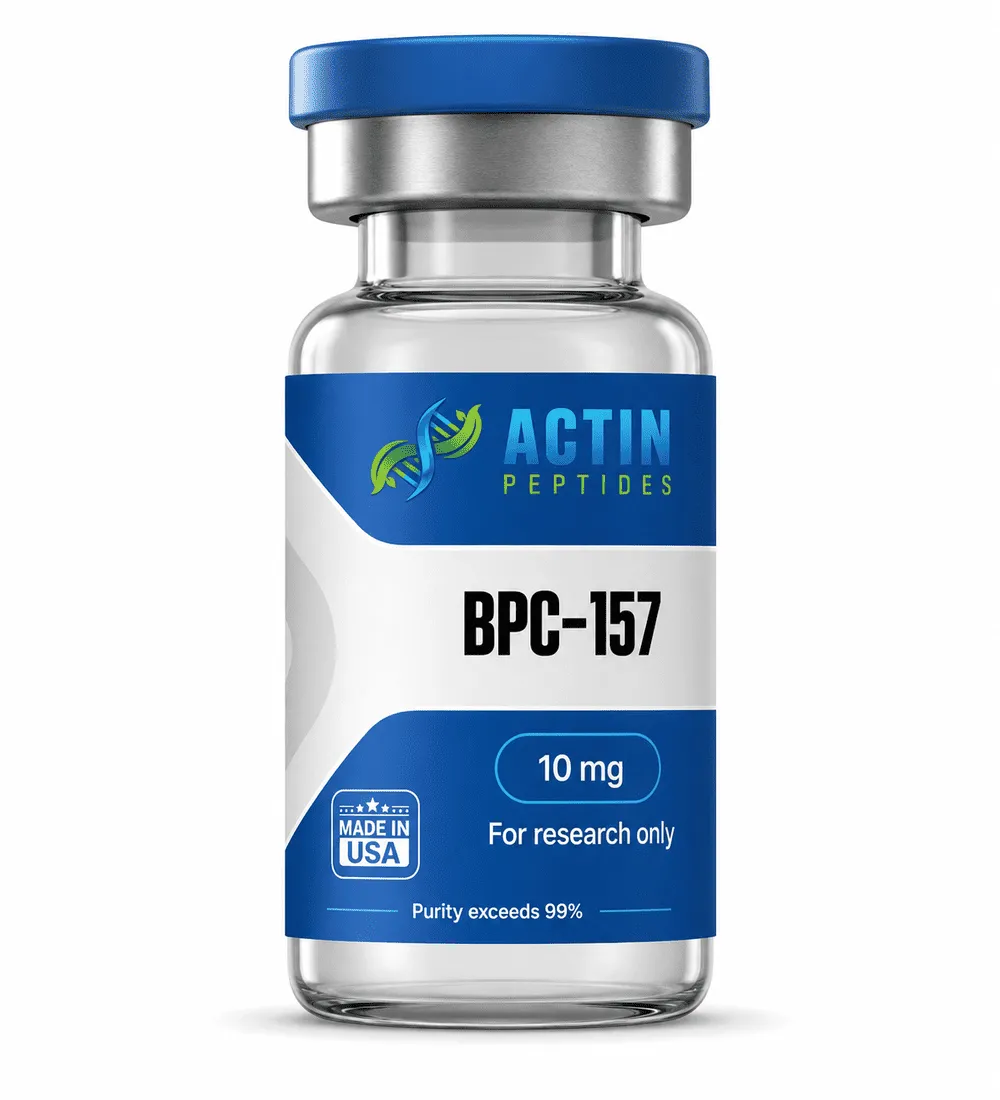
BPC-157 Peptide for Research
BPC-157 peptide is a synthetic pentadecapeptide extensively investigated for its potential role in tissue regeneration, angiogenesis, cellular signaling, gastrointestinal integrity, and musculoskeletal research. Scientists continue to study its interactions with growth factor pathways, fibroblasts, endothelial cells, extracellular matrix remodeling, and inflammatory signaling. At Actin Peptides, BPC-157 is available strictly for laboratory and scientific research purposes.
What Is BPC-157?
BPC-157 is a synthetic peptide consisting of 15 amino acids derived from a naturally occurring protein fragment found in gastric juice. Researchers have studied it for its potential involvement in tissue repair, angiogenesis, tendon regeneration, muscle recovery, gastrointestinal integrity, and cellular signaling.
How Does BPC-157 Work?
Research suggests BPC-157 interacts with multiple biological pathways involved in tissue remodeling. Studies indicate it may influence growth factor signaling, vascular endothelial growth factor (VEGF), fibroblast activity, collagen synthesis, endothelial cell migration, and cytoskeletal organization while supporting normal cellular communication during tissue repair.
What Is BPC-157 Researched For?
Scientists have investigated BPC-157 for research involving:
- Tissue regeneration
- Tendon and ligament repair
- Muscle regeneration
- Gastrointestinal tissue integrity
- Angiogenesis
- Cellular signaling
- Collagen production
- Endothelial cell migration
- Inflammatory pathways
- Nervous system research
What Makes BPC-157 Unique?
Unlike many research peptides that primarily target a single receptor, BPC-157 has been studied across multiple biological systems, including musculoskeletal, gastrointestinal, vascular, and neurological pathways. Its broad research profile has made it one of the most investigated regenerative peptides in laboratory settings.
Overview
BPC-157, also known as Body Protection Compound-157 or Pentadecapeptide BPC-157, is a synthetic peptide composed of 15 amino acids. Researchers developed the peptide from a naturally occurring gastric protein fragment after scientists observed the biological importance of gastric peptides in maintaining tissue integrity.
Over the past two decades, BPC-157 research has expanded considerably. Studies suggest the peptide may influence several signaling pathways associated with tissue remodeling, angiogenesis, extracellular matrix formation, fibroblast migration, collagen deposition, and inflammatory regulation.
Because of these characteristics, scientists continue investigating BPC-157 across numerous experimental models involving connective tissue, gastrointestinal tissues, skeletal muscle, vascular biology, and cellular regeneration.
Researchers frequently compare BPC-157 with other regenerative peptides, including TB-500, KPV, and collagen-supporting peptides. For studies focused on connective tissue regeneration, researchers often also evaluate:
- https://actinpeptides.com/product/tb-500-thymosin-beta-4-5mg-10mg/
- https://actinpeptides.com/product/kpv-peptide-4mg/
- https://actinpeptides.com/product/ghk-cu-200mg/
- https://actinpeptides.com/product/matrixyl-200mg/
Mechanism of Action
BPC-157 Supports Multiple Cellular Signaling Pathways
Research suggests BPC-157 does not function through a single receptor. Instead, scientists believe it influences several interconnected biological pathways responsible for tissue remodeling, vascular development, cellular migration, and extracellular matrix organization.
Rather than acting as a hormone replacement, BPC-157 appears to regulate cellular communication involved in tissue maintenance.
Growth Hormone Receptor Signaling
Studies indicate BPC-157 may interact with growth hormone receptor-related pathways.
Researchers propose that this interaction could support:
- Cellular proliferation
- Fibroblast activity
- Collagen synthesis
- Tissue remodeling
- Cellular differentiation
Importantly, current research indicates these effects appear distinct from direct growth hormone replacement mechanisms.
VEGF and Angiogenesis
One of the most extensively investigated mechanisms involves vascular endothelial growth factor (VEGF).
Research suggests BPC-157 may influence:
- VEGF expression
- Endothelial cell migration
- Blood vessel formation
- Capillary remodeling
- Oxygen and nutrient delivery to regenerating tissues
Scientists continue exploring how these vascular adaptations contribute to tissue repair models.
FAK–Paxillin Signaling
Experimental studies indicate BPC-157 may activate:
- Focal Adhesion Kinase (FAK)
- Paxillin
These proteins regulate:
- Cell adhesion
- Cellular migration
- Cytoskeletal organization
- Mechanical stability
- Fibroblast movement
Activation of these pathways may help explain the peptide’s growing role in tendon and connective tissue research.
ERK1/2 Cellular Signaling
Research also suggests BPC-157 influences phosphorylation of:
- ERK1
- ERK2
These signaling proteins regulate:
- Cell growth
- Cellular migration
- Gene expression
- Tissue remodeling
- Angiogenesis
Scientists continue investigating how ERK signaling contributes to regenerative processes.
Nitric Oxide Regulation
Several experimental models suggest BPC-157 interacts with nitric oxide (NO) signaling.
Nitric oxide plays an important role in:
- Vascular function
- Endothelial homeostasis
- Blood flow regulation
- Cellular communication
Research continues to evaluate how these interactions influence tissue regeneration models.
Chemical Makeup
| Property | Details |
|---|---|
| Peptide Name | BPC-157 |
| Full Name | Body Protection Compound-157 |
| Other Name | Pentadecapeptide BPC-157 |
| Molecular Formula | C62H98N16O22 |
| Molecular Weight | 1419.55 g/mol |
| Peptide Length | 15 amino acids |
| Research Category | Regenerative Research Peptide |
Why Researchers Study BPC-157
Scientists continue investigating BPC-157 because research suggests it may influence numerous biological processes simultaneously, including:
- Fibroblast migration
- Endothelial cell activity
- Angiogenesis
- Collagen production
- Extracellular matrix remodeling
- Growth factor signaling
- Cellular migration
- Cytoskeletal organization
- Inflammatory signaling
- Tissue regeneration
Unlike peptides designed for a single molecular target, BPC-157 has demonstrated activity across multiple interconnected regenerative pathways in preclinical studies.
Research and Clinical Studies
BPC-157 Peptide and Wound Healing Research
Study Objective
Scientists investigated whether BPC-157 could influence biological processes associated with wound healing and tissue regeneration.
Methodology
Researchers evaluated experimental models involving skin wounds, intestinal anastomosis, and implanted biomaterials while comparing BPC-157 with placebo-treated controls.
Findings
Studies indicated BPC-157 may support:
- Increased collagen deposition
- Enhanced reticulin formation
- Greater vascular development
- Improved granulation tissue formation
- Accelerated epithelial remodeling
Researchers also observed increased expression of VEGF alongside enhanced endothelial cell migration.
Laboratory investigations further suggested BPC-157 may regulate ERK1/2 signaling and downstream transcription factors involved in angiogenesis and tissue remodeling.
Scientific Significance
These findings suggest BPC-157 continues to be an important research compound for investigating extracellular matrix remodeling, collagen synthesis, vascular development, and tissue regeneration.
BPC-157 Peptide and Tendon Regeneration Research
Study Objective
Scientists investigated how BPC-157 influences tendon fibroblasts during tissue remodeling.
Methodology
Cultured tendon fibroblasts derived from experimental models were exposed to BPC-157 under both normal and oxidative stress conditions.
Findings
Research suggests BPC-157 may:
- Enhance fibroblast migration
- Improve cellular survival under oxidative stress
- Promote F-actin formation
- Activate FAK signaling
- Increase paxillin phosphorylation
- Support cytoskeletal organization
Researchers also observed improved cellular adhesion and migration, both of which are essential components of connective tissue remodeling.
Scientific Significance
These findings continue to support further investigation into tendon biology, extracellular matrix organization, and connective tissue regeneration.
BPC-157 Peptide and Gastrointestinal Research
Study Objective
Scientists have extensively investigated BPC-157 peptide for its potential role in gastrointestinal tissue research. The primary objective has been to understand how the peptide interacts with gastric tissues, intestinal mucosa, angiogenic pathways, and cellular repair mechanisms following experimental tissue injury.
Methodology
Researchers compared BPC-157 with several well-known growth factors, including epidermal growth factor (EGF), fibroblast growth factor (FGF), and vascular endothelial growth factor (VEGF), across multiple experimental models involving the:
- Esophagus
- Stomach
- Duodenum
- Small intestine
- Colon
- Lower gastrointestinal tract
Scientists evaluated tissue architecture, angiogenesis, collagen formation, epithelial regeneration, and overall tissue organization following peptide administration.
Findings
Research suggests BPC-157 demonstrated consistent activity across multiple gastrointestinal tissue models.
Studies indicate the peptide may support:
- Angiogenesis within gastrointestinal tissues
- Collagen deposition
- Fibroblast migration
- Epithelial regeneration
- Extracellular matrix remodeling
- Cellular communication involved in tissue maintenance
Unlike several isolated growth factors that primarily influence individual signaling pathways, researchers observed that BPC-157 appeared active across numerous gastrointestinal tissues under experimental conditions.
Scientific Significance
These findings continue to position BPC-157 as one of the most extensively studied regenerative peptides for gastrointestinal biology and tissue remodeling research.
Researchers interested in gastrointestinal inflammation and tissue recovery frequently investigate complementary research peptides, including:
- KPV Peptide – https://actinpeptides.com/product/kpv-peptide-4mg/
- TB-500 (Thymosin Beta-4) – https://actinpeptides.com/product/tb-500-thymosin-beta-4-5mg-10mg/
BPC-157 Peptide and Tissue Protection Research
Study Objective
Scientists have investigated whether BPC-157 influences broader tissue protection mechanisms beyond localized wound healing.
The objective has been to determine whether multiple organ systems share common regenerative signaling pathways that respond to BPC-157 exposure.
Methodology
Experimental models evaluated tissues including:
- Liver
- Pancreas
- Gastrointestinal tract
- Blood vessels
- Heart tissue
- Connective tissue
Researchers examined inflammatory signaling, endothelial function, vascular remodeling, and cellular organization following peptide administration.
Findings
Studies suggest BPC-157 may influence several biological systems involved in tissue maintenance.
Scientists observed possible interactions with:
- Nitric oxide (NO) signaling
- Prostaglandin pathways
- Dopamine signaling
- Somatosensory neuron pathways
- Peptidergic defense mechanisms
Researchers believe these interconnected pathways may explain the peptide’s broad experimental profile across different tissues.
Scientific Significance
Rather than targeting a single receptor, BPC-157 appears to influence multiple cellular signaling networks involved in tissue homeostasis and extracellular matrix regulation.
This systems-level activity continues to make BPC-157 an important compound for regenerative biology research.
BPC-157 Peptide and Muscle Regeneration Research
Study Objective
Scientists investigated whether BPC-157 may influence skeletal muscle remodeling following experimentally induced muscle injury.
Methodology
Researchers evaluated gastrocnemius muscle injury models while comparing placebo-treated groups with those receiving BPC-157.
Muscle architecture, cellular organization, and functional recovery markers were monitored throughout the experimental period.
Findings
Research suggests BPC-157 may support biological processes associated with:
- Muscle fiber organization
- Cellular regeneration
- Connective tissue remodeling
- Angiogenesis
- Functional tissue recovery
Investigators also observed improved structural organization within injured muscle tissue compared with untreated experimental controls.
Scientific Significance
These findings have encouraged additional research into BPC-157’s interactions with skeletal muscle biology and regenerative cellular signaling.
Scientists often compare muscle regeneration peptides alongside:
BPC-157 Peptide and Nervous System Research
Study Objective
Researchers have explored whether BPC-157 influences cellular pathways involved in nervous system integrity following experimental neurological injury.
Methodology
Experimental models examined several neurological outcomes after controlled traumatic brain injury.
Scientists evaluated:
- Brain tissue organization
- Vascular integrity
- Edema
- Cellular survival
- Histological appearance
Findings
Research suggests BPC-157 may influence several signaling pathways associated with:
- Endothelial stability
- Cellular communication
- Tissue remodeling
- Inflammatory signaling
- Vascular organization
Experimental observations also indicated reductions in tissue edema together with improved structural preservation in certain laboratory models.
Scientific Significance
Although additional research remains necessary, these findings continue to expand scientific interest in BPC-157 beyond connective tissue biology into broader neurovascular research.
BPC-157 Peptide and Dopaminergic Signaling Research
Study Objective
Scientists investigated whether BPC-157 interacts with dopamine-associated signaling pathways involved in neurological function.
Methodology
Researchers evaluated laboratory models exposed to dopamine agonists and dopamine antagonists before introducing BPC-157.
Behavioral responses and neurological activity were subsequently compared between experimental groups.
Findings
Studies indicate BPC-157 may influence biological pathways associated with dopamine signaling.
Researchers observed changes suggesting the peptide may help regulate neuronal communication through interactions involving dopamine-related mechanisms.
Scientists emphasize that these findings remain experimental and continue to require additional investigation.
Scientific Significance
This area of research highlights the peptide’s potential importance for understanding complex neurochemical signaling networks rather than serving as evidence of therapeutic activity.
BPC-157 Peptide and Angiogenesis Research
One of the most consistently reported observations across experimental studies involves angiogenesis.
Research suggests BPC-157 may support biological mechanisms associated with:
- Endothelial cell proliferation
- Endothelial migration
- Capillary formation
- VEGF signaling
- Blood vessel remodeling
- Oxygen delivery to regenerating tissues
Scientists continue investigating how these vascular adaptations contribute to tissue remodeling throughout different organ systems.
BPC-157 Peptide and Collagen Production
Collagen provides structural support throughout connective tissues.
Research indicates BPC-157 may influence:
- Fibroblast activation
- Collagen synthesis
- Extracellular matrix organization
- Connective tissue remodeling
- Tissue tensile strength
These observations explain why BPC-157 frequently appears alongside collagen-supporting peptides such as:
- GHK-Cu – https://actinpeptides.com/product/ghk-cu-200mg/
- Matrixyl – https://actinpeptides.com/product/matrixyl-200mg/
- SYN-COLL (Palmitoyl Tripeptide-5) – https://actinpeptides.com/product/syn-coll-palmitoyl-tripeptide-5-200mg/
Why Researchers Continue Studying BPC-157
Scientists continue investigating BPC-157 because studies suggest it may influence multiple interconnected regenerative pathways simultaneously.
Current areas of investigation include:
- Angiogenesis
- Fibroblast biology
- Collagen production
- Extracellular matrix remodeling
- Growth factor signaling
- Cellular migration
- Cytoskeletal organization
- Endothelial cell biology
- Gastrointestinal tissue integrity
- Skeletal muscle regeneration
- Tendon remodeling
- Nervous system research
Its broad biological profile makes BPC-157 one of the most researched regenerative peptides currently available for laboratory investigation.
Frequently Asked Questions (FAQ)
What is BPC-157 peptide?
BPC-157 is a synthetic peptide composed of 15 amino acids derived from a naturally occurring protein fragment found in gastric juice. Scientists have studied it extensively for its potential role in tissue regeneration, angiogenesis, connective tissue biology, gastrointestinal integrity, and cellular signaling in laboratory settings.
How does BPC-157 work?
Research suggests BPC-157 influences several biological pathways rather than acting through a single receptor. Studies indicate it may regulate growth factor signaling, vascular endothelial growth factor (VEGF), fibroblast activity, focal adhesion kinase (FAK), ERK1/2 signaling, nitric oxide pathways, and extracellular matrix remodeling.
What is BPC-157 being researched for?
Scientists have investigated BPC-157 for research involving:
- Tissue regeneration
- Tendon and ligament biology
- Muscle regeneration
- Gastrointestinal tissue integrity
- Angiogenesis
- Collagen production
- Endothelial cell migration
- Cellular signaling
- Extracellular matrix remodeling
- Nervous system research
Is BPC-157 a growth hormone?
No. BPC-157 is not growth hormone and does not replace human growth hormone (hGH). Research suggests it may interact with growth hormone receptor-related signaling pathways involved in tissue remodeling without functioning as a growth hormone.
Does BPC-157 stimulate angiogenesis?
Studies indicate BPC-157 may influence biological processes associated with angiogenesis by supporting VEGF signaling, endothelial cell migration, and blood vessel formation during tissue regeneration research.
What tissues has BPC-157 been studied for?
Current research has investigated BPC-157 across multiple tissue types, including:
- Tendons
- Ligaments
- Skeletal muscle
- Skin
- Gastrointestinal tissues
- Blood vessels
- Connective tissue
- Nervous tissue
- Bone
- Cartilage
What signaling pathways are associated with BPC-157?
Research suggests BPC-157 may influence several signaling pathways, including:
- VEGF signaling
- ERK1/2 pathway
- FAK–Paxillin pathway
- Nitric oxide signaling
- Growth factor pathways
- Fibroblast signaling
- Endothelial cell communication
Scientists continue investigating these complex molecular interactions.
What makes BPC-157 unique among research peptides?
Unlike peptides that primarily target one receptor or biological pathway, BPC-157 has demonstrated activity across several interconnected regenerative systems involving angiogenesis, extracellular matrix remodeling, connective tissue biology, gastrointestinal research, and cellular communication.
Is BPC-157 studied with other peptides?
Yes. Researchers frequently investigate BPC-157 alongside complementary research peptides depending on the experimental objective.
Examples include:
Connective tissue and wound healing
- TB-500 (Thymosin Beta-4)
https://actinpeptides.com/product/tb-500-thymosin-beta-4-5mg-10mg/ - KPV Peptide
https://actinpeptides.com/product/kpv-peptide-4mg/
Skin and collagen research
- GHK-Cu
https://actinpeptides.com/product/ghk-cu-200mg/ - Matrixyl
https://actinpeptides.com/product/matrixyl-200mg/ - SYN-COLL (Palmitoyl Tripeptide-5)
https://actinpeptides.com/product/syn-coll-palmitoyl-tripeptide-5-200mg/
Muscle regeneration research
- IGF-1 LR3
https://actinpeptides.com/product/receptor-grade-igf-1-lr3-1mg/ - MGF
https://actinpeptides.com/product/mgf-5mg/ - Follistatin-344
https://actinpeptides.com/product/follistatin-344-1mg/
Is BPC-157 approved for therapeutic use?
No. BPC-157 is not approved for human consumption or therapeutic use. It remains a research compound intended exclusively for laboratory investigations.
Does BPC-157 affect collagen production?
Research suggests BPC-157 may support fibroblast activity and collagen synthesis during tissue remodeling. Scientists continue studying its role in extracellular matrix organization and connective tissue biology.
What is angiogenesis, and why is it important in BPC-157 research?
Angiogenesis is the formation of new blood vessels from existing vasculature. Researchers study this process because blood vessel development supports nutrient delivery, oxygen transport, and tissue remodeling in regenerative biology models.
What is the difference between BPC-157 and TB-500?
Although both peptides are widely studied in regenerative biology, they act through different biological mechanisms.
- BPC-157 is primarily investigated for angiogenesis, fibroblast activity, gastrointestinal research, and connective tissue signaling.
- TB-500 is being researched for cell migration, actin dynamics, tissue remodeling, and wound repair.
Many researchers compare both peptides within regenerative laboratory models.
Why do researchers study BPC-157 so extensively?
Scientists continue investigating BPC-157 because it appears to influence multiple interconnected biological systems involved in:
- Tissue regeneration
- Cellular migration
- Endothelial biology
- Growth factor signaling
- Connective tissue remodeling
- Collagen synthesis
- Angiogenesis
- Gastrointestinal integrity
Its broad experimental profile has made it one of the most extensively studied regenerative peptides available for laboratory research.
Conclusion
BPC-157 has become one of the most widely investigated peptides in regenerative biology due to its broad range of experimental applications. Research suggests it interacts with multiple cellular signaling pathways involved in angiogenesis, fibroblast migration, extracellular matrix remodeling, collagen production, endothelial function, and tissue organization. Scientists have studied the peptide across musculoskeletal, gastrointestinal, vascular, and neurological models, highlighting its versatility as a research compound.
Current studies continue to explore how BPC-157 influences growth factor signaling, nitric oxide pathways, focal adhesion kinase (FAK), ERK1/2 activation, and other molecular mechanisms that regulate cellular communication and tissue maintenance. While these findings are promising within laboratory environments, additional research remains necessary to better understand its full biological activity and potential applications.
Researchers interested in connective tissue regeneration, wound healing, muscle biology, collagen synthesis, or gastrointestinal studies often evaluate BPC-157 alongside complementary peptides such as TB-500, KPV, GHK-Cu, Matrixyl, and IGF-1 LR3 to investigate distinct but related regenerative pathways.
At Actin Peptides, we provide high-quality research peptides manufactured for scientific investigation, analytical testing, and laboratory research. Every product is intended to support researchers seeking reliable compounds for preclinical and experimental studies.
Related Research Peptides
Researchers exploring BPC-157 may also be interested in:
Wound Healing & Tissue Regeneration
- https://actinpeptides.com/product/tb-500-thymosin-beta-4-5mg-10mg/
- https://actinpeptides.com/product/kpv-peptide-4mg/
Skin, Collagen & Connective Tissue
- https://actinpeptides.com/product/ghk-cu-200mg/
- https://actinpeptides.com/product/matrixyl-200mg/
- https://actinpeptides.com/product/syn-coll-palmitoyl-tripeptide-5-200mg/
Muscle Growth & Recovery Research
- https://actinpeptides.com/product/receptor-grade-igf-1-lr3-1mg/
- https://actinpeptides.com/product/mgf-5mg/
- https://actinpeptides.com/product/follistatin-344-1mg/
- https://actinpeptides.com/product/ace-031-1mg/
Research Disclaimer
BPC-157 is available strictly for research and laboratory purposes only. It is not approved for human consumption, therapeutic use, or diagnostic applications. Please review and adhere to our Terms and Conditions before ordering.
 English
Reviews
There are no reviews yet.