
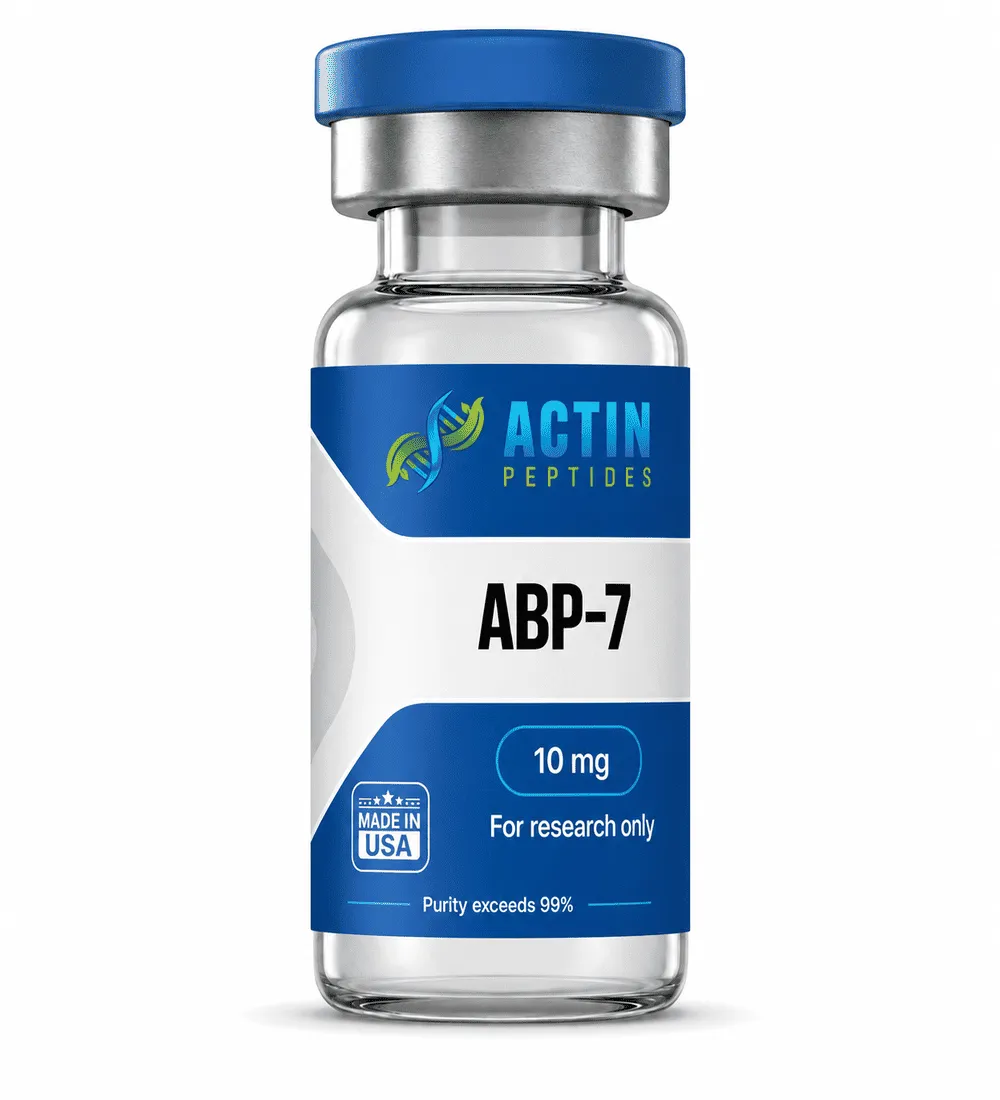
Description
ABP-7 Peptide (Actin Binding Peptide-7): Research, Benefits, Mechanisms, and Studies
What Is ABP-7 Peptide?
ABP-7 (Actin Binding Peptide-7) is a synthetic heptapeptide composed of seven amino acids with the sequence Acetyl-LKKTETQ. It is derived from the actin-binding region of TB-500 (Thymosin Beta 4) and is often referred to as a TB-500 fragment.
The LKKTETQ sequence is widely regarded as the primary actin-binding domain within Thymosin Beta 4. Because of this, researchers have shown interest in studying this peptide in areas such as tissue repair, angiogenesis, fibrosis, and cellular regeneration.
ABP-7 is produced using solid-phase peptide synthesis and is designed to replicate the actin-binding activity associated with Thymosin Beta 4 while focusing on its core functional segment.
How ABP-7 Peptide Works
Research suggests that ABP-7 interacts with actin, a key structural protein found throughout the body. Actin is a major component of the cellular cytoskeleton and contributes to several important cellular functions, including:
- Maintaining cell structure and stability
- Supporting cell migration
- Assisting tissue repair processes
- Facilitating intracellular transport
- Participating in cellular signaling
Studies indicate that this peptide may inhibit the conversion of globular actin (G-actin) into filamentous actin (F-actin) through a mechanism known as actin sequestration. By helping maintain actin in its monomeric form, it may influence cell movement, shape changes, and tissue remodeling.
These properties have made it a subject of interest in research involving wound healing, regenerative biology, angiogenesis, and fibrotic conditions.
Chemical Properties
| Property | Value |
|---|---|
| Peptide Name | ABP-7 (Actin Binding Peptide-7) |
| Sequence | Ac-LKKTETQ |
| Molecular Formula | C38H81N9O20 |
| Molecular Weight | 889.5 g/mol |
| Alternative Names | TB-500 Fragment, Ac-LKKTETQ |
Research and Scientific Studies
Wound Healing and Tissue Repair
One of the primary areas of investigation involves the peptide’s potential role in wound repair and tissue regeneration.
Studies using aged murine models examined whether the actin-binding fragment of Thymosin Beta 4 could reproduce some of the repair-related effects observed with the parent peptide. Findings suggested that the fragment promoted tissue repair responses comparable to those associated with full-length Thymosin Beta 4.
Researchers observed potential improvements in:
- Keratinocyte migration
- Collagen deposition
- Wound closure
- Tissue remodeling
These findings suggest that the peptide may support biological processes involved in tissue repair by encouraging epidermal cells to migrate into damaged areas.
Potential Mechanisms Involved in Wound Repair
Several pathways have been proposed to explain its observed effects.
Purinergic Receptor Activity
Research suggests that ABP 7 peptide may interact with purinergic receptors involved in cellular responses to injury. This interaction could increase intracellular calcium levels, which are important for:
- Cell migration
- Tissue remodeling
- Signaling associated with wound closure
Cytoskeletal Modulation
Because it binds to actin, the peptide may influence cytoskeletal organization and cellular mobility. These effects could contribute to the movement of cells required during tissue repair.
MAP Kinase Pathways
Evidence also suggests possible interactions with MAP kinase signaling pathways, which are involved in regulating cell proliferation, migration, and regenerative responses.
Fibrosis Research
Researchers have explored the potential effects of this peptide on fibrotic processes, particularly in studies involving hepatic stellate cells (HSCs) and liver fibrosis.
Fibrosis occurs when excessive connective tissue accumulates following injury or chronic inflammation. Activated hepatic stellate cells play a central role in this process.
Potential Anti-Fibrotic Activity
Research indicates that the peptide may influence several markers associated with fibrosis, including:
- PDGFβ receptor expression
- Alpha-smooth muscle actin (α-SMA)
- Collagen Type I production
Investigators have also reported possible effects on the Akt signaling pathway, including reduced phosphorylation of:
- Akt T308
- Akt S473
- PRAS40
Since these signaling pathways are involved in cellular growth, migration, and survival, their modulation may affect processes linked to fibrotic tissue formation.
As a result, the peptide continues to be studied as a tool for understanding fibrosis-related cellular mechanisms.
Angiogenesis Research
Another area of interest is angiogenesis, the process through which new blood vessels form.
Studies suggest that the peptide may support several endothelial cell functions involved in vascular development, including:
- Endothelial cell migration
- Tube formation
- Vessel sprouting
- Cellular remodeling
Potential Role in Blood Vessel Formation
Researchers theorize that its actin-binding properties may alter cytoskeletal dynamics within endothelial cells. These structural changes could support the movement and organization of cells required for angiogenesis.
Ex vivo vascular sprouting models have also suggested a potential role in early-stage vessel development, making it relevant to ongoing research in regenerative medicine and vascular biology.
Although the precise molecular mechanisms remain under investigation, current findings indicate that the peptide may influence both cellular architecture and signaling pathways involved in blood vessel formation.
Why Researchers Study ABP-7
Interest in ABP-7 stems largely from its interaction with actin and its connection to TB-500 (Thymosin Beta 4).
Current areas of research include:
- Wound healing
- Tissue regeneration
- Fibrosis
- Angiogenesis
- Cytoskeletal biology
- Cell migration
As scientific understanding continues to evolve, researchers use this peptide to explore mechanisms involved in tissue repair, cellular remodeling, and regenerative processes.
Frequently Asked Questions
What is ABP-7?
ABP-7 is a synthetic peptide consisting of seven amino acids derived from the actin-binding region of Thymosin Beta 4. It is commonly studied for its effects on actin dynamics, tissue repair, angiogenesis, and fibrosis-related pathways.
Is ABP-7 the same as TB-500?
No. While it originates from a specific functional region of TB-500 (Thymosin Beta 4), it is not the complete peptide. Instead, it represents a smaller fragment containing the primary actin-binding sequence.
How does it interact with actin?
Research suggests that it binds to actin and may influence the balance between globular actin (G-actin) and filamentous actin (F-actin). This interaction may affect cell movement, cytoskeletal organization, and tissue remodeling.
What areas of research involve this peptide?
Current studies have explored its potential role in:
- Wound healing
- Tissue regeneration
- Angiogenesis
- Fibrosis research
- Cell migration
- Cytoskeletal biology
Can ABP-7 support wound healing?
Preclinical studies suggest that it may support processes associated with tissue repair, including keratinocyte migration, collagen deposition, and tissue remodeling. Additional research is needed to better understand its mechanisms and potential applications.
Is it being studied for fibrosis?
Yes. Researchers have investigated its effects on hepatic stellate cells and fibrosis-related signaling pathways. Early findings suggest that it may influence markers associated with fibrotic tissue formation.
Does it support angiogenesis?
Research indicates that it may contribute to endothelial cell migration, tube formation, and vessel sprouting, all of which are important components of new blood vessel development.
Is ABP-7 approved for human use?
No. This peptide is intended exclusively for laboratory and scientific research. It has not been approved for human consumption, medical treatment, or therapeutic use.
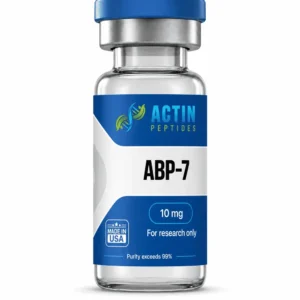
ABP-7 Peptide for Research Use
ABP-7 Peptide is intended strictly for laboratory and scientific research purposes only. It is not approved for human consumption or therapeutic use.
Before placing an order, please review our Terms and Conditions.
 English
Reviews
There are no reviews yet.