
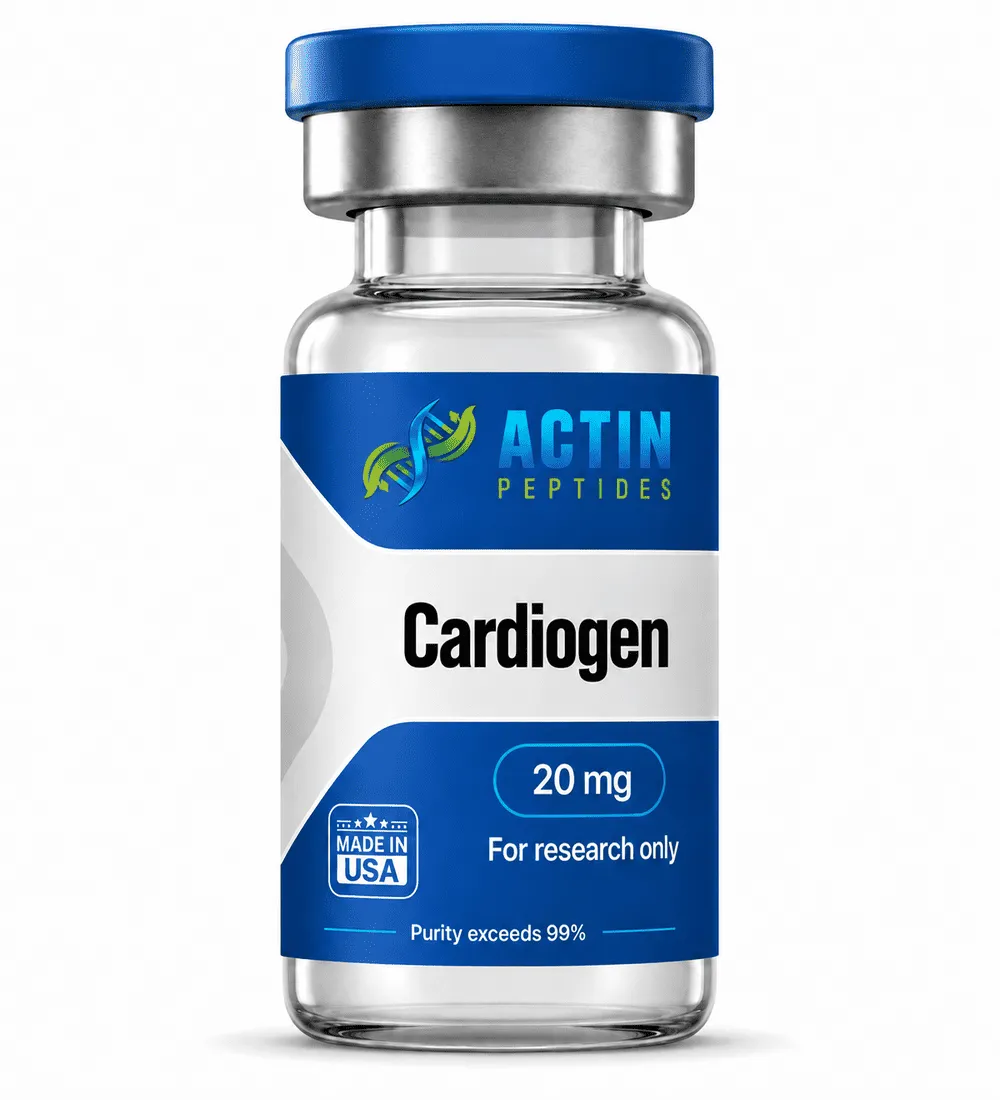
Description
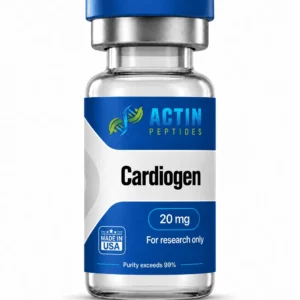
Cardiogen Peptide – Research Bioregulator for Cellular Signaling and Cardiac Tissue Studies
Introduction
Cardiogen peptide is a synthetic tetrapeptide studied as a potential bioregulator involved in fibroblast activity, cellular signaling, and tissue remodeling processes. In preclinical research, Cardiogen has been investigated for its interactions with cellular pathways linked to regeneration, inflammation modulation, and programmed cell death (apoptosis).
Within laboratory models, Cardiogen peptide research suggests possible activity in cardiovascular-related tissues and broader connective tissue systems. Scientists have also explored its potential influence on gene expression and structural protein regulation in fibroblasts, which are central to extracellular matrix maintenance and repair dynamics.
Overview of Cardiogen Peptide
Cardiogen is a short-chain peptide composed of four amino acids (Ala-Glu-Asp-Arg). Researchers classify it as a bioregulatory peptide due to its potential role in cellular communication pathways.
Studies indicate that Cardiogen may:
- Influence fibroblast proliferation and differentiation
- Interact with intracellular signaling pathways tied to apoptosis regulation
- Participate in tissue remodeling processes in experimental models
- Modulate expression of structural and nuclear proteins in cell cultures
In preclinical research environments, Cardiogen has been examined alongside other regenerative peptides such as
GHK-Cu,
BPC-157, and
TB-500
to better understand overlapping mechanisms in tissue biology and cellular repair signaling.
Mechanism of Action of Cardiogen Peptide
Cardiogen peptide mechanism research focuses on how the molecule may interact with intracellular regulatory systems involved in cell survival and structural organization.
1. Fibroblast and Cytoskeletal Regulation
Research suggests Cardiogen may influence fibroblast activity by modulating:
- Actin microfilament formation
- Tubulin-based microtubule stability
- Vimentin intermediate filament expression
These structural proteins form the cytoskeleton, which governs cell shape, migration, and mechanical resilience.
2. Nuclear Protein Expression and Gene Regulation
Studies indicate possible effects on nuclear lamins (A/C), which support:
- Nuclear integrity
- DNA organization
- Gene transcription regulation
This suggests Cardiogen may influence how fibroblasts respond to environmental and injury-related signals.
3. Apoptosis and p53-Related Signaling
Research has investigated potential interactions between Cardiogen and p53-regulated pathways. Findings suggest:
- Modulation of apoptosis in cardiomyocyte models
- Changes in programmed cell death signaling in fibroblast and tumor systems
However, these mechanisms remain under active investigation in preclinical environments.
4. Cellular Metabolism and Structural Remodeling
Cardiogen may also support:
- Protein synthesis in structural cellular components
- Cellular energy utilization in stressed tissue models
- Extracellular matrix remodeling dynamics
Chemical Makeup of Cardiogen
| Property | Details |
|---|---|
| Molecular Formula | C18H31N7O9 |
| Molecular Weight | 489.5 g/mol |
| Sequence | H-Ala-Glu-Asp-Arg-OH |
| Type | Synthetic tetrapeptide |
| Other Names | SCHEMBL3194515 |
Research and Clinical Studies on Cardiogen Peptide
1. Cellular Proliferation and Structural Protein Expression
Objective:
Researchers investigated whether Cardiogen influences fibroblast structure and protein expression.
Methodology:
Murine embryonic fibroblasts were cultured and exposed to Cardiogen for short incubation periods under controlled laboratory conditions.
Findings:
- Increased expression of actin, tubulin, and vimentin
- Up to 2–5× elevation in nuclear lamin A/C proteins
- Enhanced cytoskeletal organization activity
Scientific Significance:
These findings suggest Cardiogen may support cellular structural remodeling and gene expression regulation in fibroblast models.
2. Apoptosis Modulation in Cardiac Tissue Models
Objective:
To evaluate Cardiogen’s influence on cardiomyocyte survival and apoptosis signaling.
Methodology:
Experimental myocardial injury models were used, with comparison between control and peptide-treated groups.
Findings:
- Reduced p53 expression in myocardial tissue
- Lower apoptosis rates in cardiomyocytes
- Improved cellular survival following ischemic stress
Scientific Significance:
This suggests Cardiogen may play a role in apoptosis regulation and tissue recovery signaling in cardiac-related research models.
3. Tumor-Associated Cellular Signaling Studies
Objective:
To assess Cardiogen’s effects on tumor cell environments and fibroblast-related signaling.
Methodology:
Murine sarcoma models were analyzed under peptide exposure.
Findings:
- Increased tumor cell apoptosis in experimental conditions
- Evidence of vascular-related tumor modulation
- No direct cytostatic effect observed
Scientific Significance:
These results indicate Cardiogen may influence tumor biology indirectly through vascular and apoptotic signaling pathways.
4. Tissue Regeneration and Fibroblast Activity
Objective:
To examine fibroblast-driven tissue remodeling under peptide exposure.
Methodology:
Fibroblast cultures were observed for migration, adhesion, and structural protein changes.
Findings:
- Increased cellular migration
- Enhanced extracellular matrix protein expression
- Improved structural organization in fibroblast networks
Scientific Significance:
Cardiogen may support fibroblast-mediated tissue remodeling processes in laboratory conditions.
What is Cardiogen Peptide?
Cardiogen peptide is a synthetic tetrapeptide studied for its potential role in fibroblast regulation, cellular signaling, and tissue remodeling processes in preclinical research models.
How does Cardiogen Peptide work?
Research suggests Cardiogen may interact with intracellular signaling pathways that regulate:
- Fibroblast activity
- Cytoskeletal protein expression
- Apoptosis-related signaling (including p53 pathways)
- Cellular structural remodeling
What is Cardiogen researched for?
Cardiogen peptide research focuses on:
- Cellular regeneration models
- Fibroblast proliferation and differentiation
- Cardiomyocyte apoptosis regulation
- Tumor-associated signaling pathways
- Tissue remodeling mechanisms
What makes Cardiogen peptide unique?
It is unique due to its small tetrapeptide structure and its ability to interact with both cytoplasmic and nuclear protein systems, potentially influencing structural and regulatory cellular processes simultaneously.
Related Research Peptides
For broader research context, Cardiogen is often studied alongside:
- BPC-157 for tissue repair research
- TB-500 for cellular migration studies
- GHK-Cu for skin and collagen research
- IGF-1 LR3 for growth factor research
Conclusion
Cardiogen peptide remains a research-focused compound investigated for its potential roles in fibroblast regulation, apoptosis signaling, and structural protein expression. Current studies suggest possible involvement in cellular remodeling pathways, particularly within cardiovascular and connective tissue models. However, all findings remain strictly preclinical and exploratory.
FAQ
Is Cardiogen peptide naturally occurring?
Cardiogen is a synthetic tetrapeptide designed to mimic bioregulatory signaling sequences studied in cellular models.
What is Cardiogen peptide used for in research?
It is studied for fibroblast regulation, apoptosis signaling, and tissue remodeling mechanisms.
Does Cardiogen peptide affect collagen production?
Research suggests indirect involvement through fibroblast activity and extracellular matrix regulation.
Research Disclaimer
Cardiogen peptide is available strictly for research and laboratory purposes only. It is not approved for human consumption, therapeutic use, or diagnostic applications. Please review and adhere to our Terms and Conditions before ordering.

 English
Reviews
There are no reviews yet.