
Description
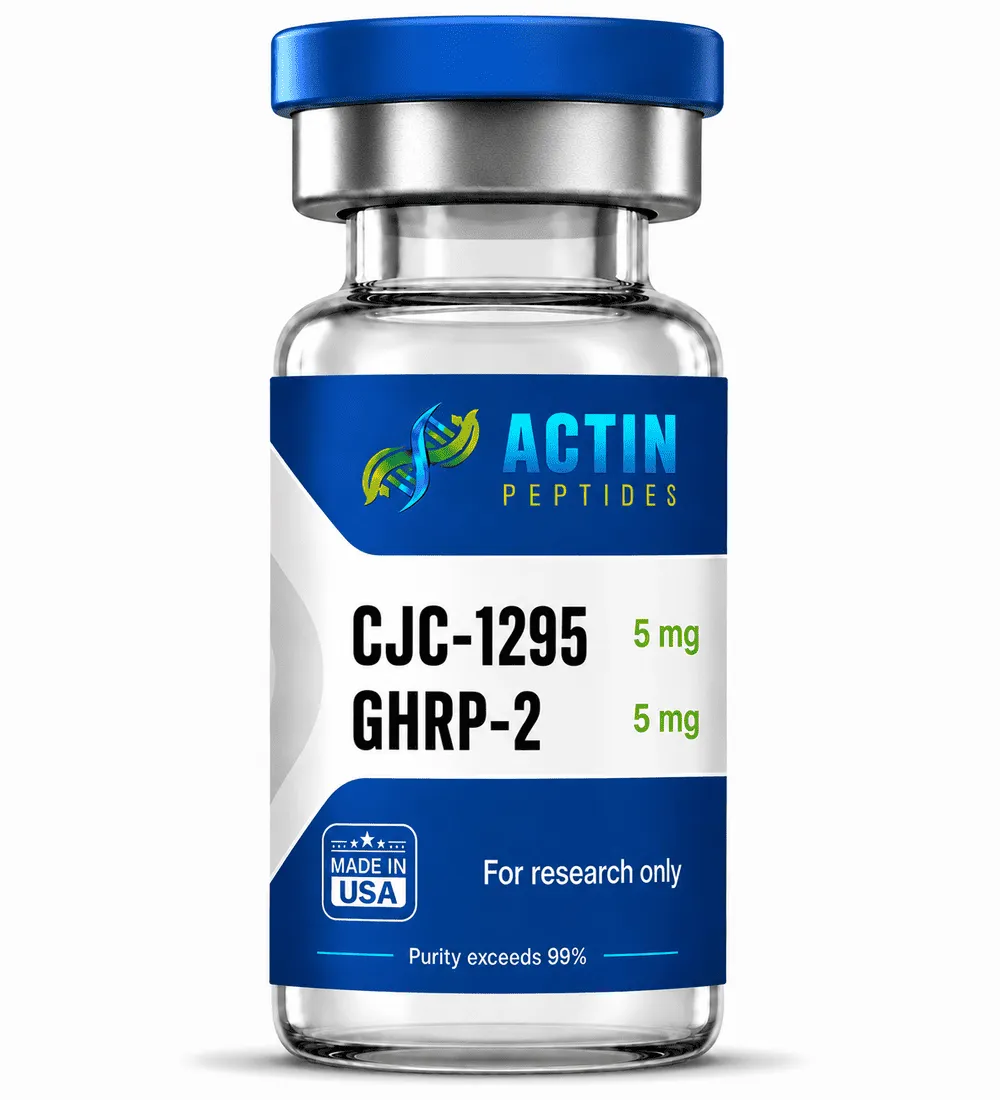
CJC-1295 & GHRP-2 Peptide Blend
Introduction
CJC-1295 & GHRP-2 Peptide Blend combines two research peptides that have been studied for their interactions with separate signaling pathways involved in growth hormone secretion. CJC-1295 is a modified growth hormone-releasing hormone (GHRH) analog, while GHRP-2 is a synthetic growth hormone secretagogue studied for its interaction with the growth hormone secretagogue receptor.
Because the two compounds appear to act through different receptors, scientists have investigated whether combined exposure may produce complementary or synergistic effects on pulsatile growth hormone (GH) signaling. Research involving CJC-1295 & GHRP-2 has therefore focused on the anterior pituitary, hypothalamic signaling, insulin-like growth factor-1 (IGF-1), metabolism, energy balance, and cellular growth processes.
This blend is intended for laboratory and research applications only.
Overview of CJC-1295 & GHRP-2
CJC-1295 and GHRP-2 are structurally distinct peptides with different proposed biological targets.
CJC-1295
CJC-1295 is a modified analog of growth hormone-releasing hormone. It was developed from the biologically active GHRH 1-29 sequence and modified to improve its stability and persistence in experimental settings.
CJC-1295 has been studied for its potential interaction with the growth hormone-releasing hormone receptor (GHRH-R) located on pituitary somatotroph cells. Activation of this pathway may contribute to growth hormone secretion.
The DAC-modified form of CJC-1295 contains a Drug Affinity Complex designed to associate with circulating plasma proteins. Researchers have investigated this modification because it may extend the compound’s persistence compared with unmodified GHRH analogs.
GHRP-2
GHRP-2, also known as pralmorelin, is a synthetic hexapeptide studied as a growth hormone secretagogue.
Research indicates that GHRP-2 interacts with the growth hormone secretagogue receptor type 1a (GHS-R1a). This receptor is expressed in areas including the hypothalamus and anterior pituitary.
Scientists have investigated GHRP-2 for its potential influence on:
- Growth hormone secretion
- Pulsatile endocrine signaling
- Energy balance
- Appetite-related signaling
- Hypothalamic-pituitary communication
Because CJC-1295 and GHRP-2 target different receptor systems, researchers have explored whether simultaneous exposure may amplify GH secretion compared with either compound studied independently.
For related growth factor research, researchers may also examine compounds such as IGF-1 LR3 and MGF.
What Is CJC-1295 & GHRP-2?
CJC-1295 & GHRP-2 is a research peptide combination studied for its potential effects on growth hormone signaling through two separate receptor pathways: the GHRH receptor and the growth hormone secretagogue receptor.
The combination is primarily investigated for endocrine signaling, pulsatile GH release, IGF-1 production, metabolism, and growth-related cellular processes.
How Does CJC-1295 & GHRP-2 Work?
Research suggests that the two peptides may act through complementary signaling mechanisms.
- CJC-1295 may interact with GHRH receptors on pituitary somatotroph cells.
- GHRP-2 may activate GHS-R1a receptors in the hypothalamus and pituitary.
- These separate pathways may converge on growth hormone secretion.
- Increased GH signaling may subsequently influence hepatic IGF-1 production.
Importantly, the combination itself has not been extensively studied as a single standardized experimental intervention. Therefore, potential synergy remains an area of scientific interest rather than an established outcome.
Mechanism of Action
CJC-1295 and GHRH Receptor Signaling
CJC-1295 has been studied as a modified GHRH analog. GHRH normally interacts with receptors on somatotroph cells within the anterior pituitary.
When researchers investigate GHRH receptor activation, they examine downstream signaling events that may increase growth hormone synthesis and secretion.
The DAC modification is particularly relevant to CJC-1295 research because it may alter the peptide’s pharmacokinetic behavior by promoting association with circulating proteins.
As a result, researchers have investigated whether CJC-1295 may produce more sustained GH-related signaling than shorter-lived endogenous GHRH sequences.
GHRP-2 and GHS-R1a Signaling
GHRP-2 is studied as a growth hormone secretagogue that interacts with GHS-R1a.
The growth hormone secretagogue receptor participates in several biological signaling systems, including:
- Hypothalamic signaling
- Pituitary hormone secretion
- Energy balance
- Appetite regulation
- Ghrelin-related pathways
Upon receptor activation, GHRP-2 may stimulate intracellular signaling events associated with GH release.
Because this pathway differs from GHRH receptor activation, scientists have investigated combinations of GHRH analogs and growth hormone secretagogues to better understand potential interactions between the two endocrine systems.
Potential Synergy Between GHRH and GHS-R1a Pathways
What makes the CJC-1295 & GHRP-2 blend unique?
The two peptides are researched for their ability to influence GH secretion through different receptor systems.
CJC-1295 is associated with GHRH receptor signaling, whereas GHRP-2 is associated with GHS-R1a activation. Research involving GHRH analogs and growth hormone secretagogues suggests that simultaneous stimulation of these pathways may influence pulsatile GH secretion differently than activation of either pathway alone.
However, researchers should distinguish evidence involving individual compounds or related analogs from direct studies of the exact blend.
Chemical Makeup
| Property | CJC-1295 | GHRP-2 |
|---|---|---|
| Peptide Type | Modified GHRH analog | Synthetic growth hormone secretagogue |
| Molecular Formula | C152H252N44O42 | C45H55N9O6 |
| Molecular Weight | 3367.9 g/mol | 817.9 g/mol |
| Amino Acid Length | Modified GHRH 1-29 analog | Hexapeptide |
| Primary Research Target | GHRH receptor | GHS-R1a receptor |
| Other Known Names | GRF 1-29 albumin conjugate, GHRH derivative | Pralmorelin, GPA-748 |
CJC-1295 Sequence
L-tyrosyl-D-alanyl-L-alpha-aspartyl-L-alanyl-L-isoleucyl-L-phenylalanyl-L-threonyl-L-glutaminyl-L-seryl-L-tyrosyl-L-arginyl-L-lysyl-L-valyl-L-leucyl-L-alanyl-L-glutaminyl-L-leucyl-L-seryl-L-alanyl-L-arginyl-L-lysyl-L-leucyl-L-leucyl-L-glutaminyl-L-alpha-aspartyl-L-isoleucyl-L-leucyl-L-seryl-L-argininamide
GHRP-2 Sequence
D-alanyl-3-(2-naphthyl)-D-alanyl-L-alanyl-L-tryptophyl-D-phenylalanyl-L-lysinamide
Research and Clinical Studies
CJC-1295 & GHRP-2 Research and Growth Hormone Secretion
Study Objective
Researchers have investigated whether growth hormone-releasing hormone analogs and growth hormone secretagogues may influence GH secretion through complementary mechanisms.
Research Methodology
Experimental and clinical investigations have examined GH secretion following exposure to compounds acting through GHRH receptors, GHS-R1a receptors, or both signaling systems.
Researchers have measured:
- Basal GH concentrations
- Pulsatile GH secretion
- Time to peak GH release
- Duration of endocrine signaling
- IGF-1 concentrations
Findings
Studies involving CJC-1295 have suggested that the compound may increase circulating GH and IGF-1 concentrations for an extended period compared with endogenous GHRH.
Research involving GHRP-2 and related growth hormone secretagogues suggests rapid stimulation of GH secretion through GHS-R1a.
Furthermore, studies investigating combined GHRH and secretagogue signaling have reported greater pulsatile GH responses than those observed with either signaling pathway alone.
Scientific Significance
These findings support continued research into the relationship between:
GHRH receptor signaling + GHS-R1a signaling → pituitary GH secretion
However, results from studies using related compounds should not automatically be interpreted as direct evidence for every specific CJC-1295 & GHRP-2 formulation.
CJC-1295 & GHRP-2 Research and IGF-1
Study Objective
Scientists have investigated whether increased GH signaling may subsequently influence insulin-like growth factor-1 production.
Proposed Biological Pathway
Growth hormone interacts with receptors on multiple tissues, particularly hepatocytes in the liver.
This interaction may activate the:
JAK2–STAT signaling pathway
The proposed sequence includes:
- Growth hormone interacts with the GH receptor.
- Janus kinase 2 (JAK2) becomes activated.
- STAT proteins undergo phosphorylation.
- Activated STAT proteins enter the nucleus.
- Gene transcription related to IGF-1 production may increase.
IGF-1 is subsequently released into circulation and interacts with multiple tissues involved in cellular growth and metabolism.
For researchers specifically examining IGF-related pathways, IGF-1 LR3 provides another research compound relevant to insulin-like growth factor signaling.
Findings
Research involving CJC-1295 has reported sustained elevations in mean GH and IGF-1 concentrations in experimental and clinical settings.
The magnitude and duration of these changes depended on experimental conditions and exposure levels.
Scientific Significance
These findings have made CJC-1295 relevant to research involving:
- Growth factor signaling
- Cellular proliferation
- Protein metabolism
- Endocrine feedback systems
- IGF-1 regulation
CJC-1295 & GHRP-2 Research and Metabolism
Study Objective
Researchers have explored how growth hormone and ghrelin-related signaling systems interact with energy balance and metabolism.
Growth Hormone and Lipid Metabolism
Growth hormone has been extensively studied for its relationship with:
- Lipolysis
- Fatty acid mobilization
- Fat oxidation
- Glucose metabolism
- Protein turnover
Therefore, researchers investigating GH-related signaling may examine changes in substrate utilization and energy balance.
Related metabolic research compounds available from Actin Peptides include AOD-9604, Fragment 176-191, and MOTS-c.
GHRP-2 Research and Appetite Signaling
Study Objective
Scientists have investigated GHRP-2 because GHS-R1a signaling overlaps with pathways associated with ghrelin and appetite regulation.
Proposed Mechanism
GHS-R1a activation in hypothalamic regions may influence neuropeptides involved in energy balance, including:
- Neuropeptide Y (NPY)
- Agouti-related peptide (AgRP)
These neuropeptides participate in complex systems that regulate food intake and energy homeostasis.
Research also suggests that ghrelin-related signaling may interact with reward pathways involved in food motivation.
Scientific Significance
This makes GHRP-2 relevant not only to GH research but also to studies examining the relationship between:
Endocrine signaling → hypothalamic activity → energy balance
Because appetite and metabolism involve numerous interacting hormonal and neurological systems, these experimental findings should not be interpreted as predictable outcomes outside controlled research conditions.
CJC-1295 & GHRP-2 Research and Muscle Growth Signaling
Study Objective
Scientists have investigated the relationship between GH, IGF-1, protein metabolism, and skeletal muscle cellular activity.
Proposed Biological Relationship
Growth hormone signaling may contribute to downstream IGF-1 production. IGF-1 has been extensively studied for its relationship with:
- Cellular proliferation
- Protein synthesis
- Satellite cell signaling
- Skeletal muscle development
- Tissue growth
Consequently, CJC-1295 & GHRP-2 research may be relevant to experimental models investigating anabolic signaling networks.
Additional research compounds relevant to muscle and growth factor studies include ACE-031, Follistatin-344, and MGF.
What Is CJC-1295 & GHRP-2 Researched For?
Researchers have investigated CJC-1295 and GHRP-2 in connection with:
- Growth hormone secretion
- Pulsatile endocrine signaling
- GHRH receptor activity
- Growth hormone secretagogue receptor signaling
- IGF-1 production
- Cellular growth pathways
- Protein metabolism
- Energy balance
- Appetite-related signaling
The exact CJC-1295 & GHRP-2 combination remains less extensively studied than the individual compounds and related peptide combinations.
Potential Research Advantages of Combining CJC-1295 and GHRP-2
The primary scientific rationale for studying these peptides together is their distinct receptor activity.
| CJC-1295 | GHRP-2 |
|---|---|
| GHRH analog | Growth hormone secretagogue |
| Studies GHRH receptor signaling | Studies GHS-R1a signaling |
| Modified for extended persistence | Associated with rapid secretagogue activity |
| Relevant to sustained GH research | Relevant to pulsatile GH research |
Together, the combination provides researchers with an opportunity to investigate interactions between two separate endocrine signaling pathways.
Frequently Asked Questions
What is CJC-1295 & GHRP-2?
CJC-1295 & GHRP-2 is a research peptide blend combining a modified GHRH analog with a synthetic growth hormone secretagogue. Scientists study the compounds for their interactions with separate receptor pathways involved in GH signaling.
How does CJC-1295 & GHRP-2 work?
CJC-1295 may interact with GHRH receptors, while GHRP-2 may activate GHS-R1a receptors. These pathways may converge at the anterior pituitary and influence growth hormone secretion.
What is the difference between CJC-1295 and GHRP-2?
CJC-1295 is a modified growth hormone-releasing hormone analog. GHRP-2 is a synthetic growth hormone secretagogue that interacts with the ghrelin receptor pathway.
What is CJC-1295 & GHRP-2 researched for?
The blend is researched for growth hormone signaling, pulsatile hormone release, IGF-1 pathways, metabolism, energy balance, and cellular growth-related mechanisms.
Is there direct research on the exact CJC-1295 & GHRP-2 blend?
Research on the individual peptides and related GHRH-secretagogue combinations is more extensive than direct research on every specific commercial blend formulation. Researchers should evaluate evidence according to the exact compounds and experimental conditions studied.
What makes the blend scientifically interesting?
Its primary research interest comes from combining two peptides that may activate different receptor systems involved in growth hormone secretion.
Conclusion
CJC-1295 & GHRP-2 represents a combination of two distinct research peptides that have been investigated for their potential interactions with growth hormone signaling pathways. CJC-1295 is studied primarily through its relationship with the growth hormone-releasing hormone receptor, whereas GHRP-2 is investigated for its activity at the growth hormone secretagogue receptor GHS-R1a.
Because these receptor systems differ, scientists have explored whether combined stimulation may influence pulsatile GH secretion differently from individual peptide exposure. Downstream research has also examined the relationship between GH signaling, IGF-1 production, metabolism, energy balance, and cellular growth.
Although research involving GHRH analogs and growth hormone secretagogues provides important mechanistic insights, direct evidence for any specific blend formulation remains limited. Therefore, findings from individual peptide studies should be interpreted within their respective experimental contexts.
Research Disclaimer
CJC-1295 & GHRP-2 Peptide Blend is available strictly for research and laboratory purposes only. It is not approved for human consumption, therapeutic use, or diagnostic applications. Please review our Terms and Conditions before placing an order.
 English
  French
Reviews
There are no reviews yet.