
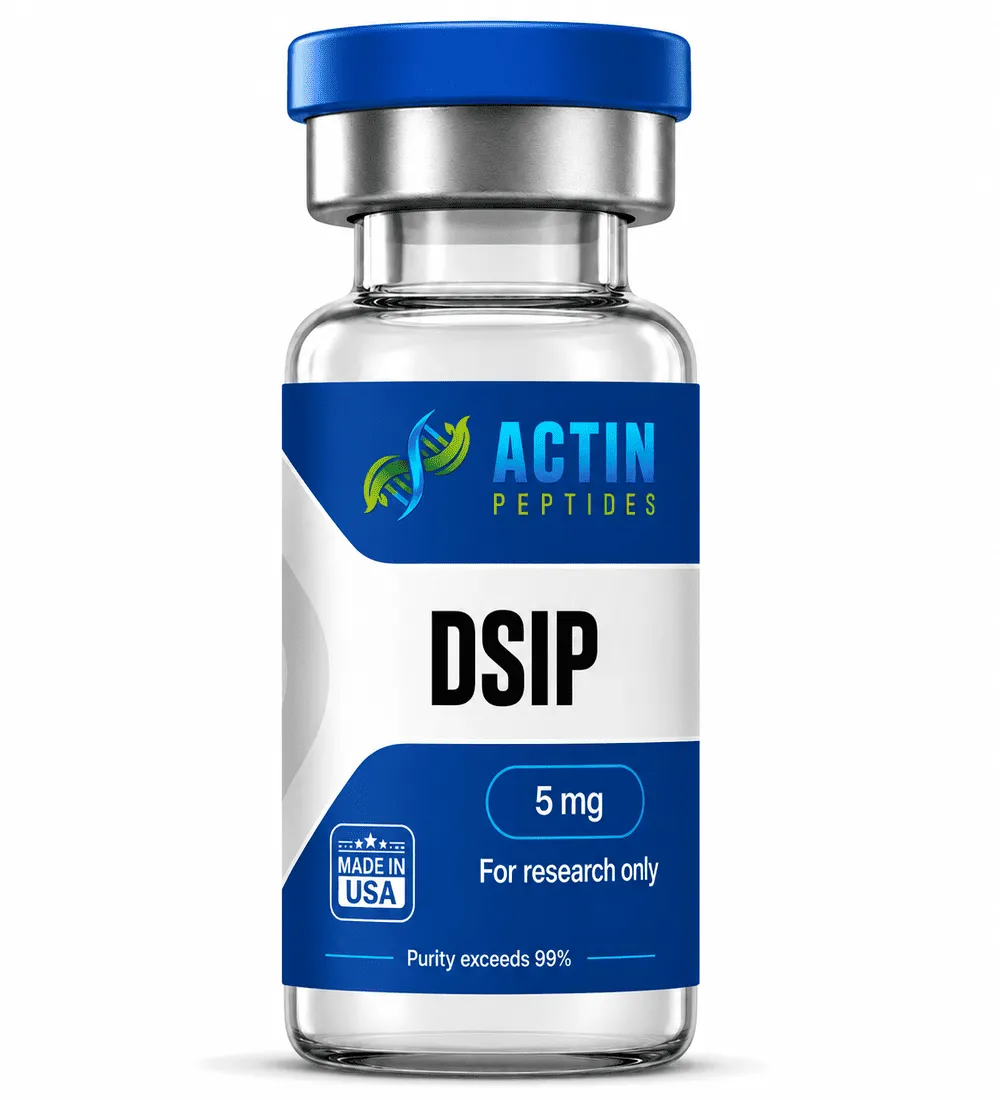
Description
DSIP Peptide (Delta Sleep-Inducing Peptide): Research Overview, Mechanisms, and Scientific Studies
Introduction
DSIP (Delta Sleep-Inducing Peptide) is a naturally occurring nonapeptide composed of nine amino acids that has been investigated for its potential involvement in sleep regulation, neuroendocrine signaling, stress responses, and other physiological processes.
Scientists first characterized DSIP between 1963 and 1977 after isolating the peptide from the central nervous system of experimental models exhibiting electrically induced sleep. Since then, DSIP research has expanded beyond sleep-related investigations to include studies examining neurotransmitter activity, endocrine signaling, stress-response markers, oxidative processes, and longevity-related endpoints.
Importantly, most of the research described below comes from experimental animal, cellular, or historical clinical studies. These findings provide scientific context for ongoing investigation but do not establish therapeutic efficacy in humans.
What Is DSIP?
DSIP, short for Delta Sleep-Inducing Peptide, is a nine-amino-acid neuropeptide investigated for its possible involvement in sleep architecture and central nervous system signaling.
Research has explored DSIP in connection with:
- Slow-wave sleep (SWS)
- Neurotransmitter regulation
- GABA and NMDA receptor signaling
- Opioidergic pathways
- Endocrine signaling
- Stress-response markers
- Oxidative stress
- Aging and longevity-related research
The precise biological mechanism of DSIP remains incompletely established, and researchers continue to investigate how the peptide interacts with neural and endocrine systems.
DSIP Peptide Overview
DSIP is classified as a nonapeptide, meaning that its structure contains nine amino acids. Its original scientific characterization focused on the possibility that it could influence delta-wave sleep activity.
Subsequent studies have investigated additional biological effects, including potential interactions with neurotransmitter systems and stress-related signaling.
Because sleep involves coordinated activity between multiple neural circuits, neurotransmitters, hormones, and receptor systems, researchers have proposed several possible mechanisms through which DSIP could influence sleep architecture.
However, no single receptor or pathway has been definitively established as the primary DSIP mechanism.
DSIP Mechanism of Action
GABA and NMDA Signaling
One area of DSIP research involves two major neurotransmitter systems: gamma-aminobutyric acid (GABA) and N-methyl-D-aspartate (NMDA) receptors.
GABA represents one of the brain’s principal inhibitory neurotransmitter systems, while NMDA receptors participate in excitatory glutamate signaling.
Experimental research has suggested that DSIP may influence the balance between inhibitory and excitatory neurotransmission. In particular, animal studies have investigated whether DSIP can enhance aspects of GABAergic signaling while reducing certain excitatory effects associated with NMDA receptor activity.
These observations have contributed to the hypothesis that DSIP may influence neural activity involved in sleep initiation and maintenance.
Opioid-Related Signaling
Researchers have also investigated potential relationships between DSIP and opioid receptor systems.
Experimental findings suggest that DSIP may indirectly influence opioid-related neurotransmission, providing a possible explanation for research examining the peptide in relation to sleep, stress responses, and withdrawal-related models.
The precise molecular relationship between DSIP and opioid receptors remains an area of investigation.
Alpha-1 Adrenergic Signaling
Another proposed DSIP mechanism involves alpha-1 adrenergic receptors, which participate in signaling associated with the sympathetic nervous system and stress responses.
Experimental research has examined whether DSIP can modulate alpha-1 adrenergic signaling in the pineal gland and whether this interaction could contribute to changes in sleep patterns or stress-related physiological responses.
Taken together, these findings indicate that DSIP may interact with several interconnected signaling systems rather than operating through one established receptor pathway.
Chemical Makeup of DSIP
| Property | Details |
|---|---|
| Peptide Name | Delta Sleep-Inducing Peptide |
| Abbreviation | DSIP |
| Structure | Nonapeptide |
| Amino Acids | 9 |
| Molecular Formula | C35H48N10O15 |
| Molecular Weight | 848.82 g/mol |
| Other Known Titles | DSIP nonapeptide, Emideltide |
DSIP Research and Scientific Studies
DSIP and Sleep Cycles
Study Objective
Researchers have investigated whether DSIP can influence sleep architecture, particularly slow-wave sleep (SWS) and total sleep duration.
Methodology
One experimental study used feline models divided into control and DSIP groups. Researchers monitored sleep-related activity for approximately eight hours following peptide exposure.
Findings
The DSIP-treated group demonstrated an apparent increase in:
- Total sleep duration
- Slow-wave sleep
- Early sleep activity following exposure
The increase in slow-wave sleep appeared relatively quickly and remained elevated for several hours before declining.
Slow-wave sleep represents the deepest stage of non-rapid eye movement (NREM) sleep and is characterized by high-amplitude, low-frequency delta waves on electroencephalography (EEG).
Additional clinical research has also investigated DSIP in relation to sleep pressure and sleep efficiency, with one study reporting an apparent increase in sleep during the first two hours following experimental exposure.
Scientific Significance
These findings provide a foundation for DSIP sleep research, particularly studies examining how neuropeptides may influence sleep architecture and transitions between different sleep stages.
Nevertheless, historical experimental results should not be interpreted as evidence that DSIP is an established sleep treatment.
DSIP and Endocrine Regulation
Study Objective
Scientists have investigated whether DSIP may interact with hormones released through the hypothalamic-pituitary system.
Methodology
Experimental animal studies evaluated hormone concentrations following DSIP exposure, including luteinizing hormone (LH) and growth hormone (GH).
Findings
One animal study reported an apparent increase in LH levels approximately 30 minutes after DSIP exposure, while researchers did not observe a comparable effect on follicle-stimulating hormone (FSH).
Other research investigated the relationship between DSIP and growth hormone secretion. Experimental models demonstrated an apparent increase in GH levels following peptide exposure.
Researchers also explored whether dopamine-related signaling could contribute to this response. The use of pimozide, a dopamine antagonist, appeared to interfere with the DSIP-associated increase in GH.
In vitro pituitary-cell experiments produced similar observations, although higher concentrations produced a different response pattern.
Scientific Significance
These findings suggest that DSIP may interact with neuroendocrine signaling systems associated with sleep and hormone secretion.
The relationship is particularly interesting because slow-wave sleep itself is associated with physiological patterns of growth hormone secretion. However, the exact relationship between DSIP, sleep architecture, dopamine signaling, and GH secretion requires additional investigation.
DSIP and Stress-Response Research
Study Objective
Researchers have studied DSIP in experimental models exposed to controlled stress conditions to determine whether the peptide could influence biochemical markers associated with stress responses.
Methodology
In one study, experimental groups received DSIP at different intervals before or after stress exposure. Researchers examined changes in:
- Substance P
- Beta-endorphin
- Corticosterone
These molecules participate in neural, endocrine, and stress-response processes.
Findings
DSIP exposure was associated with changes in several measured biomarkers.
Researchers observed an initial reduction followed by an increase in beta-endorphin levels. Corticosterone levels also appeared to decrease shortly after DSIP exposure.
Scientific Significance
The findings provide evidence for continued investigation into DSIP and stress-response signaling.
Rather than demonstrating a definitive stress-related effect, the study suggests that DSIP may interact with several biochemical systems involved in physiological adaptation to stress.
DSIP and Oxidative Stress Research
Study Objective
Researchers have investigated whether DSIP may influence antioxidant systems and markers of oxidative stress in experimental models.
Methodology
Animal models were evaluated following DSIP exposure, with researchers measuring biochemical indicators associated with lipid peroxidation and endogenous antioxidant activity.
Findings
Experimental observations suggested that DSIP may influence levels of malondialdehyde, a marker commonly associated with lipid peroxidation.
Researchers also reported changes in endogenous antioxidant systems, including enzymes and compounds involved in antioxidant defense.
Reported markers included:
- Superoxide dismutase
- Catalase
- Ceruloplasmin
- Urea
- Uric acid
Scientific Significance
These observations have led scientists to investigate whether DSIP may participate in the regulation of oxidative-stress responses.
However, these experimental findings should be considered preliminary and should not be interpreted as evidence of an established antioxidant therapy.
DSIP and Longevity Research
Study Objective
Some experimental research has examined DSIP in relation to aging-associated biological changes and longevity-related endpoints.
Methodology
Researchers compared DSIP-treated and control groups of experimental animals and evaluated parameters including body weight, chromosomal abnormalities, lifespan, and malignancy incidence.
Findings
The reported experimental observations included:
- No apparent increase in food intake
- Reduced body weight in treated animals
- A reported reduction in chromosomal aberrations
- An apparent increase in lifespan
- A reported reduction in malignancy occurrence
Scientific Significance
These findings have contributed to interest in DSIP as a subject for aging and longevity research.
However, animal longevity findings cannot establish equivalent effects in humans. Additional controlled research would be necessary to determine whether these observations have broader biological relevance.
DSIP and Neurotransmitter Signaling
DSIP research increasingly focuses on the relationship between sleep architecture and neurotransmitter activity.
The peptide has been investigated in relation to several systems, including:
GABA
GABA provides inhibitory signaling within the central nervous system. Researchers have proposed that DSIP may influence GABAergic activity, potentially altering neural excitability.
Glutamate and NMDA Receptors
NMDA receptors respond to glutamate and participate in excitatory neurotransmission, learning, memory, and synaptic signaling. Experimental research has investigated whether the peptide can modulate aspects of NMDA-associated activity.
Opioid Signaling
DSIP has also been investigated in connection with endogenous opioid pathways, particularly in research involving stress and withdrawal-related physiological responses.
Adrenergic Signaling
Alpha-1 adrenergic receptors have received attention because of their involvement in sympathetic and stress-related signaling.
Together, these research areas suggest that it may influence several interconnected neural pathways.
What Is DSIP Researched For?
DSIP is primarily researched for its potential involvement in sleep regulation and central nervous system signaling. Additional research has examined its relationship with endocrine regulation, stress-response biomarkers, oxidative stress, and aging-related processes.
How Does DSIP Work?
The precise DSIP mechanism remains unresolved. Experimental research suggests that the peptide may interact with GABAergic, glutamatergic, opioid-related, and adrenergic signaling systems, potentially influencing neural and endocrine activity associated with sleep and stress.
What Makes DSIP Unique?
DSIP is distinctive because researchers initially identified it through investigations of experimentally induced sleep and subsequently studied it across multiple physiological systems. Its nine-amino-acid structure and proposed interactions with several neurotransmitter pathways make it an interesting subject for neuropeptide research.
DSIP Research: Key Areas at a Glance
| Research Area | What Scientists Have Investigated |
|---|---|
| Sleep | Slow-wave sleep, total sleep, sleep pressure |
| Neurotransmitters | GABA, NMDA, opioid-related signaling |
| Endocrine function | LH and growth hormone signaling |
| Stress | Substance P, beta-endorphin, corticosterone |
| Oxidative stress | Antioxidant enzymes and lipid peroxidation |
| Aging | Lifespan and age-associated biological markers |
Related Peptide Research
DSIP belongs to a broader field of peptide research examining cellular signaling, neurological processes, growth factors, and tissue biology.
For example, researchers investigating peptide-mediated signaling may also explore compounds such as BPC-157 and TB-500, which have been studied primarily in experimental models involving cellular migration, angiogenic signaling, and tissue-repair pathways.
Researchers interested in peptide-related aging biology may also examine Epithalon and other compounds investigated for their relationships with cellular and molecular aging processes.
These compounds represent separate research areas and should not be considered interchangeable with DSIP.
Conclusion
DSIP (Delta Sleep-Inducing Peptide) is a nine-amino-acid neuropeptide that has been investigated extensively for its potential relationship with sleep architecture and central nervous system signaling.
Research has examined its possible influence on slow-wave sleep, GABA and NMDA signaling, opioid-related pathways, alpha-1 adrenergic receptors, endocrine hormones, stress biomarkers, oxidative processes, and longevity-related endpoints.
The available literature provides several interesting hypotheses about the biological activity of DSIP. However, its precise mechanism of action remains incompletely understood, and many findings originate from experimental animal or cellular models. Consequently, additional research is necessary to establish the relevance, reproducibility, and biological significance of these observations.
Frequently Asked Questions
What is DSIP peptide?
DSIP, or Delta Sleep-Inducing Peptide, is a naturally occurring nine-amino-acid neuropeptide originally isolated during research into experimentally induced sleep. Scientists have subsequently studied it in relation to sleep, neurotransmitter signaling, endocrine activity, and stress responses.
What is DSIP peptide researched for?
DSIP research primarily examines sleep architecture and slow-wave sleep. Researchers have also investigated its potential relationship with neurotransmitter systems, endocrine regulation, stress-response biomarkers, oxidative stress, and aging-related biological processes.
Does DSIP have an established mechanism of action?
No single primary mechanism has been definitively established. Experimental research has proposed interactions involving GABA, NMDA, opioid-related, and alpha-1 adrenergic signaling, but further research is needed.
What is the molecular weight of DSIP?
The molecular weight listed for DSIP is approximately 848.82 g/mol, with the molecular formula C35H48N10O15.
Is DSIP FDA approved?
This research material should not be represented as FDA-approved. The research discussed on this page does not establish approval for therapeutic, diagnostic, or human-use applications.
Research Disclaimer
DSIP is available strictly for research and laboratory purposes only. It is not approved for human consumption, therapeutic use, or diagnostic applications. Please review our Terms and Conditions before placing an order.
 English
Reviews
There are no reviews yet.