
Description
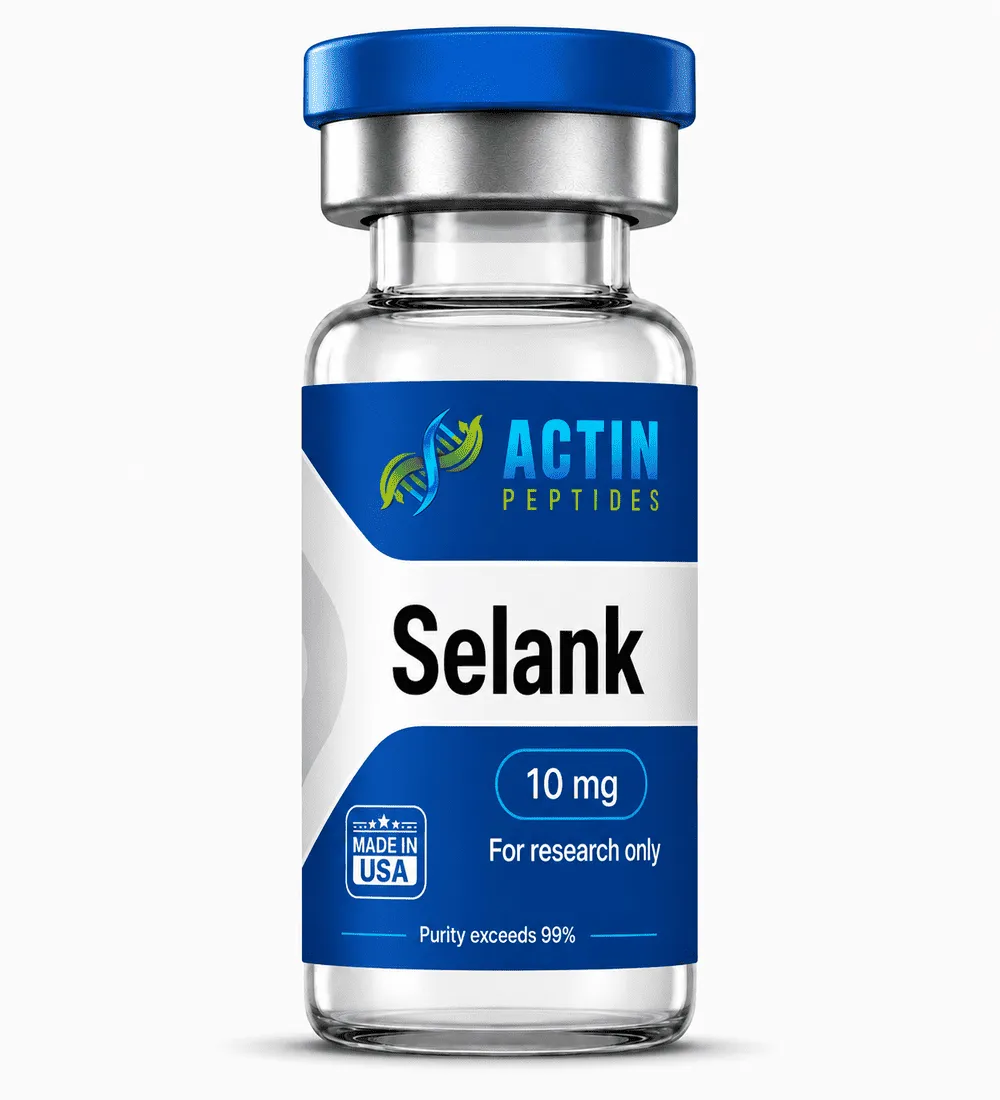
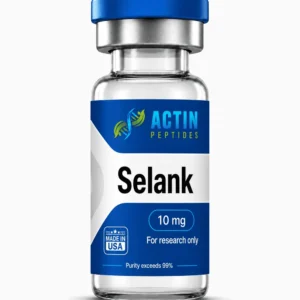
Selank Peptide – Research on GABA Signaling, Neurotransmission, BDNF and Immunomodulation
Introduction
Selank peptide is a synthetic heptapeptide analogue of tuftsin, a naturally occurring tetrapeptide associated with immune-system signaling. Researchers have investigated Selank for its potential interactions with neurotransmitter systems, gene expression, neurotrophic signaling, cognitive processes, and immune regulation.
Selank research has particularly examined its relationship with the gamma-aminobutyric acid (GABA) system, serotonin metabolism, brain-derived neurotrophic factor (BDNF), enkephalin signaling, and inflammatory cytokines. Experimental studies have also explored its effects on learning behavior, stress-related models, cardiovascular parameters, and lipid metabolism.
Because much of the available evidence comes from laboratory and animal research, Selank studies should be interpreted as exploratory rather than evidence of established therapeutic efficacy.
What Is Selank Peptide?
Selank is a synthetic seven-amino-acid peptide developed as an analogue of tuftsin, a naturally occurring peptide fragment associated with immunological activity.
The molecule contains a tuftsin-derived sequence together with a Pro-Gly-Pro (PGP) sequence at its C-terminal region. Researchers have investigated whether this structure may influence peptide stability, biological transport, and interactions with neurological signaling systems.
Key research areas include:
- GABAergic neurotransmission
- Serotonin signaling and metabolism
- Brain-derived neurotrophic factor (BDNF)
- Neuroplasticity and learning models
- Enkephalin metabolism
- Gene-expression regulation
- Immune and cytokine signaling
- Experimental stress models
- Lipid and glucose metabolism
Selank Peptide Overview
Selank consists of two structural components: a tuftsin-derived sequence at the N-terminal region and the Pro-Gly-Pro (PGP) sequence toward the C-terminal end.
Researchers have proposed that the PGP motif may influence the molecule’s interaction with biological barriers, including the blood-brain barrier (BBB). The BBB is a highly selective interface that regulates the movement of substances between circulating blood and central nervous system tissues.
However, the exact transport mechanism of Selank across the BBB remains an area of scientific investigation.
The peptide has attracted particular interest because several experimental studies suggest that its biological activity may involve multiple interconnected signaling systems rather than a single receptor pathway.
Selank Peptide Mechanism of Action
GABAergic Signaling
One of the most frequently investigated areas of Selank mechanism research involves the gamma-aminobutyric acid (GABA) system.
GABA functions as a major inhibitory neurotransmitter in the central nervous system. Researchers have investigated whether Selank can influence genes associated with GABA receptors and other components of GABAergic neurotransmission.
In experimental gene-expression studies, researchers compared changes produced by Selank and GABA. The results showed correlations across multiple neurotransmission-related genes, supporting further investigation into how Selank may interact with GABAergic signaling.
The available findings do not establish that Selank acts simply as a direct GABA receptor agonist. Instead, researchers have proposed that it may influence the GABAergic system through more complex regulatory mechanisms.
BDNF and Neuroplasticity
Brain-derived neurotrophic factor (BDNF) is a neurotrophin involved in neuronal survival, synaptic function, and neuroplasticity.
Selank studies have investigated whether exposure to the peptide may influence BDNF gene expression, particularly in the hippocampus. The hippocampus plays important roles in learning, memory, and emotional processing.
Research models involving stress-related suppression of BDNF have provided a basis for investigating whether Selank may influence this pathway.
These findings make the relationship between Selank and BDNF an important area of ongoing peptide research.
Serotonin Signaling
Scientists have also studied Selank in relation to serotonergic signaling.
Experimental models in which serotonin synthesis was altered suggested that Selank may influence serotonin metabolism in specific brain regions. Researchers have proposed that these effects could involve changes in the processing or availability of serotonin rather than simple direct stimulation of serotonin receptors.
Because serotonin participates in numerous neurological processes, including mood regulation and behavioral responses, this pathway remains relevant to Selank research.
Enkephalin Signaling
Another proposed Selank mechanism involves enkephalins, endogenous opioid peptides that participate in neurological signaling.
Research has examined whether Selank may influence enzymes responsible for breaking down enkephalins. If this mechanism is confirmed, altered enkephalin metabolism could provide one possible explanation for some of the behavioral effects observed in experimental models.
However, this mechanism remains a research hypothesis rather than an established clinical mechanism.
Gene Expression and Immune Signaling
Selank has also been investigated for its potential influence on gene expression in the brain and immune-related tissues.
Experimental studies have examined RNA expression in the hippocampus and spleen following Selank exposure. Among the genes investigated was CX3CR1, which participates in immune-cell communication and inflammatory signaling.
These findings suggest that Selank may influence biological processes through transcriptional regulation. Further research is necessary to determine the consistency, magnitude, and biological significance of these changes.
Chemical Makeup of Selank Peptide
| Property | Details |
|---|---|
| Molecular Formula | C33H57N11O9 |
| Molecular Weight | 751.88 g/mol |
| Peptide Length | 7 amino acids |
| Classification | Synthetic heptapeptide |
| Other Known Titles | TP-7, Selanc |
| Structural Origin | Tuftsin analogue |
Selank Peptide Research and Studies
Selank and BDNF Research
Study Objective
Researchers investigated whether Selank may influence the expression of brain-derived neurotrophic factor (BDNF) in the brain.
Methodology
Experimental research examined BDNF messenger RNA (mRNA) expression, particularly within the hippocampus. Researchers were interested in conditions where stress-related glucocorticoid signaling could alter BDNF expression.
Findings
The studies suggested that Selank exposure may increase BDNF mRNA expression in experimental models.
Scientific Significance
BDNF participates in neuronal survival, synaptic adaptation, and neuroplasticity. Therefore, the observed relationship between Selank and BDNF provides a basis for additional research into peptide-mediated regulation of neurotrophic signaling.
Selank and GABA Signaling Research
Study Objective
Researchers examined whether Selank may influence genes associated with GABAergic neurotransmission.
Methodology
Experimental animals were exposed to Selank or GABA. Researchers subsequently analyzed the expression of dozens of neurotransmission-related genes using polymerase chain reaction (PCR) methods.
Findings
The expression patterns observed following Selank exposure showed correlations with those associated with GABA exposure.
Researchers also identified differences in the expression of certain genes, suggesting that Selank may not simply reproduce the direct activity of GABA.
Scientific Significance
The findings support further investigation into Selank’s potential influence on GABAergic signaling and broader neurotransmitter regulation.
Selank and Serotonin Research
Study Objective
Researchers investigated whether Selank may affect serotonin metabolism under conditions involving impaired serotonergic activity.
Methodology
Experimental models with altered serotonin synthesis were evaluated following Selank exposure.
Findings
The research suggested that Selank may influence serotonin metabolism in brain regions associated with serotonergic signaling.
Scientific Significance
These observations provide another potential mechanism through which Selank could influence neurotransmitter dynamics in laboratory models.
Selank and Gene Expression
Study Objective
Researchers examined whether Selank could alter gene expression in neurological and immune-related tissues.
Methodology
Male experimental animals were separated into control and Selank-exposure groups. Researchers subsequently isolated RNA from the spleen and hippocampus and evaluated gene expression using PCR-based methods.
Findings
The research identified changes in the expression of several genes, including CX3CR1, a gene associated with immune-cell communication and inflammatory signaling.
Scientific Significance
The results suggest that Selank may influence biological activity through changes in gene expression rather than through a single receptor-mediated pathway.
Selank and Enkephalin Signaling
Study Objective
Researchers investigated whether Selank may influence enkephalin concentrations in experimental models.
Methodology
Research models were evaluated for levels of tau-leucine-enkephalin, an endogenous opioid peptide involved in neurological signaling.
Findings
Researchers observed changes in enkephalin levels following Selank exposure and proposed that the peptide may influence enzymes responsible for enkephalin degradation.
Scientific Significance
This research provides a possible connection between Selank and endogenous opioid-peptide signaling. Additional studies are necessary to establish the exact molecular pathway.
Selank and Learning & Memory Research
Study Objective
Researchers investigated whether Selank could influence learning performance in conditioned avoidance-response models.
Methodology
Experimental animals underwent repeated training sessions over four days. Selank exposure occurred shortly before each training session.
Findings
Researchers reported fewer errors and more correct responses during subsequent training sessions in the Selank-exposed group.
Scientific Significance
The findings have prompted further research into possible relationships between Selank, neuropeptide signaling, synaptic adaptation, and learning-related processes.
These observations remain limited to experimental research models and should not be interpreted as evidence of cognitive enhancement in humans.
Selank and Immunomodulation Research
Study Objective
Scientists have investigated whether Selank may influence immune-related cytokine signaling.
Methodology
Experimental models were exposed to Selank over a defined research period. Researchers subsequently analyzed peripheral blood samples.
Findings
The research reported changes in interleukin-6 (IL-6) and alterations in the balance between Th1 and Th2 cytokine signaling.
Scientific Significance
These observations suggest that Selank may interact with immune signaling networks. However, the biological significance of these changes requires additional investigation.
Selank and Stress-Related Research
Researchers have also evaluated Selank in experimental models involving altered behavioral responses following prolonged exposure to ethanol.
Following removal of ethanol exposure, researchers observed behavioral changes associated with withdrawal models. Selank exposure was subsequently evaluated using social-interaction and maze-based behavioral assessments.
The study reported changes in behavioral responses following Selank exposure.
These findings contribute to the broader investigation of how synthetic peptide analogues may interact with neurotransmitter and neuropeptide systems.
Selank and Cardiovascular Research
Experimental cardiovascular research has evaluated Selank in animal models to examine potential changes in blood pressure, cerebral blood flow, heart rate, and respiratory parameters.
One study reported a rapid reduction in arterial blood pressure following peptide exposure and an accompanying increase in cerebral blood flow during the early observation period.
The researchers did not report corresponding changes in respiratory function or heart rate within the experimental conditions.
These findings remain specific to the experimental model and do not establish cardiovascular effects in humans.
Selank and Lipid Metabolism Research
Researchers have also investigated Selank in experimental models exposed to high-fat diets.
In one study, animals received a high-fat diet before researchers evaluated the effects of Selank exposure on lipid-related parameters.
The study reported changes in:
- Total cholesterol
- Low-density lipoprotein (LDL)
- Very-low-density lipoprotein (VLDL)
- Triglycerides
- Fibrinolytic activity
- Platelet aggregation
- Glucose-related parameters
- Body weight
The researchers also reported changes in lipid metabolism and body-weight measurements.
These observations have generated interest in the potential relationship between Selank and metabolic signaling. However, these findings remain preclinical and do not demonstrate weight-loss or metabolic treatment effects in humans.
What Is Selank Researched For?
Selank is primarily researched for its potential effects on neurotransmission, neurotrophic signaling, immune regulation, and gene expression. Research areas include GABAergic signaling, BDNF expression, serotonin metabolism, enkephalin pathways, learning models, and cytokine regulation.
What Makes Selank Peptide Unique?
Selank’s primary research distinction is its combination of a tuftsin-derived structure with a C-terminal PGP sequence. Researchers have consequently investigated the peptide across both neurological and immunological systems.
Unlike compounds studied through a single biological pathway, Selank research involves several interconnected systems, including GABA, serotonin, BDNF, enkephalins, cytokines, and gene-expression pathways.
Selank Peptide Research and Related Compounds
Selank can be considered alongside other peptides investigated in neurological and cellular-signaling research.
For example, Semax is another synthetic peptide investigated in neurobiological research, while BPC-157 has been studied in experimental models involving tissue signaling and neurobiological pathways.
Researchers investigating growth-factor and neuroendocrine signaling may also examine compounds such as IGF-1 LR3 to compare different peptide-mediated signaling systems.
For broader research into cellular aging and longevity-related signaling, Epithalon and Humanin represent additional research compounds with distinct molecular targets.
Selank Peptide Benefits Research: What Does the Evidence Show?
The phrase “Selank peptide benefits” should be interpreted carefully because available evidence does not establish clinically proven benefits.
Instead, Selank research has reported potential effects involving:
- GABA-related gene expression
- BDNF expression
- Serotonin metabolism
- Enkephalin signaling
- Learning and behavioral models
- Immune-related cytokine signaling
- Gene-expression regulation
- Experimental cardiovascular parameters
- Lipid metabolism
Most of these findings originate from experimental or preclinical research. Consequently, additional controlled research is required before researchers can determine whether these mechanisms translate into meaningful human outcomes.
Frequently Asked Questions
What is Selank peptide?
Selank is a synthetic heptapeptide analogue of tuftsin. Scientists have studied it for potential interactions with GABAergic neurotransmission, BDNF, serotonin, enkephalin signaling, gene expression, and immune-related pathways.
How does Selank work?
Research suggests that Selank may influence several interconnected biological systems rather than acting through one clearly established mechanism. Researchers have investigated its potential effects on GABA-related signaling, neurotrophic factors, serotonin metabolism, enkephalins, and immune-related gene expression.
What is Selank researched for?
Selank has been researched in experimental models involving neurotransmission, learning and memory, stress-related behavior, immune signaling, gene expression, cardiovascular parameters, and lipid metabolism.
Does Selank affect GABA?
Research suggests that Selank may influence genes involved in GABAergic neurotransmission. However, available research does not establish that Selank simply functions as a direct GABA receptor agonist.
Does Selank affect BDNF?
Experimental studies suggest that Selank may influence BDNF mRNA expression in the hippocampus. BDNF is a neurotrophic factor involved in neuronal survival, synaptic function, and neuroplasticity.
Is Selank approved for human therapeutic use?
This product page describes Selank as a research compound. The experimental findings discussed here should not be interpreted as evidence of regulatory approval, therapeutic efficacy, or suitability for human use.
What are Selank peptide benefits?
Research on Selank peptide benefits is still preclinical and not confirmed in humans. However, studies suggest potential areas of interest including modulation of GABA-related signaling, support of BDNF expression, influence on serotonin metabolism, effects on learning and behavioral models, immune signaling regulation, and changes in gene-expression pathways. These findings are experimental and require further validation before any conclusions about real-world benefits can be made.
Conclusion
Selank peptide remains an active subject of peptide research because scientists have identified potential interactions across several neurological and immunological pathways.
Research has investigated its relationship with GABAergic neurotransmission, BDNF expression, serotonin metabolism, enkephalin signaling, gene expression, cytokine regulation, and neurobehavioral models. Additional studies have examined cardiovascular and metabolic parameters in experimental animals.
Importantly, these findings represent different stages of preclinical and experimental research. The existence of a biological mechanism or an observed effect in an animal or cellular model does not establish the same effect in humans.
For researchers evaluating Selank, the most relevant areas of investigation include its molecular structure, signaling pathways, experimental model, exposure conditions, measured endpoints, and reproducibility across independent studies.
Research Disclaimer
Selank peptide is available strictly for research and laboratory purposes only. It is not approved for human consumption, therapeutic use, or diagnostic applications. Please review our Terms and Conditions before placing an order.

 English
Reviews
There are no reviews yet.