
Description
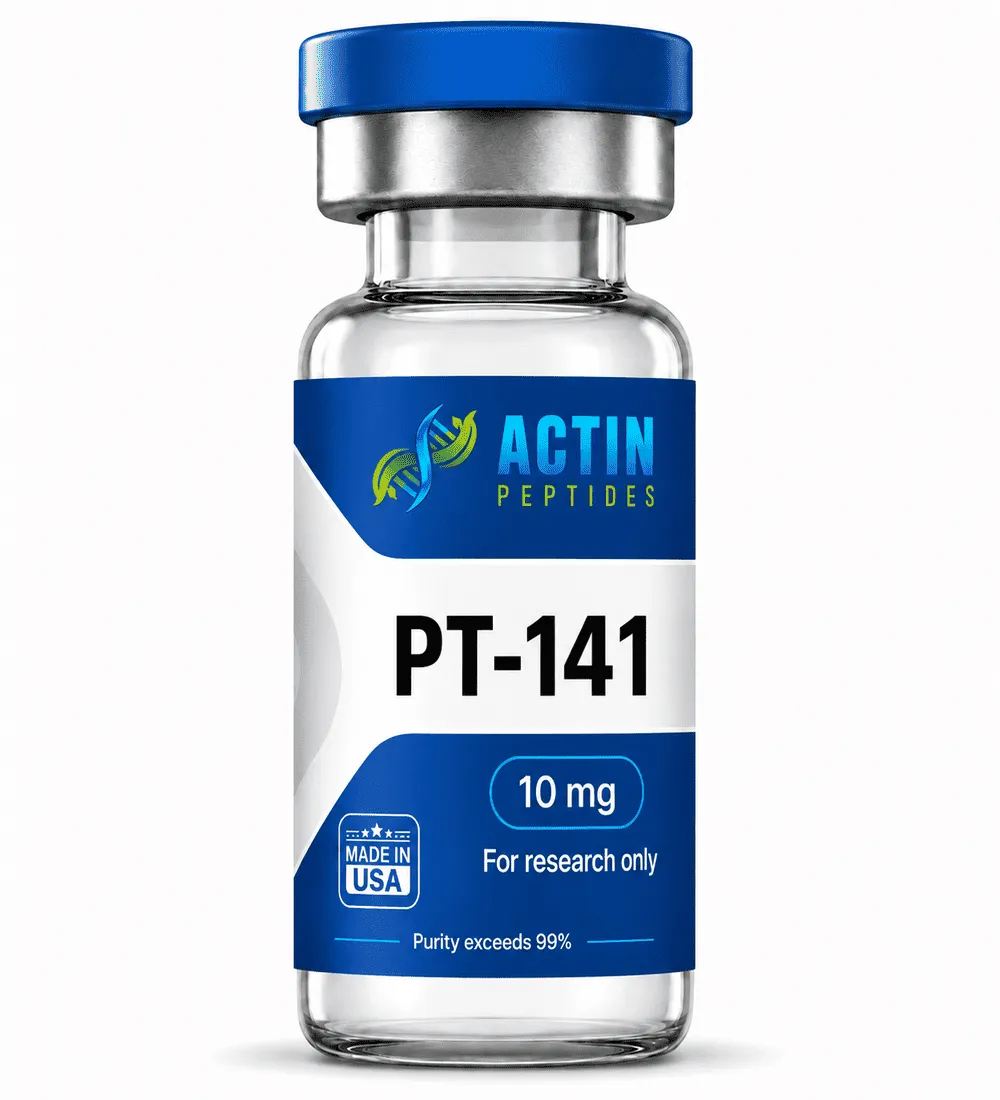
PT-141 (Bremelanotide) Peptide: Melanocortin Receptor Research
Introduction
PT-141 peptide, also known as bremelanotide, is a synthetic cyclic heptapeptide that has been extensively studied for its interaction with the melanocortin receptor system. Research has primarily examined its activity at melanocortin receptor subtypes, particularly MC3R and MC4R, and the downstream neurological and physiological signaling associated with these receptors.
Unlike peptides primarily investigated for growth-factor signaling or tissue remodeling, PT-141 research focuses strongly on melanocortin signaling, central nervous system activity, sexual behavior models, and nitric oxide-related vascular signaling.
Actin Peptides provides PT-141 (Bremelanotide) as a research compound for laboratory applications. The company identifies its peptide products as research-use-only materials.
Overview of PT-141 Peptide
PT-141 is a synthetic seven-amino-acid peptide derived from research involving melanocortin analogs. It is structurally related to melanotan II (MT-II) and acts as an agonist of melanocortin receptors.
Scientists have investigated PT-141 for its potential interaction with:
- MC3R (melanocortin-3 receptor)
- MC4R (melanocortin-4 receptor)
- Hypothalamic neuronal signaling
- Central nervous system pathways
- Nitric oxide (NO)-dependent signaling
- Sexual behavior and arousal models
- Appetite and metabolic signaling associated with melanocortin receptors
Research suggests that MC3R and MC4R participate in several physiological processes. MC3R has been associated with energy homeostasis and metabolic signaling, while MC4R has been extensively studied in relation to appetite regulation, energy expenditure, and reproductive behavior.
For researchers investigating related melanocortin compounds, Actin Peptides also offers Melanotan 1 Peptide and Melanotan 2 Peptide.
What Is PT-141 Peptide?
PT-141 is a synthetic cyclic heptapeptide also known as bremelanotide. It has been studied primarily as an agonist of melanocortin receptors, particularly MC3R and MC4R, with research examining downstream neurological and vascular signaling.
How Does PT-141 Work?
Research suggests that PT-141 interacts with melanocortin receptors in the central nervous system. Activation of MC3R and MC4R may influence neuronal signaling in hypothalamic and limbic regions, while experimental studies have also investigated downstream nitric oxide and cyclic GMP signaling in vascular tissues.
What Is PT-141 Researched For?
PT-141 research has investigated:
- Melanocortin receptor activation
- Central nervous system signaling
- Sexual behavior models
- Sexual motivation and arousal pathways
- Hypothalamic neuronal activity
- Nitric oxide-dependent signaling
- Cavernosal vascular responses
- Broader melanocortin-related metabolic signaling
What Makes PT-141 Unique?
PT-141 is distinctive because its research profile centers on melanocortin receptor signaling rather than growth hormone, collagen, or conventional tissue-repair pathways. Studies have particularly examined how MC4R activation may influence neural circuits involved in sexual behavior and how melanocortin signaling may interact with nitric oxide pathways.
PT-141 Mechanism of Action
Melanocortin Receptor Signaling
The primary area of PT-141 mechanism research involves melanocortin receptors.
Melanocortin receptors belong to the G-protein-coupled receptor family and participate in signaling networks throughout the central nervous system and other tissues. PT-141 has been investigated for agonistic activity at MC3R and MC4R.
MC3R Signaling
MC3R is expressed prominently in the brain and has been studied in relation to:
- Energy homeostasis
- Feeding behavior
- Appetite regulation
- Glucose metabolism
- Lipid metabolism
- Interaction with other melanocortin receptors
Because of these functions, MC3R remains an important target in metabolic and neuroendocrine research.
MC4R Signaling
MC4R has received substantial attention in studies of:
- Appetite regulation
- Energy expenditure
- Metabolic signaling
- Reproductive behavior
- Central nervous system activity
Research involving PT-141 has particularly focused on the relationship between MC4R activation and neural circuits associated with sexual motivation.
Hypothalamic and Central Nervous System Activity
The hypothalamus contains several neural circuits involved in endocrine regulation, metabolism, and reproductive behavior.
Experimental research suggests that melanocortin receptor activation may influence hypothalamic regions such as the medial preoptic area (mPOA). Studies have examined whether PT-141 may activate neurons in these areas and influence downstream behavioral responses.
Researchers have also investigated possible interactions with dopamine-containing neuronal terminals within the mPOA. However, the precise contribution of individual neurotransmitter systems remains an area of continuing investigation.
PT-141 and Nitric Oxide Signaling
Another important area of PT-141 research involves nitric oxide (NO) and vascular signaling.
Experimental studies using melanocortin agonists have investigated changes in intracavernosal pressure and the possibility that melanocortin receptor activation influences vascular responses through neuronal nitric oxide release.
Researchers have used pharmacological tools such as L-NAME, an inhibitor of nitric oxide synthase, and receptor antagonists to investigate these mechanisms.
The results support a research hypothesis in which central melanocortin receptor activation may influence vascular responses through neuronal pathways involving nitric oxide and the NO-cyclic GMP signaling system.
These findings remain experimental and should not be interpreted as evidence of therapeutic efficacy.
Chemical Makeup of PT-141
| Property | Details |
|---|---|
| Common Name | PT-141 |
| Other Known Name | Bremelanotide |
| Peptide Type | Synthetic cyclic heptapeptide |
| Molecular Formula | C50H68N14O10 |
| Molecular Weight | 1025.18 g/mol |
| Primary Research Target | Melanocortin receptors |
| Key Receptors Studied | MC3R and MC4R |
Research and Clinical Studies
PT-141 Initial Animal Research
Study Objective
Early research investigated whether PT-141 could influence sexual behavior in experimental animal models.
Methodology
Researchers administered PT-141 to female rat models and evaluated behavioral responses using established measures of appetitive and consummatory sexual behavior.
Findings
The research reported increased solicitation behavior without corresponding changes in several other motor or sexual behavioral parameters.
This distinction was important because researchers interpreted the findings as potentially reflecting a selective behavioral effect rather than generalized motor stimulation.
Scientific Significance
The study contributed to the hypothesis that central melanocortin systems may participate in neural networks controlling appetitive sexual behavior.
PT-141 and Sexual Behavior Research
Study Objective
Researchers subsequently examined whether melanocortin receptor activation could influence specific components of sexual behavior.
Methodology
Experimental models received PT-141 through peripheral administration or direct administration into selected regions of the brain, including the lateral ventricles and medial preoptic area.
Researchers then evaluated behavioral responses and regional neuronal activity.
Findings
The studies associated PT-141 exposure with increased appetitive behavior while observing comparatively limited effects on certain consummatory behaviors.
Researchers also observed activity in hypothalamic and limbic regions associated with reproductive behavior.
Scientific Significance
These findings helped establish the melanocortin system as an important research target for understanding the neural regulation of sexual motivation and behavior.
PT-141 and Central Nervous System Research
Study Objective
Researchers have investigated how MC4R agonism may influence brain activity associated with sexual stimuli.
Methodology
A randomized, double-blind, placebo-controlled crossover study incorporated behavioral assessments, functional neuroimaging, and hormonal analyses.
Findings
The research reported changes in sexual desire and differences in brain activity following MC4R agonism compared with placebo.
Functional neuroimaging identified changes involving areas such as:
- Cerebellar regions
- Supplementary motor areas
- Secondary somatosensory cortex
- Amygdala
- Insula
Researchers also reported altered functional connectivity between selected brain regions during exposure to erotic stimuli.
Scientific Significance
These observations provide additional evidence for investigating MC4R signaling as part of the neural circuitry involved in sexual motivation and processing.
Importantly, these findings describe experimental pharmacological activity and should not be interpreted as evidence that research-grade PT-141 products are appropriate for human use.
PT-141 and Vascular Signaling Research
Study Objective
Researchers investigated whether melanocortin receptor activation could influence vascular responses in experimental models.
Methodology
Experimental studies evaluated intracavernosal pressure following administration of melanocortin receptor agonists. Researchers also used receptor antagonists, nitric oxide synthase inhibition, and nerve transection to investigate potential mechanisms.
Findings
Melanocortin agonists produced changes in intracavernosal pressure in experimental models. Pharmacological inhibition of melanocortin receptors or nitric oxide signaling reduced these responses.
Scientific Significance
The findings support continued investigation into the relationship between MC3R/MC4R activation, neuronal signaling, nitric oxide, and vascular responses.
PT-141 Research Compared With Related Peptides
PT-141 occupies a different research category from many regenerative or growth-factor peptides.
For example, researchers investigating tissue repair and cellular migration may also examine BPC-157 or TB-500 (Thymosin Beta-4).
Researchers examining copper-dependent peptide signaling and extracellular matrix biology may investigate GHK-Cu.
In contrast, PT-141 research primarily centers on melanocortin receptor biology and central nervous system signaling.
PT-141 Peptide Research: Key Takeaways
Current research identifies several major areas of investigation:
- Receptor activity: PT-141 has been studied as an agonist of MC3R and MC4R.
- Neural signaling: Research has examined hypothalamic and limbic pathways associated with sexual behavior.
- Behavioral models: Experimental studies have investigated appetitive sexual behavior.
- Vascular signaling: Researchers have explored interactions between melanocortin activation and nitric oxide-dependent pathways.
- Neuroimaging: Human research has investigated changes in brain activity and functional connectivity following MC4R agonism.
- Metabolic relevance: MC3R and MC4R participate in broader research involving appetite, energy balance, and metabolism.
Why Researchers Study PT-141
The melanocortin system connects several biological processes, including neural signaling, endocrine regulation, energy homeostasis, and reproductive behavior.
Consequently, PT-141 provides researchers with a useful experimental compound for examining how MC3R and MC4R activation influences central nervous system pathways and downstream physiological responses.
Its research profile also makes it useful for comparative studies involving other melanocortin-related compounds.
Frequently Asked Questions
Is PT-141 the same as bremelanotide?
Yes. PT-141 is another name used for bremelanotide, a synthetic cyclic peptide investigated for its activity at melanocortin receptors.
What receptors does PT-141 target?
Research has primarily investigated PT-141 activity at the melanocortin-3 receptor (MC3R) and melanocortin-4 receptor (MC4R).
What is PT-141 research focused on?
PT-141 studies have focused primarily on melanocortin signaling, central nervous system activity, sexual behavior models, hypothalamic pathways, and nitric oxide-related vascular signaling.
Does PT 141 affect the central nervous system?
Research indicates that melanocortin receptors are expressed in central nervous system regions involved in multiple physiological processes. Experimental PT-141 studies have investigated activity in hypothalamic and limbic brain regions.
How is PT-141 different from Melanotan II?
PT-141 is structurally related to melanotan II and emerged from research involving melanocortin analogs. Both compounds have been investigated for melanocortin receptor activity, although their research profiles and receptor pharmacology differ.
Where can researchers buy PT-141 peptide?
Actin Peptides lists PT-141 (Bremelanotide) 10 mg among its research-use-only peptide products.
Is PT-141 approved for human use?
The research-grade product described on this page is supplied by Actin Peptides strictly for research and laboratory purposes. It should not be represented as a research product being approved for human consumption, therapeutic use, or diagnostic applications.
Conclusion
PT-141 (bremelanotide) is a synthetic cyclic peptide whose research profile centers on melanocortin receptor signaling, particularly MC3R and MC4R. Studies have investigated its effects on hypothalamic neuronal activity, sexual behavior models, functional brain responses, and nitric oxide-dependent vascular signaling.
The available research provides a foundation for studying how melanocortin pathways connect neural, metabolic, endocrine, and reproductive signaling. Nevertheless, experimental findings should be distinguished from established clinical outcomes, and research-grade material should be handled only within appropriate laboratory settings.
Research Disclaimer
PT-141 peptide is available strictly for research and laboratory purposes only. It is not approved for human consumption, therapeutic use, or diagnostic applications. Please review our Terms and Conditions before placing an order.


 English
Reviews
There are no reviews yet.