
Description
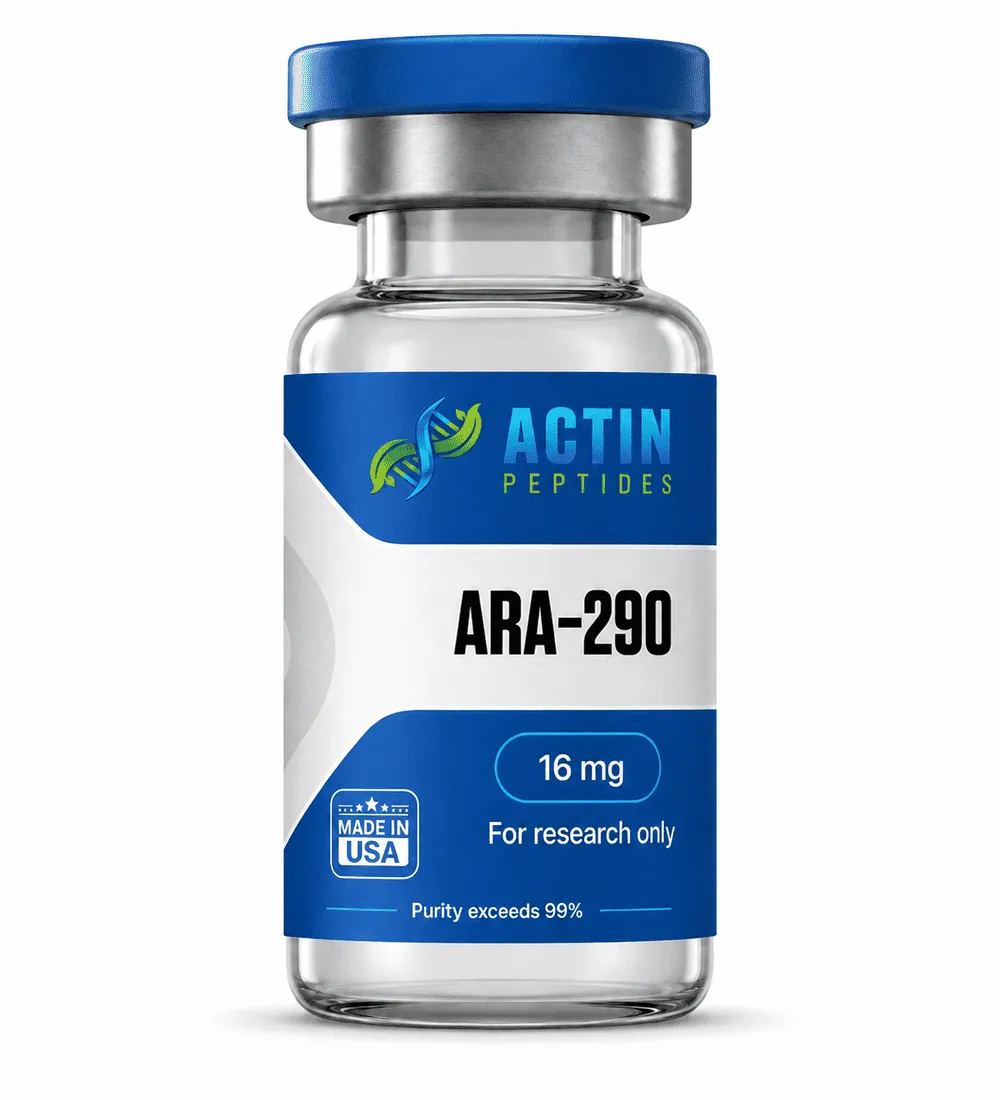
ARA-290 Peptide Research: Tissue Protection, Immune Signaling, and Regenerative Studies
Introduction
ARA-290 peptide, also known as Cibinetide or Helix B Surface Peptide (HBSP), is a synthetic 11-amino-acid peptide derived from the tissue-protective region of erythropoietin (EPO). Unlike full-length erythropoietin, ARA-290 has been studied for its interaction with innate repair pathways rather than red blood cell production.
Scientists have investigated ARA 290 for its potential role in tissue protection, cellular repair, inflammatory signaling, immune modulation, endothelial function, and regenerative biology. Consequently, ARA-290 research continues to attract attention in studies involving cellular survival pathways and tissue recovery mechanisms.
What Is ARA-290?
ARA-290 is a synthetic peptide derived from the helix B region of erythropoietin. Research suggests it may activate innate repair receptors involved in tissue protection, cellular survival, inflammatory regulation, and regenerative signaling.
How Does ARA-290 Work?
Research indicates that ARA-290 may bind to the Innate Repair Receptor (IRR), a receptor complex composed of the erythropoietin receptor and CD131. This interaction may activate tissue-protective signaling pathways without stimulating red blood cell production.
What Is ARA-290 Researched For?
Scientists have investigated ARA-290 for:
- Tissue protection
- Cellular repair
- Inflammatory signaling
- Immune regulation
- Endothelial cell function
- Vascular regeneration
- Retinal ischemia research
- Cytokine modulation
- Cellular survival pathways
What Makes ARA-290 Unique?
Unlike erythropoietin, ARA-290 targets tissue-protective pathways without activating erythropoiesis. This distinction makes it a valuable research peptide for studying regenerative and immunomodulatory mechanisms.
Overview of ARA-290 Peptide Research
Research suggests that tissue injury may activate specialized repair mechanisms involving the Innate Repair Receptor (IRR). Scientists believe ARA-290 may selectively interact with this receptor complex, potentially supporting cellular resilience under conditions of inflammation, oxidative stress, and tissue damage.
As a result, researchers have explored ARA-290 across multiple fields, including:
- Regenerative biology
- Cellular signaling
- Endothelial function
- Immune system research
- Inflammation research
- Tissue recovery studies
Furthermore, scientists frequently investigate ARA-290 alongside regenerative peptides such as BPC-157, TB-500, and KPV Peptide.
Mechanism of Action
Innate Repair Receptor Activation
Research suggests that ARA-290 primarily exerts its biological activity through activation of the Innate Repair Receptor (IRR).
The IRR consists of:
- Erythropoietin Receptor (EPOR)
- CD131 (Beta Common Receptor)
Scientists propose that activation of this receptor complex may initiate tissue-protective signaling pathways involved in cellular survival and repair.
Cellular Signaling Pathways
Studies indicate that ARA-290 may influence several intracellular signaling cascades, including:
PI3K-Akt Pathway
The PI3K-Akt pathway plays an important role in:
- Cellular survival
- Growth regulation
- Metabolic activity
- Tissue recovery
Research suggests ARA-290 may activate this pathway under conditions of cellular stress.
JAK2-STAT5 Pathway
Scientists have investigated ARA-290 for its potential involvement in:
- Cellular communication
- Immune regulation
- Tissue protection signaling
Activation of JAK2-STAT5 may contribute to enhanced cellular resilience.
NF-κB Regulation
Research indicates that ARA-290 may influence NF-κB signaling, a pathway associated with inflammatory gene expression and immune activation.
Interaction with Inflammatory Cytokines
Scientists have investigated whether ARA-290 may influence cytokine production.
Research suggests the peptide may interact with signaling molecules such as:
- Interleukin-6 (IL-6)
- Interleukin-1β (IL-1β)
- Tumor Necrosis Factor Alpha (TNF-α)
These pathways remain active areas of peptide research and cellular signaling investigations.
Chemical Makeup
| Property | Details |
|---|---|
| Molecular Formula | C51H54N16O21 |
| Molecular Weight | 1257.3 g/mol |
| Alternative Names | Cibinetide, HBSP, PH-BSP |
| Peptide Class | Erythropoietin-Derived Peptide |
| Research Category | Tissue Protection and Regenerative Research |
Research and Clinical Studies
ARA-290 and Nociception Research
Study Objective
Scientists investigated whether ARA-290 could influence neuronal signaling pathways associated with nociceptive responses.
Methodology
Researchers examined sensory neurons using calcium imaging techniques and evaluated cellular responses to capsaicin exposure.
Findings
Studies indicated that ARA-290 may:
- Alter TRPV1 receptor sensitivity
- Modulate neuronal activation thresholds
- Influence sensory signaling pathways
Researchers observed selective interactions with capsaicin-responsive pathways while preserving other sensory mechanisms.
Scientific Significance
These findings suggest that ARA-290 may serve as a useful research tool for investigating neuronal signaling and receptor modulation.
ARA-290 and Retinal Ischemia Research
Study Objective
Scientists explored whether ARA-290 could support endothelial cell survival and vascular regeneration in retinal ischemia models.
Methodology
Researchers combined endothelial colony-forming cells (ECFCs) with ARA-290 and evaluated vascular repair outcomes.
Findings
Research suggested:
- Enhanced endothelial cell survival
- Improved resistance to oxidative stress
- Reduced inflammatory cytokine expression
- Increased vascular repair capacity
Additionally, investigators observed reductions in inflammatory markers within retinal tissues.
Scientific Significance
These findings highlight the peptide’s relevance in endothelial biology and vascular regeneration research.
Researchers studying vascular health often investigate related regenerative compounds such as BPC-157 and TB-500.
ARA-290 and Inflammatory Cytokine Research
Study Objective
Scientists investigated whether ARA-290 could influence inflammatory signaling following pancreatic islet transplantation.
Methodology
Researchers evaluated cytokine expression, apoptosis markers, and tissue viability after peptide administration.
Findings
Studies indicated:
- Reduced cytokine-associated cellular stress
- Lower caspase activity
- Improved cellular viability markers
- Decreased inflammatory mediator production
Researchers also observed suppression of IL-6, IL-12, and TNF-α signaling pathways.
Scientific Significance
These findings support continued investigation into immune signaling and inflammatory pathway regulation.
ARA-290 and Tissue Protection
Study Objective
Researchers sought to determine whether ARA-290 could influence cellular survival following tissue injury.
Methodology
Laboratory investigations evaluated tissue integrity, inflammatory markers, and regenerative signaling pathways.
Findings
Research suggests that ARA-290 may:
- Support tissue-protective pathways
- Promote cellular survival mechanisms
- Reduce inflammatory signaling
- Enhance regenerative responses
Scientific Significance
Scientists continue to investigate these pathways as part of broader regenerative medicine and peptide research programs.
ARA-290 and Immune Modulation
Study Objective
Researchers explored how ARA-290 may influence innate and adaptive immune responses.
Methodology
Studies examined interactions between the peptide and immune cell populations, including macrophages and dendritic cells.
Findings
Research suggests ARA-290 may:
- Influence cytokine signaling
- Affect macrophage activation
- Modulate dendritic cell behavior
- Alter antigen presentation pathways
Scientific Significance
These observations suggest that the peptide may serve as an important research tool for understanding immune regulation and cellular communication.
Related Research Peptides
Researchers interested in ARA-290 studies frequently explore complementary regenerative compounds including:
Conclusion
ARA-290 remains one of the most extensively studied erythropoietin-derived peptides in regenerative research. Studies indicate that it may influence tissue protection, immune signaling, endothelial cell function, inflammatory pathways, and cellular survival mechanisms.
Furthermore, scientists continue to investigate its interaction with the Innate Repair Receptor and related signaling networks involved in tissue recovery and regenerative biology. As research advances, ARA-290 continues to demonstrate significant value as a laboratory research peptide.
Frequently Asked Questions
Is ARA-290 the same as erythropoietin?
No. ARA-290 is a synthetic peptide derived from a specific tissue-protective region of erythropoietin but does not function as a full erythropoietin molecule.
What is ARA-290 researched for?
Researchers study ARA 290 peptides for tissue protection, inflammatory signaling, immune modulation, endothelial function, cellular survival, and regenerative biology.
How does ARA-290 work?
Research suggests ARA-290 binds to the Innate Repair Receptor (IRR), activating tissue-protective signaling pathways involving PI3K-Akt, JAK2-STAT5, and cellular survival mechanisms.
Where can researchers buy ARA-290?
Researchers seeking high-purity ARA-290 peptide for sale can explore the Actin Peptides research catalog.
Research Disclaimer
ARA-290 is available strictly for research and laboratory purposes only. It is not approved for human consumption, therapeutic use, or diagnostic applications. Please review our Terms and Conditions before placing an order.
 English
  French