
Description
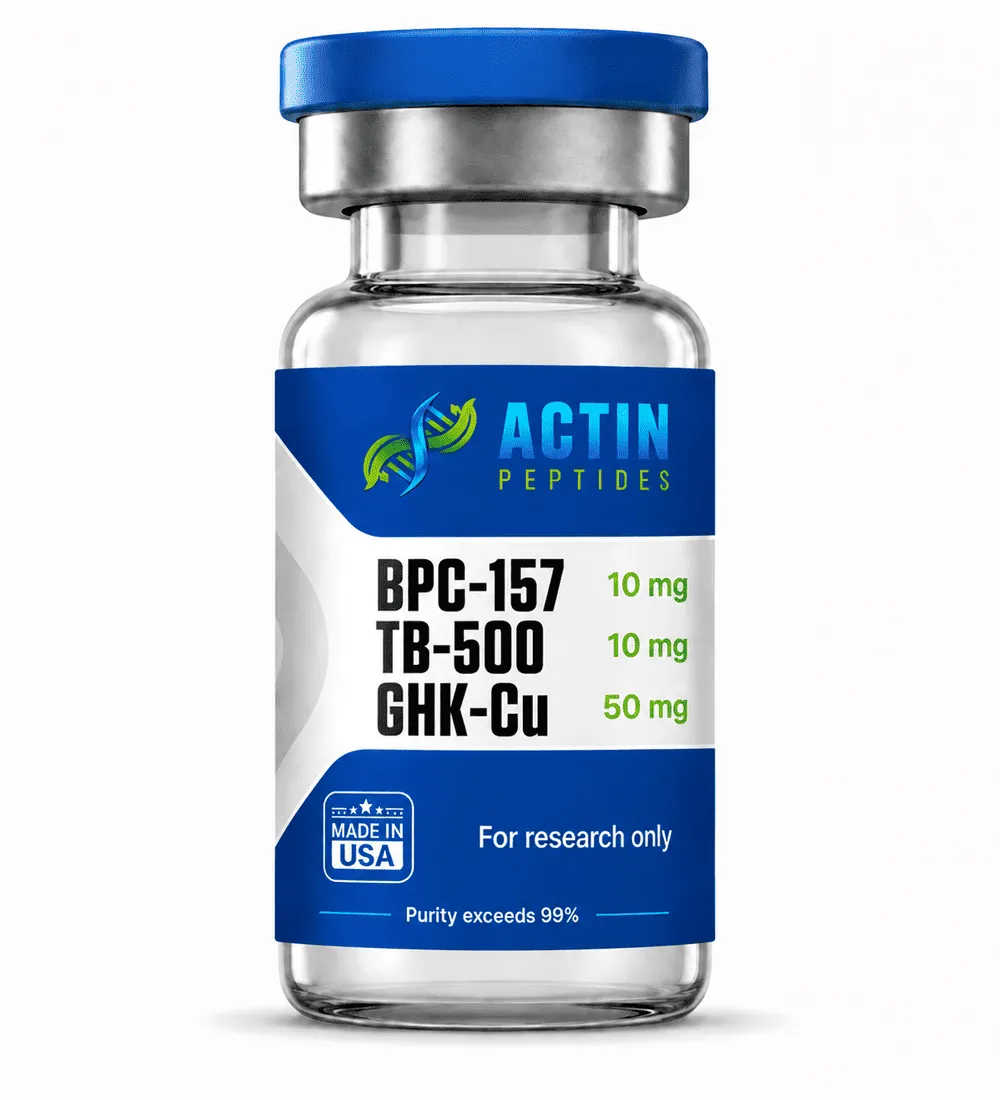
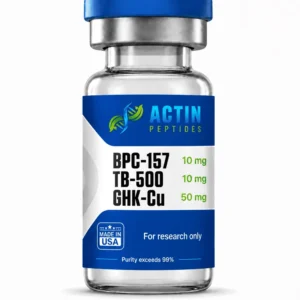
BPC-157 & TB-500 & GHK-Cu Blend Peptide
Advanced Research on Cellular Repair, Angiogenesis, Collagen Remodeling, and Inflammatory Signaling
Introduction
The BPC-157 & TB-500 & GHK-Cu Blend peptide combines three extensively researched peptides into a single research formulation designed to investigate complementary biological pathways involved in cellular repair, extracellular matrix remodeling, angiogenesis, and inflammatory signaling.
Each peptide contributes distinct mechanisms that researchers continue to investigate in experimental models.
- BPC-157 is a synthetic pentadecapeptide studied for its interaction with angiogenic signaling, endothelial function, fibroblast migration, and nitric oxide regulation.
- TB-500, a synthetic analogue of thymosin beta-4, has been investigated for its influence on cytoskeletal organization, endothelial cell migration, and tissue remodeling.
- GHK-Cu, a naturally occurring copper-binding tripeptide, has been studied for its role in collagen production, extracellular matrix remodeling, antioxidant activity, and cellular communication.
Because these peptides influence different yet interconnected biological pathways, scientists have proposed that combining them may provide a useful research model for studying complex regenerative processes involving connective tissue, vascular remodeling, inflammatory regulation, and extracellular matrix organization.
Researchers continue to investigate the BPC-157 & TB-500 & GHK-Cu blend in laboratory settings to better understand how multiple regenerative signaling pathways may interact within damaged cellular environments.
What is BPC-157 & TB-500 & GHK-Cu Blend?
BPC-157 & TB-500 & GHK-Cu Blend is a research peptide combination consisting of three compounds that scientists study for their potential roles in angiogenesis, extracellular matrix remodeling, collagen production, endothelial function, and inflammatory signaling.
How does BPC-157 & TB-500 & GHK-Cu Blend work?
Research suggests the blend may influence several biological pathways simultaneously, including endothelial signaling, fibroblast activity, nitric oxide regulation, collagen synthesis, cytoskeletal organization, and cellular migration.
What is BPC-157 & TB-500 & GHK-Cu researched for?
Scientists have investigated the blend’s individual components for research involving:
- Cellular regeneration
- Connective tissue remodeling
- Angiogenesis
- Endothelial cell biology
- Collagen synthesis
- Fibroblast migration
- Oxidative stress
- Extracellular matrix remodeling
- Inflammatory signaling
What makes this peptide blend unique?
Unlike single research peptides, this blend combines three complementary mechanisms that may simultaneously influence vascular biology, connective tissue remodeling, and cellular repair pathways.
Overview
Researchers increasingly recognize that tissue regeneration depends on numerous interconnected biological systems rather than a single signaling pathway.
Successful repair of damaged tissues often requires coordination among:
- endothelial cells
- fibroblasts
- extracellular matrix proteins
- collagen-producing cells
- inflammatory mediators
- angiogenic growth factors
- antioxidant defense systems
Each peptide within this blend appears to influence different stages of these biological processes.
For example, BPC-157 has been studied for its interactions with endothelial integrity, nitric oxide signaling, and fibroblast migration.
TB-500 has been investigated for regulating actin dynamics, cellular movement, and angiogenesis through endothelial organization.
Meanwhile, GHK-Cu has attracted considerable scientific interest because of its relationship with copper transport, collagen production, antioxidant activity, extracellular matrix remodeling, and gene expression.
Rather than acting through identical mechanisms, these peptides may complement one another across multiple biological pathways. Consequently, researchers continue exploring whether simultaneous exposure produces broader biological responses than investigating each peptide independently.
Because of these overlapping mechanisms, this blend has become increasingly relevant within peptide research involving:
- connective tissue biology
- vascular regeneration
- endothelial function
- extracellular matrix remodeling
- collagen organization
- cellular communication
- inflammatory regulation
Researchers continue investigating these interactions across numerous laboratory and experimental models.
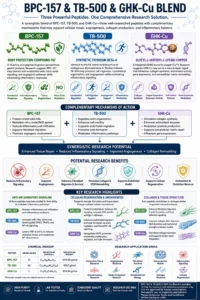
Mechanism of Action
BPC-157 and Endothelial Signaling
Research suggests that BPC-157 may primarily influence biological systems responsible for maintaining endothelial integrity.
Scientists have proposed that the peptide interacts with nitric oxide (NO) signaling while supporting communication between endothelial cells and surrounding connective tissues.
Experimental models have also associated BPC-157 with activation of several intracellular repair pathways, including:
- FAK (Focal Adhesion Kinase)
- Paxillin signaling
- Egr-1 activation
- NAB2 regulation
Together, these pathways may influence:
- cell adhesion
- fibroblast migration
- endothelial stability
- extracellular matrix organization
These observations have made BPC-157 an important peptide within research involving angiogenesis and connective tissue biology.
For additional research involving wound healing peptides, see:
- https://actinpeptides.com/product/bpc-157-5mg-10mg/
- https://actinpeptides.com/product/kpv-peptide-4mg/
TB-500 and Cytoskeletal Organization
TB-500 represents the synthetic version of thymosin beta-4, a naturally occurring peptide involved in actin regulation.
Scientists suggest TB-500 binds globular actin (G-actin), allowing cells to reorganize their internal cytoskeleton more efficiently.
Cell migration depends heavily on this process.
Researchers continue studying how this mechanism may influence:
- endothelial migration
- fibroblast movement
- angiogenesis
- extracellular matrix remodeling
- connective tissue organization
Laboratory investigations have also linked TB-500 with increased expression of several angiogenic signaling molecules, including:
- VEGF-A
- Angiopoietin-2
- Tie2 receptor
Together these pathways may support cellular organization during tissue remodeling.
Researchers interested in thymosin-based peptide research may also explore:
https://actinpeptides.com/product/tb-500-thymosin-beta-4-5mg-10mg/
GHK-Cu and Copper-Dependent Cellular Signaling
GHK-Cu differs substantially from the other peptides in this blend.
Rather than acting solely as a signaling peptide, GHK-Cu functions as a copper-binding complex naturally released during collagen breakdown.
Scientists suggest this peptide may deliver biologically active copper to injured tissues.
Copper serves as an essential cofactor for numerous enzymes involved in:
- collagen maturation
- extracellular matrix remodeling
- antioxidant defense
- angiogenesis
- connective tissue organization
Research also indicates GHK-Cu may influence hundreds of genes associated with:
- tissue remodeling
- cellular communication
- antioxidant activity
- extracellular matrix synthesis
Its broad biological activity makes GHK-Cu one of the most extensively studied regenerative peptides available today.
Chemical Makeup
| Component | Molecular Formula | Molecular Weight | Other Names |
|---|---|---|---|
| BPC-157 | C62H98N16O22 | 1419.5 g/mol | Body Protection Compound-157 |
| TB-500 | C212H350N56O78S | 4963 g/mol | Synthetic Thymosin Beta-4 |
| GHK-Cu | C14H23CuN6O4 | 403.38 g/mol | Glycyl-L-Histidyl-L-Lysine Copper |
Research and Clinical Studies
Anti-Inflammatory Signaling Research
BPC-157, TB-500 & GHK-Cu and Cellular Inflammatory Regulation
One of the primary reasons scientists continue to investigate the BPC-157 & TB-500 & GHK-Cu blend is its potential influence on inflammatory signaling. Although each peptide appears to interact with different molecular pathways, research suggests their biological actions may complement one another during the cellular response to injury.
Rather than suppressing normal immune function, studies indicate these peptides may help regulate intracellular signaling involved in inflammation, oxidative stress, vascular stability, and tissue remodeling. Consequently, researchers continue exploring how these compounds influence communication between endothelial cells, fibroblasts, macrophages, and other structural cells within damaged tissues.
TB-500 and Toll-Like Receptor Signaling
Research suggests that TB-500 may influence inflammatory regulation through pathways associated with innate immunity.
When tissues experience mechanical stress or injury, cells often activate Toll-Like Receptor (TLR) signaling. These receptors recognize cellular damage and initiate inflammatory signaling cascades designed to coordinate repair. While this response is essential for tissue recovery, prolonged activation may contribute to excessive inflammation and impaired regeneration.
Scientists have investigated whether TB-500 may regulate these signaling events.
Laboratory studies indicate that TB-500 may increase intracellular levels of microRNA-146a (miR-146a), a regulatory molecule believed to function as a natural feedback inhibitor of inflammatory signaling.
As miR-146a increases, research suggests several downstream signaling proteins may decrease, including:
- IRAK1
- TRAF6
- NF-κB regulatory mediators
These proteins normally amplify inflammatory signaling inside cells.
By reducing their activity, TB-500 may help moderate excessive inflammatory responses while preserving normal cellular communication.
Researchers also observed reduced activation of inflammatory transcription pathways involved in cytokine production, making TB-500 an increasingly important research peptide for studying controlled inflammatory regulation.
BPC-157 and Endothelial Protection During Inflammation
Unlike TB-500, BPC-157 appears to influence inflammatory signaling indirectly by supporting endothelial integrity.
Scientists have proposed that healthy blood vessels play an essential role in controlling inflammation because damaged endothelium often permits excessive immune cell infiltration into surrounding tissues.
Experimental research suggests BPC-157 may help maintain endothelial stability during periods of cellular stress.
Researchers have reported reductions in several laboratory markers commonly associated with inflammatory activity, including indicators linked to:
- neutrophil accumulation
- leukotriene production
- thromboxane synthesis
Interestingly, studies suggest these observations occurred without broad suppression of immune signaling.
Instead, BPC-157 appears to promote a more balanced inflammatory environment by preserving vascular integrity and supporting nitric oxide homeostasis.
Scientists also observed increased macrophage activity associated with tissue remodeling rather than persistent inflammatory signaling.
This regulatory behavior continues to make BPC-157 a peptide of considerable interest within vascular biology and connective tissue research.
For additional research involving endothelial-support peptides, researchers may also explore:
- https://actinpeptides.com/product/bpc-157-5mg-10mg/
- https://actinpeptides.com/product/kpv-peptide-4mg/
GHK-Cu and Oxidative Stress Research
Oxidative stress represents another important component of inflammatory biology.
Reactive oxygen species (ROS) naturally increase after tissue injury and may contribute to protein damage, mitochondrial dysfunction, and prolonged inflammatory signaling.
Scientists continue investigating whether GHK-Cu may help regulate oxidative balance inside cells.
Laboratory experiments suggest the copper peptide complex may:
- reduce intracellular reactive oxygen species
- restore antioxidant enzyme activity
- improve superoxide dismutase function
- reduce oxidative damage within activated macrophages
Researchers have also observed reductions in several inflammatory mediators, including:
- TNF-α
- IL-6
These cytokines normally coordinate inflammatory signaling between immune cells.
Mechanistic investigations suggest GHK-Cu may influence these responses by regulating NF-κB activation, one of the most extensively studied inflammatory signaling pathways.
Interestingly, studies indicate the peptide appears highly selective, showing minimal interaction with several unrelated signaling pathways, including ERK and JNK activation.
This specificity continues to attract scientific interest regarding controlled inflammatory regulation.
Researchers studying copper peptides for extracellular matrix biology may also explore:
Cellular Regeneration Research
Why Cellular Regeneration Matters
Successful tissue regeneration requires more than simple cell growth.
Researchers recognize that damaged tissues undergo highly coordinated biological events involving:
- endothelial cells
- fibroblasts
- extracellular matrix proteins
- angiogenic growth factors
- collagen remodeling
- cellular migration
- oxygen delivery
Scientists continue investigating whether the combined biological actions of BPC-157, TB-500, and GHK-Cu may support several of these interconnected regenerative pathways simultaneously.
TB-500 and Endothelial Cell Migration
One of the defining biological characteristics of TB-500 involves its interaction with the cellular cytoskeleton.
The cytoskeleton provides structural support while allowing cells to migrate toward damaged tissues.
Research indicates TB-500 binds globular actin (G-actin) and may regulate how actin fibers assemble into larger structural networks.
This process appears especially important for endothelial cells.
Before new blood vessels develop, endothelial cells must:
- change shape
- migrate
- organize into tubular structures
- connect with neighboring cells
Laboratory investigations suggest TB-500 may enhance several of these behaviors.
Scientists have also reported increased expression of pro-angiogenic signaling molecules, including:
- VEGF-A
- Angiopoietin-2
- Tie2 receptor
Together these factors may coordinate blood vessel formation during tissue remodeling.
Researchers further suggest these observations involve signaling through the Notch–NF-κB pathway, linking structural organization with gene expression responsible for vascular development.
BPC-157 and Angiogenic Signaling
Scientists have also extensively investigated BPC-157 for its relationship with angiogenesis.
Rather than directly stimulating new vessel formation, research suggests the peptide may create favorable biological conditions that support endothelial survival and vascular remodeling.
Experimental models have associated BPC-157 with activation of several repair-related signaling pathways, including:
- Egr-1
- NAB2
- FAK
- Paxillin
These intracellular proteins regulate:
- cell attachment
- migration
- extracellular matrix interaction
- endothelial movement
Researchers additionally suggest that BPC-157 helps normalize nitric oxide signaling under both excessive and deficient nitric oxide conditions.
Because nitric oxide regulates vascular relaxation, endothelial communication, and angiogenic signaling, maintaining appropriate NO balance may contribute to efficient vascular remodeling during tissue repair.
GHK-Cu and Angiogenic Growth Factors
Research also suggests GHK-Cu may influence angiogenesis through several complementary mechanisms.
Scientists have observed increased expression of:
- vascular endothelial growth factor (VEGF)
- endothelial proliferation markers
- endothelial migration activity
- tube formation in laboratory cultures
These findings suggest GHK-Cu may contribute to blood vessel development within regenerative environments.
Researchers believe copper availability plays an important role.
Copper serves as a required cofactor for multiple enzymes involved in:
- angiogenesis
- extracellular matrix maturation
- collagen cross-linking
- antioxidant protection
By delivering biologically active copper directly to tissues, GHK-Cu may support several enzymatic systems simultaneously.
Consequently, the peptide continues attracting significant attention within connective tissue and regenerative biology research.
Collagen Repair and Extracellular Matrix Research
How Does the BPC-157, TB-500 & GHK-Cu Blend Support Collagen Research?
Collagen is the most abundant structural protein in the body and serves as the foundation of tendons, ligaments, skin, cartilage, bone, and other connective tissues. During tissue remodeling, collagen fibers must be synthesized, organized, cross-linked, and integrated into the extracellular matrix (ECM) to restore structural integrity.
Scientists continue investigating the BPC-157 & TB-500 & GHK-Cu Blend peptide because each component appears to influence different stages of collagen remodeling. Rather than acting through identical mechanisms, the peptides may complement one another by supporting fibroblast activity, extracellular matrix organization, angiogenesis, and connective tissue architecture.
TB-500 and Connective Tissue Organization
Research suggests that TB-500 may play an important role in the structural organization of newly formed connective tissue.
Following tissue injury, fibroblasts migrate into damaged areas and begin producing collagen fibers. However, collagen quantity alone does not determine tissue quality. Proper alignment, spacing, and maturation of collagen fibers are equally important for maintaining structural integrity.
Laboratory investigations involving tendon fibroblast models suggest that TB-500 may support several aspects of connective tissue organization.
Researchers observed:
- More uniform collagen fiber alignment
- Improved spacing between collagen bundles
- Increased collagen fibril diameter
- Enhanced structural organization throughout regenerating tissue
These architectural improvements appeared alongside increases in measured tensile strength and tissue stiffness compared with untreated laboratory controls.
Scientists propose that TB-500 may influence these observations through its interaction with the cellular cytoskeleton. By regulating actin filament dynamics, the peptide may improve fibroblast migration and coordination, allowing collagen-producing cells to organize extracellular matrix proteins more efficiently.
As a result, TB-500 continues to attract attention in research involving tendon biology, ligament remodeling, and extracellular matrix organization.
Researchers interested in connective tissue peptides may also explore:
- https://actinpeptides.com/product/tb-500-thymosin-beta-4-5mg-10mg/
- https://actinpeptides.com/product/bpc-157-5mg-10mg/
BPC-157 and Fibroblast Activity
Fibroblasts are among the primary cells responsible for tissue repair.
These specialized connective tissue cells synthesize collagen, elastin, fibronectin, and numerous extracellular matrix proteins required during wound remodeling.
Research suggests BPC-157 may support fibroblast behavior through several complementary biological mechanisms.
Scientists have observed accelerated fibroblast migration in laboratory cultures exposed to BPC-157. Efficient migration allows fibroblasts to rapidly populate damaged tissue, where they begin producing extracellular matrix proteins necessary for structural repair.
Studies further indicate that BPC-157 may improve fibroblast survival during oxidative stress.
Oxidative stress commonly develops following tissue injury due to increased production of reactive oxygen species. Under these conditions, fibroblast survival often decreases, slowing extracellular matrix formation.
Laboratory investigations suggest BPC-157 may help preserve fibroblast viability while maintaining cellular migration.
Researchers have additionally linked these findings to increased formation of F-actin, an essential structural protein responsible for maintaining cellular shape and mobility.
Activation of the FAK-paxillin signaling pathway has also been reported.
This pathway regulates several cellular processes involved in:
- Cell attachment
- Migration
- Cytoskeletal remodeling
- Extracellular matrix interaction
- Fibroblast coordination
Together, these observations suggest BPC-157 may support connective tissue remodeling by enhancing the functional behavior of fibroblasts rather than simply increasing collagen production alone.
GHK-Cu and Collagen Synthesis
Among the three peptides within this blend, GHK-Cu has become one of the most extensively studied compounds for collagen-related research.
Scientists first identified GHK as a naturally occurring tripeptide released during collagen degradation. Once bound to copper ions, the resulting GHK-Cu complex appears capable of influencing numerous biological pathways associated with tissue remodeling.
Research indicates that GHK-Cu may stimulate several processes involved in extracellular matrix renewal.
Laboratory studies suggest the peptide complex may support:
- Collagen synthesis
- Elastin production
- Glycosaminoglycan formation
- Fibroblast proliferation
- Endothelial migration
- Extracellular matrix remodeling
Copper itself plays an essential biological role throughout these processes.
As a required cofactor for several enzymes responsible for collagen maturation, copper contributes to the stabilization and cross-linking of newly synthesized collagen fibers.
Researchers therefore suggest that GHK-Cu may deliver biologically active copper directly to areas undergoing tissue remodeling, allowing multiple enzymatic systems to function more efficiently.
Because extracellular matrix quality depends on both collagen production and collagen maturation, GHK-Cu continues to receive considerable attention in regenerative biology research.
Researchers studying collagen-support peptides may also explore:
Extracellular Matrix Remodeling
Why Is the Extracellular Matrix Important?
The extracellular matrix (ECM) forms the structural scaffold surrounding cells throughout connective tissues.
Rather than serving as a passive framework, the ECM actively regulates:
- Cell migration
- Cellular communication
- Growth factor availability
- Mechanical stability
- Tissue organization
- Angiogenesis
- Collagen turnover
Following injury, successful regeneration depends upon coordinated remodeling of this complex environment.
Researchers suggest that each peptide within the BPC-157 & TB-500 & GHK-Cu blend may influence different components of extracellular matrix biology.
For example:
BPC-157 appears to support endothelial integrity while facilitating fibroblast migration.
TB-500 may improve cytoskeletal organization, allowing connective tissue cells to migrate efficiently through extracellular matrices.
GHK-Cu may stimulate production of structural proteins while supporting enzymatic remodeling of collagen networks.
Because these mechanisms target complementary biological systems, scientists continue investigating whether simultaneous exposure may create favorable conditions for coordinated extracellular matrix regeneration.
Why Researchers Study This Peptide Blend
Although each peptide has been extensively investigated individually, relatively few studies have evaluated their combined biological activity.
Nevertheless, scientists recognize several potentially complementary characteristics.
| Peptide | Primary Research Focus |
|---|---|
| BPC-157 | Endothelial biology, nitric oxide signaling, fibroblast migration, angiogenesis |
| TB-500 | Cytoskeletal organization, endothelial migration, tissue remodeling |
| GHK-Cu | Collagen synthesis, extracellular matrix remodeling, antioxidant activity, copper delivery |
Because successful tissue regeneration depends upon multiple interconnected biological systems, researchers continue exploring whether multi-peptide formulations may better represent the complexity of natural repair processes than single compounds alone.
Current evidence remains limited regarding simultaneous exposure of these three peptides. Therefore, further laboratory investigation is required to better understand their combined molecular interactions, signaling pathways, and long-term biological effects.
Frequently Asked Questions
What is the BPC-157 & TB-500 & GHK-Cu Blend?
The BPC-157 & TB-500 & GHK-Cu Blend is a multi-peptide research formulation that combines three well-studied compounds with complementary biological properties. Scientists continue investigating this blend for its potential influence on cellular signaling, angiogenesis, extracellular matrix remodeling, collagen synthesis, endothelial function, and inflammatory regulation.
Unlike individual peptides that primarily target one biological pathway, this blend enables researchers to study how multiple regenerative signaling mechanisms may interact simultaneously within experimental models.
How Does the BPC-157 & TB-500 & GHK-Cu Blend Work?
Research suggests each peptide contributes through distinct but interconnected biological mechanisms.
BPC-157 has been studied for its interaction with endothelial cells, nitric oxide signaling, fibroblast migration, and angiogenic pathways.
TB-500 appears to influence cellular migration by regulating actin organization, supporting endothelial movement, cytoskeletal remodeling, and tissue organization.
GHK-Cu has been investigated for its role in collagen synthesis, copper transport, antioxidant activity, extracellular matrix remodeling, and gene expression related to tissue repair.
Together, these mechanisms may provide researchers with a comprehensive model for studying tissue remodeling and regenerative biology.
What Is This Peptide Blend Researched For?
Scientists have investigated the individual components of this blend across numerous research areas, including:
- Cellular regeneration
- Connective tissue remodeling
- Angiogenesis
- Fibroblast activity
- Endothelial cell biology
- Extracellular matrix organization
- Collagen synthesis
- Nitric oxide signaling
- Oxidative stress
- Inflammatory signaling
- Vascular remodeling
- Tendon and ligament research
Although the peptides have been widely studied individually, additional research is needed to fully understand their combined biological interactions.
Why Combine BPC-157, TB-500, and GHK-Cu?
Researchers suggest these peptides may complement one another because they influence different phases of tissue remodeling.
For example:
- BPC-157 has been associated with endothelial protection and cellular migration.
- TB-500 has been linked to cytoskeletal organization and endothelial movement.
- GHK-Cu has been investigated for collagen production, extracellular matrix remodeling, and antioxidant activity.
Together, these complementary mechanisms may provide a broader platform for studying regenerative biology than individual peptides alone.
What Makes This Blend Different From Individual Peptides?
The primary distinction lies in its ability to target multiple biological systems simultaneously.
Rather than focusing on a single signaling pathway, the blend combines research involving:
- Angiogenesis
- Connective tissue remodeling
- Endothelial biology
- Fibroblast function
- Collagen organization
- Extracellular matrix remodeling
- Oxidative stress regulation
This systems-based approach has made peptide blends increasingly valuable in regenerative research.
Does This Blend Support Angiogenesis Research?
Research on each individual peptide suggests potential interactions with angiogenic pathways.
Scientists have reported observations involving:
- Vascular Endothelial Growth Factor (VEGF)
- Endothelial migration
- Tube formation
- Nitric oxide signaling
- Endothelial survival
- Vascular remodeling
These findings continue to support ongoing investigation into how the blend may influence vascular biology under laboratory conditions.
Is This Blend Being Studied for Collagen Research?
Yes.
Scientists continue studying the individual peptides because each appears to influence different aspects of collagen biology.
Research has investigated:
- Fibroblast proliferation
- Collagen synthesis
- Collagen fiber organization
- Extracellular matrix remodeling
- Connective tissue architecture
- Tissue structural integrity
Because collagen remodeling requires coordination among multiple cell types, the combined formulation remains an active area of scientific investigation.
What Other Peptides Complement This Research?
Researchers investigating connective tissue biology, regenerative signaling, and extracellular matrix remodeling may also be interested in:
- BPC-157
https://actinpeptides.com/product/bpc-157-5mg-10mg/ - TB-500 (Thymosin Beta-4)
https://actinpeptides.com/product/tb-500-thymosin-beta-4-5mg-10mg/ - GHK-Cu
https://actinpeptides.com/product/ghk-cu-200mg/ - Matrixyl
https://actinpeptides.com/product/matrixyl-200mg/ - Syn-Coll (Palmitoyl Tripeptide-5)
https://actinpeptides.com/product/syn-coll-palmitoyl-tripeptide-5-200mg/ - KPV Peptide
https://actinpeptides.com/product/kpv-peptide-4mg/
Exploring related compounds may help researchers investigate complementary biological pathways involved in tissue remodeling and cellular communication.
Conclusion
The BPC-157 & TB-500 & GHK-Cu Blend peptide represents a multifaceted research formulation designed to investigate interconnected mechanisms involved in tissue regeneration, extracellular matrix remodeling, vascular biology, and inflammatory signaling.
Current research suggests that each peptide contributes through distinct molecular pathways. BPC-157 has been studied for its influence on endothelial function, nitric oxide regulation, and fibroblast migration. TB-500 has attracted scientific interest for its role in cytoskeletal organization, cellular migration, and angiogenesis. Meanwhile, GHK-Cu has been extensively investigated for its involvement in collagen synthesis, copper-dependent enzymatic activity, extracellular matrix remodeling, and antioxidant defense.
Together, these complementary mechanisms provide researchers with an opportunity to explore how multiple regenerative signaling pathways interact within complex biological systems. Although findings from individual peptide studies remain encouraging, additional investigations are necessary to better understand the biological effects of combined exposure.
As peptide science continues to evolve, this blend remains an important research tool for studying cellular communication, connective tissue biology, angiogenesis, and structural remodeling within controlled laboratory environments.
Research Disclaimer
BPC-157 & TB-500 & GHK-Cu Blend is available strictly for research and laboratory purposes only. It is not approved for human consumption, therapeutic use, or diagnostic applications. Please review our Terms and Conditions before ordering.
 English
Reviews
There are no reviews yet.